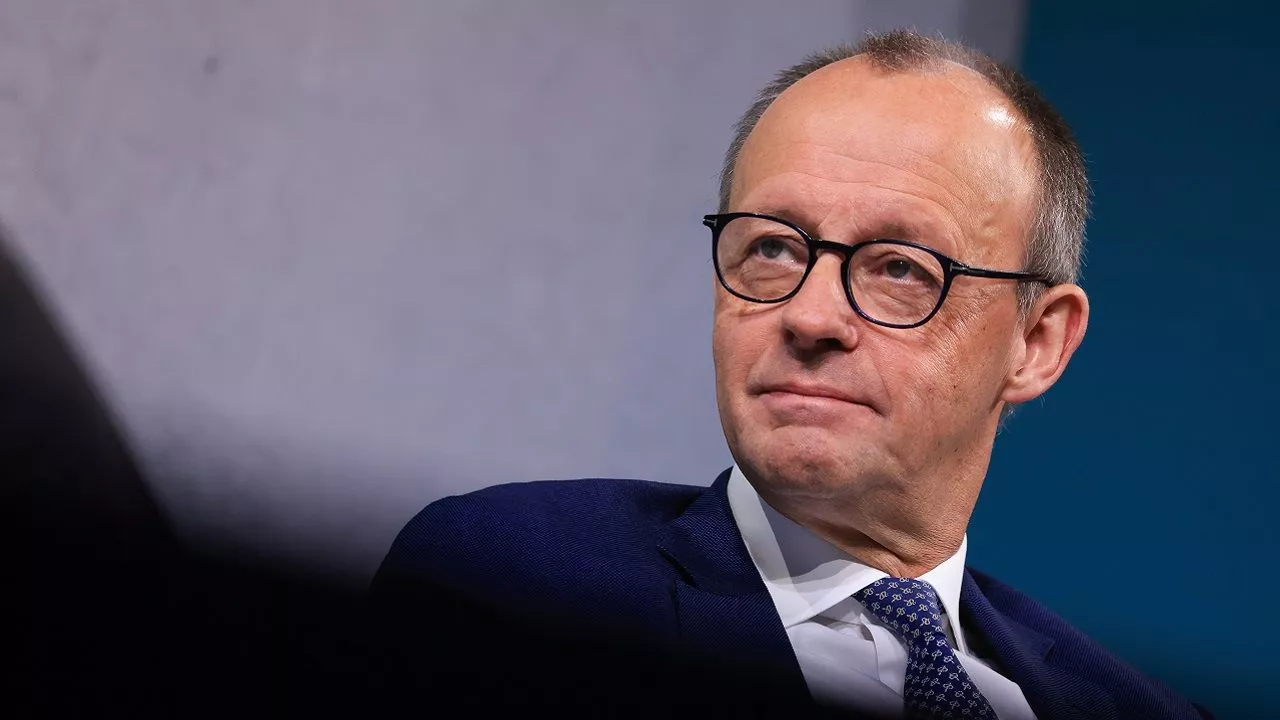
German Chancellor Friedrich Merz found himself under serious political pressure in the run-up to the regional elections on 20 September in Berlin and Mecklenburg-Western Pomerania. His personal approval rating has fallen to 14%, whilst the CDU/CSU bloc is trailing significantly behind the far-right «Alternative for Germany» (AfD) in national polls. The German media are already openly analysing possible ways of replacing the Chancellor, although Merz currently insists he has no intention of stepping down.
- Mertza’s ranking has fallen to 14%.
- The AfD is ahead of the CDU/CSU in federal opinion polls.
- Two important local elections will take place on 20 September.
- Following these events, the CDU leadership will hold a crisis meeting.
- The German media are already analysing scenarios for the Chancellor’s replacement.
Mertza’s ranking has fallen to 14%
According to an INSA survey carried out on 10–11 September, only 14% of Germans consider Merz to be the right person for the post of Chancellor, whilst 78% responded negatively. Even amongst CDU/CSU supporters, only 36% back him.
Another ARD-DeutschlandTrend poll conducted in September also reveals a crisis in support for the government: 13% of respondents rated Merz’s performance positively. AfD In this survey, the AfD received 27%, whilst the CDU/CSU received 21%. In the INSA poll, the AfD received 29%, whilst Merz’s bloc received around 19.5%.
Reuters notes that, in just over a year in office, Merz’s approval ratings have fallen to their lowest levels, whilst the promised economic reforms have so far failed to shift voters’ attitudes.
This Sunday’s election could prove decisive
On 20 September, elections will be held simultaneously in Berlin and Mecklenburg-Western Pomerania.
The most challenging situation for the CDU is in Mecklenburg-Western Pomerania. According to the latest INSA poll, the AfD is polling at around 37% there, the Social Democrats at 35%, and Merz’s party at only 7%. This even raises the risk that the CDU could find itself close to the five per cent threshold.
In Berlin, the party also risks losing the post of mayor.
Reuters reports that another poor result for the CDU could significantly increase internal party pressure on the Chancellor. At the same time, it would be wrong to suggest that Merz will automatically resign immediately after the election: CDU leaders are still publicly backing him.
The CDU will hold a crisis meeting on Sunday
Once the vote is over, Merz plans to convene the CDU executive committee. The German media are describing the forthcoming meeting as, in effect, an internal party vote of confidence in the Chancellor.
According to Tagesschau, some CDU politicians expect that regional prime ministers may openly raise the issue of the future leadership of the party and the government. Meanwhile, the Bavarian Prime Minister Marcus Söder He is currently stating that he supports Merz, and eight CDU state premiers have also publicly thrown their support behind him this week.
Merz himself emphasised this week that his government had been elected for four years and that he intended to use this term to carry out reforms. He had previously stated that «giving up is not an option».
What scenarios are being discussed in Germany?
A German television channel n-tv identified five legally and politically feasible scenarios for how the situation might unfold.
Firstly, Merz will remain Chancellor if the results of Sunday’s election prove acceptable to the CDU and the party leadership reaffirms its support for him.
The second — voluntary resignation. In that case, President Frank-Walter Steinmeier would have to accept Merz’s request to resign, and the Bundestag would have to elect a new chancellor. However, n-tv points out that there are currently no signs that Merz himself is preparing to step down.
The third option is for the Chancellor to table a motion of confidence in the Bundestag. If the motion is not passed, the President may, under certain conditions, dissolve parliament, following which snap elections are held.
The fourth scenario — a constructive vote of no confidence. The German Constitution allows the Bundestag to remove the Chancellor only if the Members of Parliament simultaneously have a majority in favour of a new head of government. This is precisely why this mechanism is difficult to use for the internal replacement of one CDU politician by another.
Fifth — such intense pressure within the CDU itself that Merz will voluntarily conclude that he has lost political support and step down from his post.
Who could replace Merts?
The German media most frequently mention two possible successors — the Minister-President of North Rhine-Westphalia Hendrik Vüsta and the Bavarian Minister-President, leader of the CSU Markus Söder. Interior Minister Alexander Dobrindt has also been mentioned in the discussions.
That said, none of the key contenders has yet openly spoken out against Merz. For Wüst, the situation is complicated by the state elections in North Rhine-Westphalia in the spring of 2027, whilst Söder’s candidacy does not enjoy unanimous support within the CDU.
The AfD is gaining ground, but remains isolated
«Alternative for Germany» has sharply strengthened its position following the election in Saxony-Anhalt, where it secured almost 44% and fell just short of an absolute majority.
The party advocates restricting migration, cutting some of the aid to Ukraine and restoring economic and energy ties with Russia. At the same time, the main German parties continue to refuse to form coalitions with the AfD — a principle known in German politics as the «firewall».
Merz himself rejected the idea this week of a minority government that would depend on AfD votes, describing the possibility of governing in this way as an illusion.
Therefore, the key development for the future chancellor will be not only the result of Sunday’s election, but also the reaction of the CDU leadership afterwards. Reuters notes that another serious setback for the party could raise questions about Merz’s political future much more acutely, although no specific decision has yet been taken regarding his replacement.