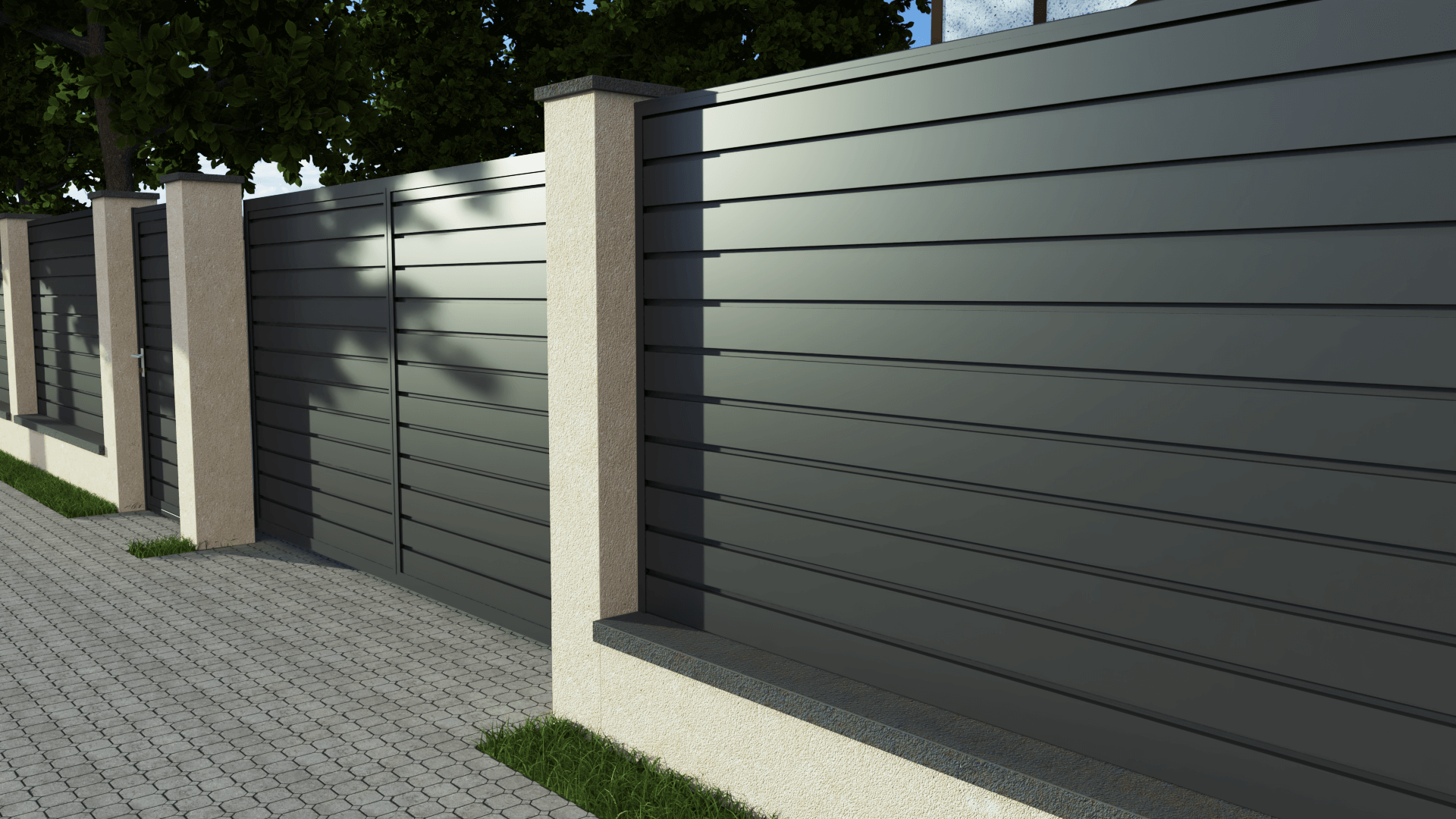
Areas with strong winds dictate their own rules for landscaping open spaces. This is evident even on private residential plots: you cannot put up a light, decorative fence around them – it will be blown over by the wind. What is needed here is robust, durable construction and there are plenty of them on the Ukrainian market. But first – let’s talk about mistakes.
Wrong decisions by buyers
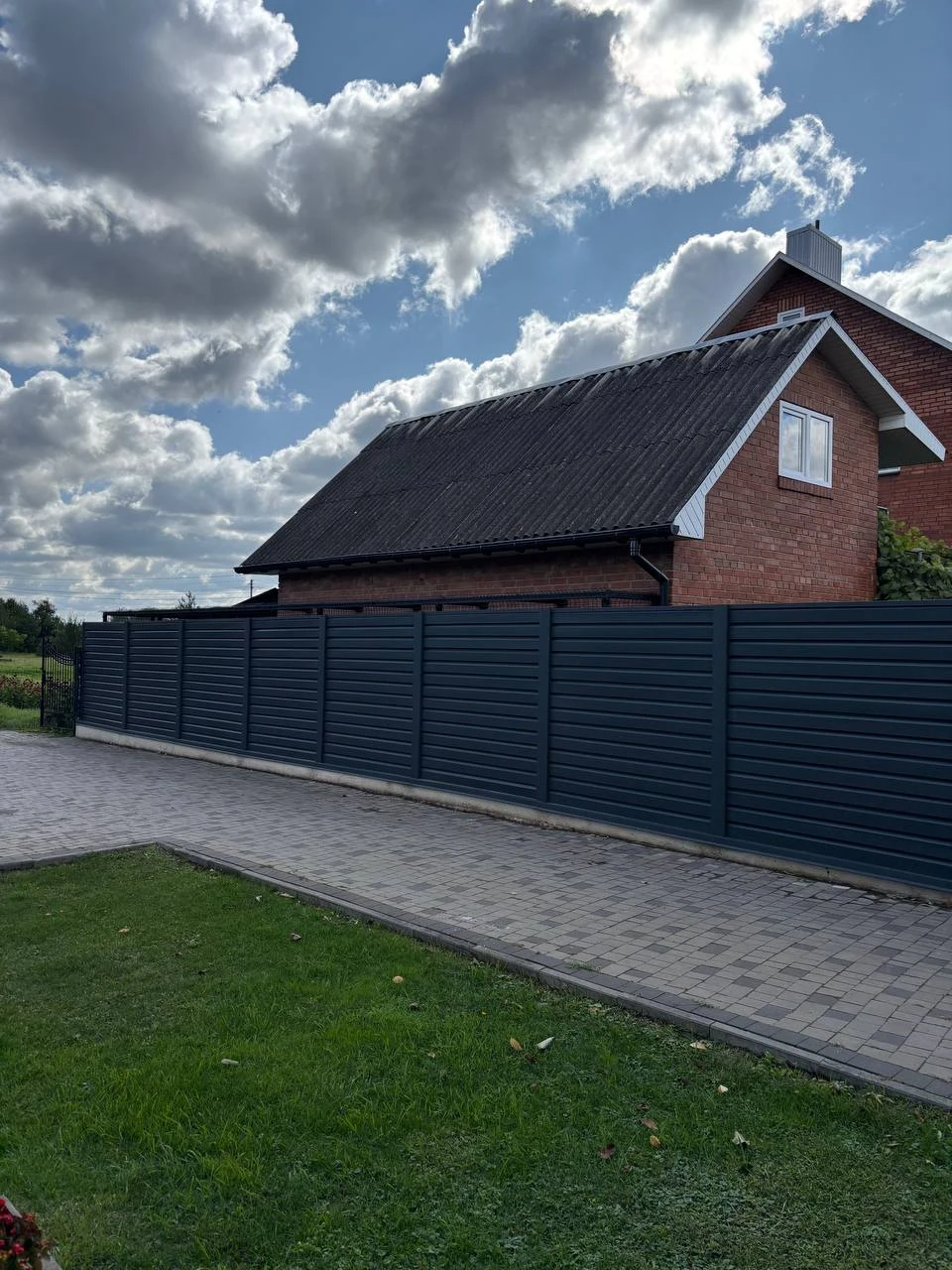
The main mistake when choosing a fence for a windy area is to install a tall, solid fence. For example, one made of corrugated sheet metal. When a solid barrier stands in the path of strong winds, an area of intense pressure drop and turbulence forms on the leeward side. In other words, the wind does not simply push against the panels at the front; it creates a suction effect at the back, shaking the foundations and bending the frame.
The basic rule for windy areas is that the less air resistance a structure creates, the longer it will last.
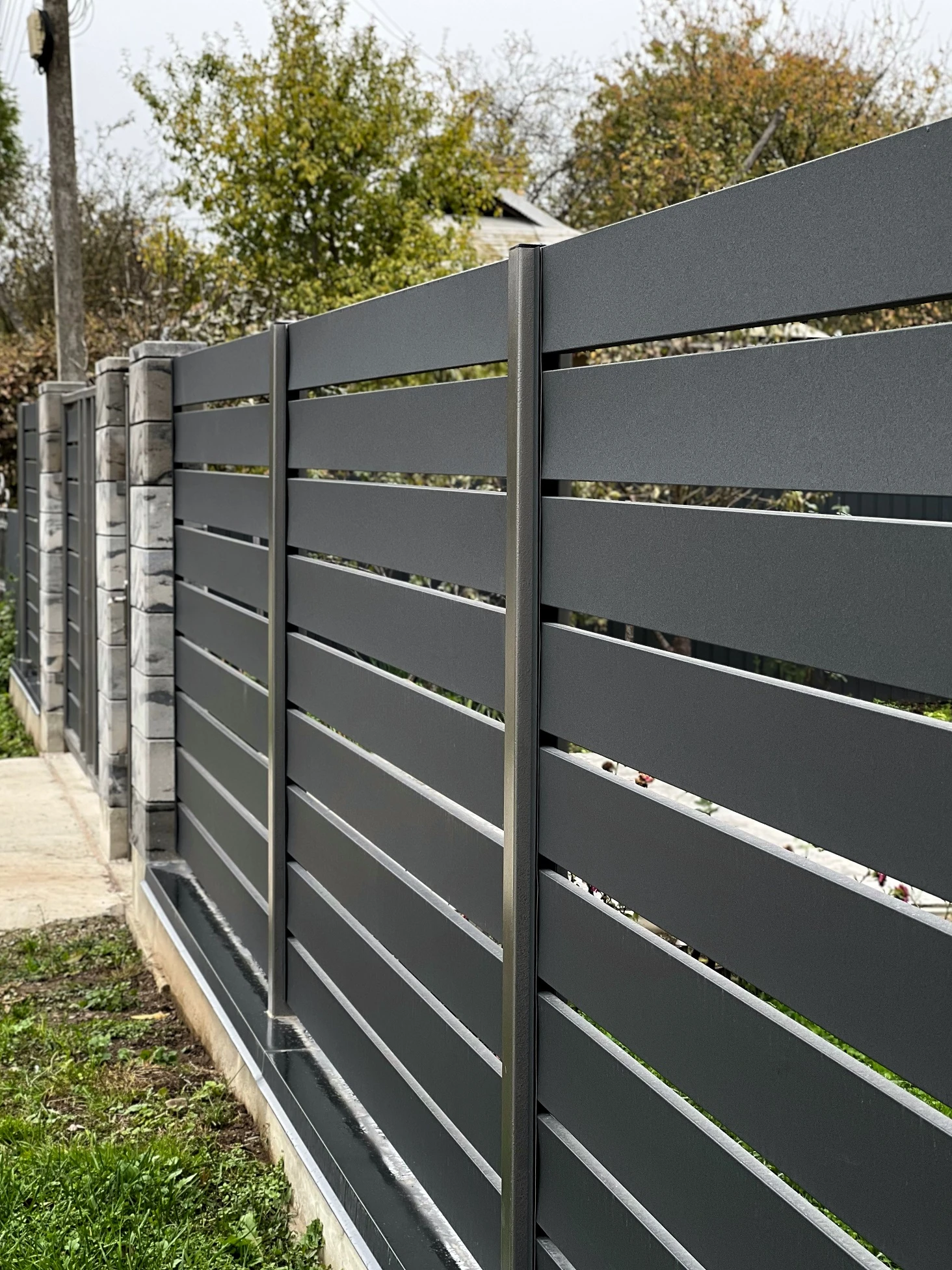
Three types of fencing designed to withstand gale-force winds
One of the fences best suited to strong air currents is Ranch. Its name brings to mind the fences found on farmland in the US, which is hardly surprising, given that this design originated there. However, whilst farmers used timber for their fences, modern fences for residential properties use metal slats with a high-quality decorative and protective coating. The metal slats in this type of fence alternate with gaps, which allow air to pass through very easily. Consequently, they significantly reduce the wind pressure on the structure.
The second option is – Fence Blinds, a design for the premium segment. The slats are made up of contoured metal strips. These are positioned at an angle to allow air to flow through freely whilst maintaining a clear view of the street from the courtyard; from the road, however, the area appears completely enclosed. The metal slats of the blinds feature stiffening ribs, which improve their resistance to bending; this means the structure will not deform under the pressure of strong winds.
The third option is – metal picket fence (Euro picket fence). A classic design familiar to everyone, which, thanks to the alternation of metal slats and the open spaces between them, does not resist the wind but allows it to pass freely through the screen.
All three designs feature sturdy metal combined with large openings that do not block the wind, but instead disperse it and allow it to pass through. As a result, the fence does not collapse, but stands securely in place for years.
Three rules for installing a fence on a windy plot
Installation errors can result in even a fence that is perfectly suited to adverse weather conditions collapsing over time (or even straight away). It is therefore very important in windy regions to adhere to three technical requirements:
- Deep anchoring and concreting
The depth of the boreholes for the support posts must be below the frost line (at least 1.2 m). In areas prone to strong winds, installation specialists recommend using a strip-and-column foundation, which will bind all the posts into a single monolith and enhance the stability of the fence.
- Increased metal thickness
Use profiled tubes for posts with a wall thickness of at least 2–3 mm (for example, 60×60×3 mm or 80×80×3 mm) and reduce the spacing between posts from the standard 3 metres to 2–2.5 metres.
- High-quality fastening
Instead of standard self-tapping screws, it is better to use roofing self-tapping screws with a larger washer or pull-through rivets, which will not come loose due to constant vibration.
So, when choosing a fence for a plot subject to strong wind loads, the focus should be on airflow, the strength of the material and a well-embedded foundation. Follow these guidelines and you’ll have a sturdy fence. Better still, consult experienced specialists, and they’ll select a reliable fence specifically for your garden.