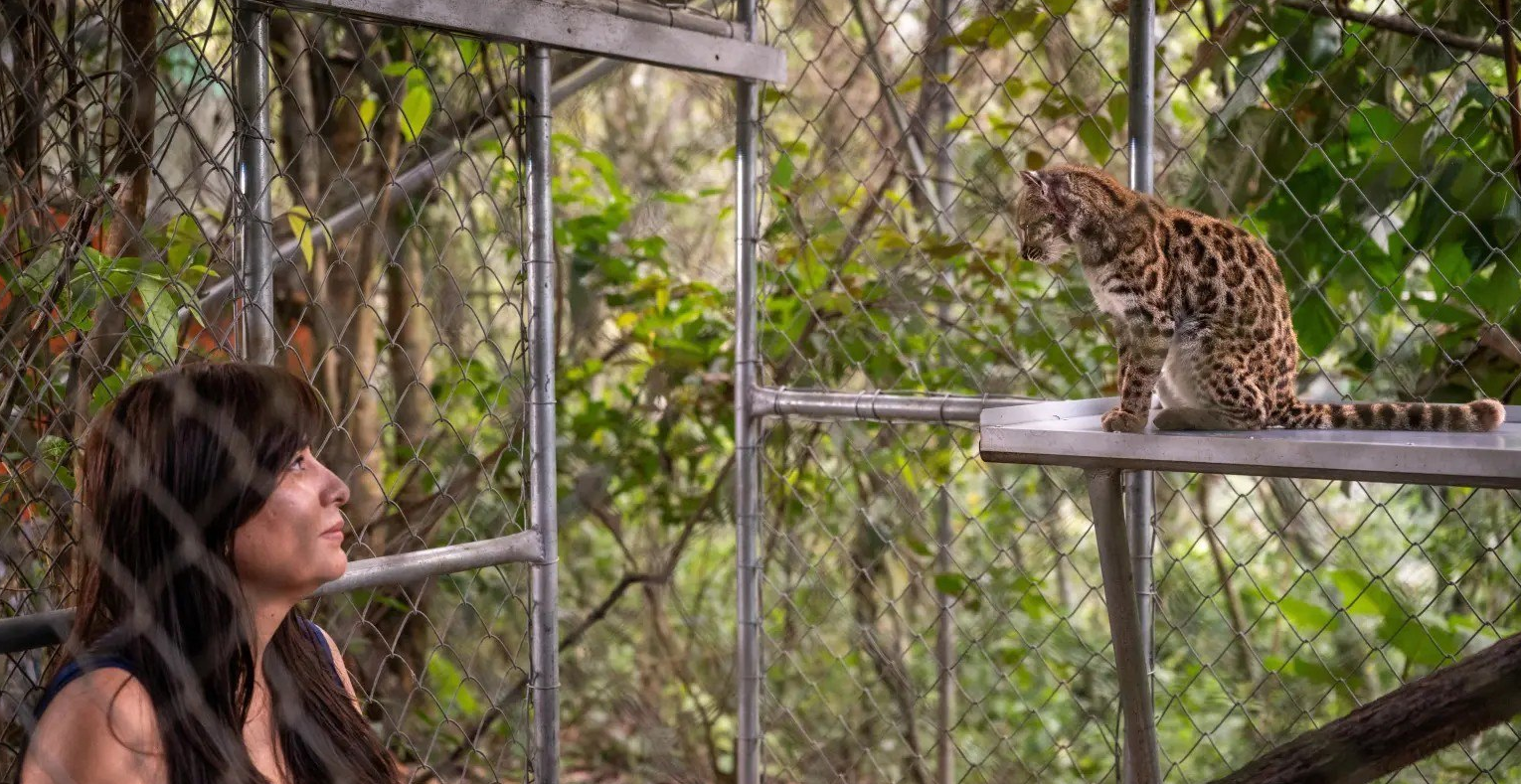
In Bolivia, scientists have officially described a new species of wild cat, *Leopardus tilcayo*, which inhabits the cloud forests of the Yungas. Genetic analysis of 38 specimens of the genus *Leopardus* has confirmed that this is a distinct evolutionary lineage. The animal weighs around 1.4 kilograms and is smaller than the average domestic cat; its population size and conservation status have yet to be assessed.
Briefly about the main points
- The kitten was found by the roadside in 2016 and was initially thought to be a domestic cat.
- Geneticists have established that the Bolivian population constitutes a distinct evolutionary lineage.
- The species diverged from other tiger cats around 1.4 million years ago.
- The researchers studied just two live animals and several camera trap images.
- The results were submitted to the IUCN for a future separate assessment of the species.
The kitten lived with the family for about a year
The story began in 2016, when a local resident found a tiny kitten by the roadside near the woods. He mistook it for a domestic cat and took it home.
After about a year, it became clear that the animal was a wild predator. It was taken to the Senda Verde Wildlife Sanctuary, where a biologist saw the cat Paola Nogales-Ascarruens.
The researcher was intrigued by the animal’s unusually small size, short rounded ears and dark patches on its fur. At first, scientists assumed that it belonged to one of the known South American tiger cats, but its appearance did not entirely match the scientific descriptions of these species.
DNA and museum specimens have revealed an ancient, distinct lineage
An international team of researchers compared the DNA of 38 cats of the genus Leopardus from various countries in South America, drawing in particular on museum specimens. In an article published in the journal *Current Biology*, the authors also reviewed the systematics of the tiger cat complex and concluded that it comprises five distinct species.
The analysis has shown that the Bolivian population has a distinct evolutionary history. According to scientists’ estimates, this lineage split off from other big cats around 1.4 million years ago. The scientific name was derived from the local name for the animal — tilcayo.
Little is known about the animal’s behaviour
This cat’s body length is approximately 46 centimetres. Its light-brown coat is covered in dark spots and rosettes, giving the animal the appearance of a miniature leopard.
Scientists have studied only two living specimens of the species and have a small number of camera trap records. Preliminary observations suggest that the cats are predominantly nocturnal and may hunt small rodents, but these characteristics require further verification.
The species has yet to undergo an environmental impact assessment
The researchers emphasise that they have not elevated a previously known subspecies to species rank: until now, no one had even proposed separating this taxon. This is precisely why it is considered the first formally described modern species of the cat family in over a century. As part of the same study, the Peruvian subspecies Leopardus tigrinus antisuyo was also identified.
The cat’s habitat is under pressure due to deforestation, agricultural expansion and mineral extraction. Due to the small number of sightings, scientists do not know the population size. The findings have already been submitted to the International Union for Conservation of Nature for a future separate assessment of the species’ conservation status.