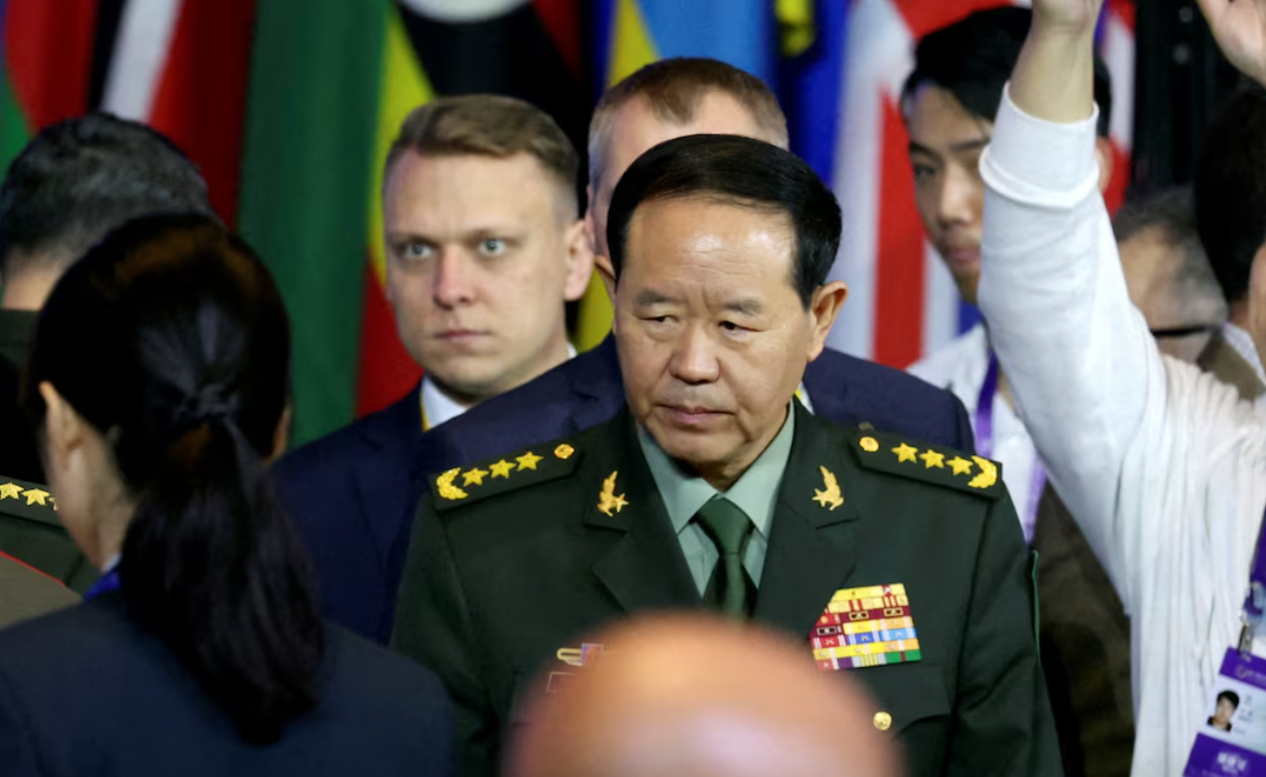
Analysts and diplomats believe that the purge within the senior leadership of the People’s Liberation Army of China could complicate the conduct of complex military operations, particularly in a scenario involving Taiwan. At the same time, the removal of two senior commanders strengthens Chinese President Xi Jinping’s control over the army, which is a key pillar of the Communist Party’s power.
Briefly about the main points
- The Politburo has expelled Zhang Yuxi and Liu Zhenli from the Party and the military.
- Five out of seven seats on the Central Military Council’s steering committee are vacant.
- Routine defence activities, training and weapons testing are continuing in the PRC.
- Analysts see risks to complex operations, in particular a potential scenario involving Taiwan.
- The leadership of the Military Council may not be renewed until the party congress in 2027.
A leadership vacuum at the top
This week, the Politburo expelled them from the Communist Party and the military Zhang Yuxia і Liu Zhenli. The investigation into them was first announced in January, but no formal sanctions have been reported as yet.
Zhang, the son of a close friend of my father’s Si, was long regarded as the Chinese leader’s closest military ally. He served as his deputy on the Central Military Commission — the country’s highest military governing body.
Second-tier officers have already taken up a number of key posts in the Central Military Council, the theatre of operations commands and individual branches of the armed forces. However, five of the seven seats on its steering committee remain unfilled.
The fight against corruption is increasingly taking on a political dimension
According to a Singaporean security researcher James Chara, the removal of Zhang’s protégé and the army’s former chief political officer Miao Hua This gave the CCP even greater influence over military affairs. Control over the PLA, he noted, meant control over the party-state system.
Since coming to power in 2012, Xi has been waging a large-scale campaign against corruption and indiscipline. Initially, it focused, in particular, on procurement within the PLA’s Rocket Force, which operates China’s conventional and nuclear missiles. Subsequently, the campaign took on a more pronounced political character.
The PLA’s official newspaper accused Zhang and Liu of contributing to political and corruption-related problems which, in its words, undermine the Party’s absolute leadership over the armed forces. Tian Shichen, president of the Chinese think tank Global Governance Institution, stated that rooting out corruption strengthens the political foundation, cohesion and combat effectiveness of the armed forces.
Routine operations are continuing, but complex scenarios are raising doubts
China is maintaining its current level of defence activity, conducting weapons tests and increasingly complex military exercises. This is taking place against a backdrop of increased deployments near Taiwan, as well as in the disputed areas of the South China Sea and the East China Sea.
At the same time, analysts warn that personnel upheavals on this scale could create problems for complex operations. Ruby Osman A researcher from the Tony Blair Institute in London believes that the PLA’s routine activities have been insulated from the turbulence, but a full-scale scenario involving Taiwan could face such challenges.
Zhang was the most senior Chinese officer with actual combat experience: he gained it during the brief and bloody border war with Vietnam in 1979 — the last time China was engaged in combat operations. According to Osman, Xi is prepared to accept short-term setbacks as the price to pay for long-term discipline and combat readiness.
Uncertainty over appointments complicates external military contacts
James Char does not expect the leadership of the Central Military Commission to be finalised until the Communist Party’s full congress at the end of 2027. At that congress, Xi is widely expected to secure a fourth five-year term. A prolonged leadership vacuum could hamper contacts between Chinese and foreign military officials, which diplomats consider necessary against the backdrop of regional tensions.
Minister of Defence Dong Jun He retains his post, but is not a member of either the Politburo or the Central Military Commission, and therefore wields less influence than many of his foreign counterparts. In 2024, Zhang met in Beijing with the then US National Security Adviser Jake Sullivan; it is not yet clear who will take on this role.
Head Indo-Pacific Programme The US Marshall Fund of Germany Bonnie Glazer suggests that, during the transitional period, the Central Military Commission may take some decisions independently. At the same time, according to her, the Central Military Commission is capable of carrying out orders via the Joint Staff, the theatre commands, the branches of the armed forces and the Party apparatus.