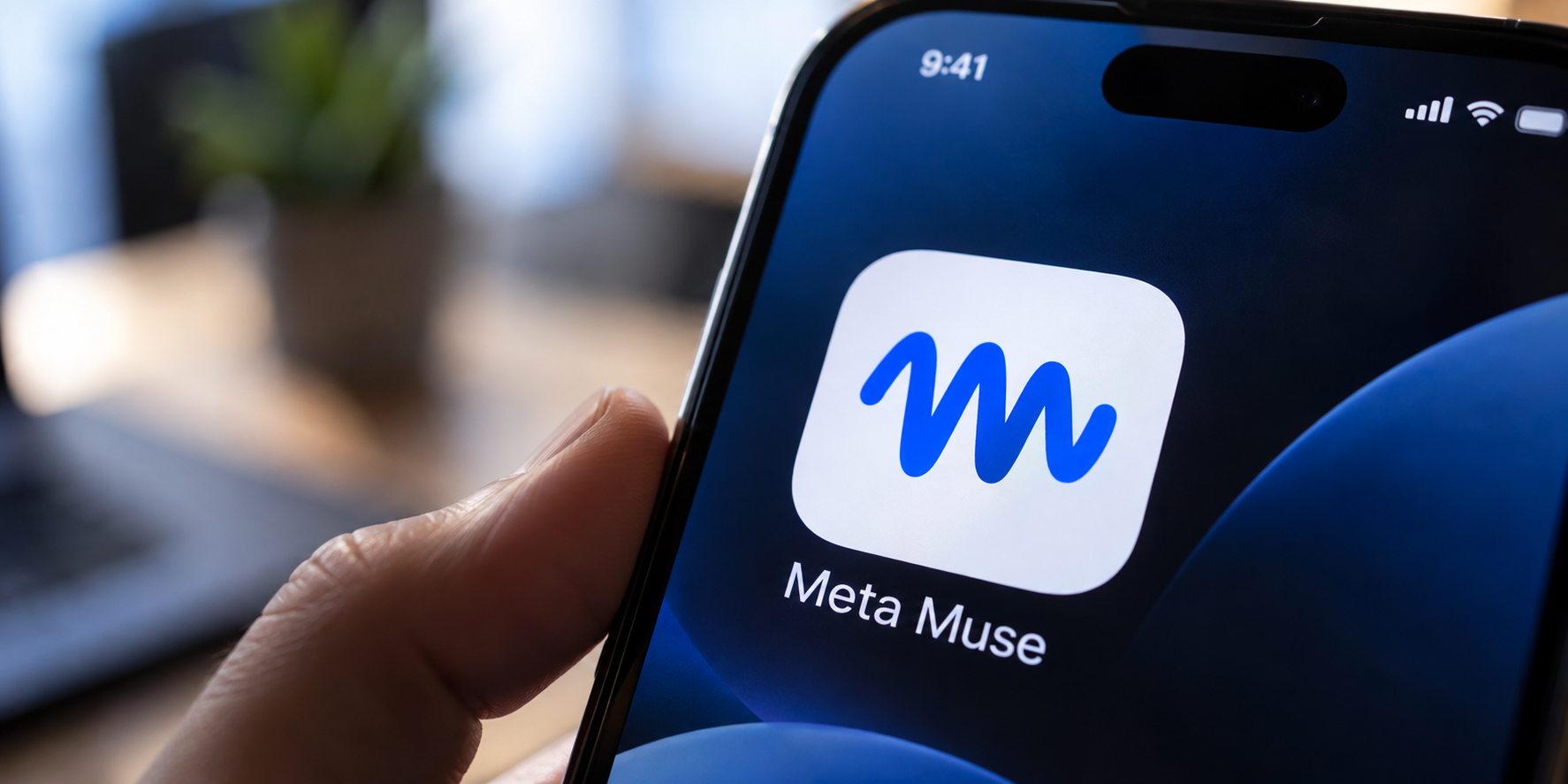
Meta has temporarily suspended the «human concierge» feature in its new personal AI assistant, Muse, which allowed contractors to handle some phone calls on behalf of users. The decision was taken following internal concerns that sensitive information could inadvertently be passed on to call centre operators, Reuters reports, citing internal company posts.
Briefly about the main points
- Meta has halted the trial of Muse calls, which could have been made by contractors.
- Staff had warned of the risk of sensitive data being passed on to operators.
- The company acknowledged that launching the project without proper disclosure of information had been a mistake.
- Human operators improved call success rates in internal tests.
- Muse has been downloaded more than 2.5 million times since its launch.
The telephone function gradually extended beyond the scope of the internal test
Muse It can call American companies and conduct conversations to carry out the user’s instructions. These tasks include booking an appointment at a hairdresser’s, checking stock availability in a shop, or obtaining quotes from various service providers.
Meta staff began testing the feature in August. Following the app’s launch, the company gradually rolled it out to a selection of users, and last week the ‘human concierge’ mode became available to half of Meta’s staff. Those who did not wish to take part were able to opt out.
An internal complaint documented a racist remark made during a conversation
Apart from comments regarding confidentiality, one of the staff members reported an incident that occurred whilst contacting an internet and cable provider to sort out a bill. According to him, the transcript of the conversation contained a racist remark made by a human contractor.
The vice-president of Meta’s Superintelligence Labs division apologised to the employee and stated that this agent would no longer be working on any Meta projects. She also described the decision to begin testing calls via contractors without proper disclosure as a mistake.
People were expected to improve performance in areas where AI was rejected
According to the vice-president, internal audits showed that recruiting staff could have increased the success rate of calls to 95–98%, whereas in the case of independent AI calls The figure was lower. Some users found that the people they were speaking to would hang up as soon as they realised it was an AI making the call.
Meta spokesperson Daniel Roberts He stated that the test was intended to gather feedback on how to enhance security and privacy ahead of the public launch. According to him, the company is working with retailers to improve the potential call feature.
The operators’ plan contradicted Muse’s stated data protection model
During start-up Meta She emphasised that each Muse agent would operate within its own isolated virtual machine — a separate cloud-based computer designed to isolate sessions. The company promised to store sensitive data, including passwords, in a separate, secure repository.
Employees who criticised the human concierge service cited these very statements. In their view, routing some calls to human operators could undermine one of the product’s key safety promises.
Muse quickly built up an audience, whilst Meta already had similar experience
According to the analytics firm Sensor Tower, following its release, Muse received over 2.5 million downloads and topped the US app download charts for two weeks. Since the launch of the bot, Meta’s share price has risen by more than 20%, adding over $200 billion to the company’s market capitalisation, although it fell by 0.6% on Tuesday.
This is not the first time Meta has relied on human labour for an AI service. Around ten years ago, Facebook tested the ‘M’ assistant in Messenger; media reports at the time estimated that humans carried out approximately 70% of its tasks. Meta has stated that it will potentially resume the launch of the Muse phone feature only after further refinements have been made and users have been duly notified.