The Economist has called on regulators to impose strict restrictions in advance on research that could lead to the creation of a self-replicating «mirror life». Such organisms do not currently exist, but scientists admit that their unusual molecular structure could undermine the effectiveness of some immune and natural control mechanisms. The WHO and UN bodies are already discussing precautionary international regulations.
Briefly about the main points
- Science has not yet created self-replicating mirror organisms.
- The WHO estimates that the necessary opportunities will not arise for at least a decade.
- The risks are linked to potentially weaker immune and environmental controls.
- The UN has classified certain molecules as low-risk, whilst self-replicating life forms have been described as potentially catastrophic.
- Experts support the safe study of molecules, but not the creation of organisms.
How a «mirror» form of life might work
Key molecules in living organisms exhibit chirality — a property that is often likened, in simple terms, to the right and left hands. They are mirror images of one another, but do not align perfectly. Natural life on Earth predominantly utilises one configuration of such molecules.
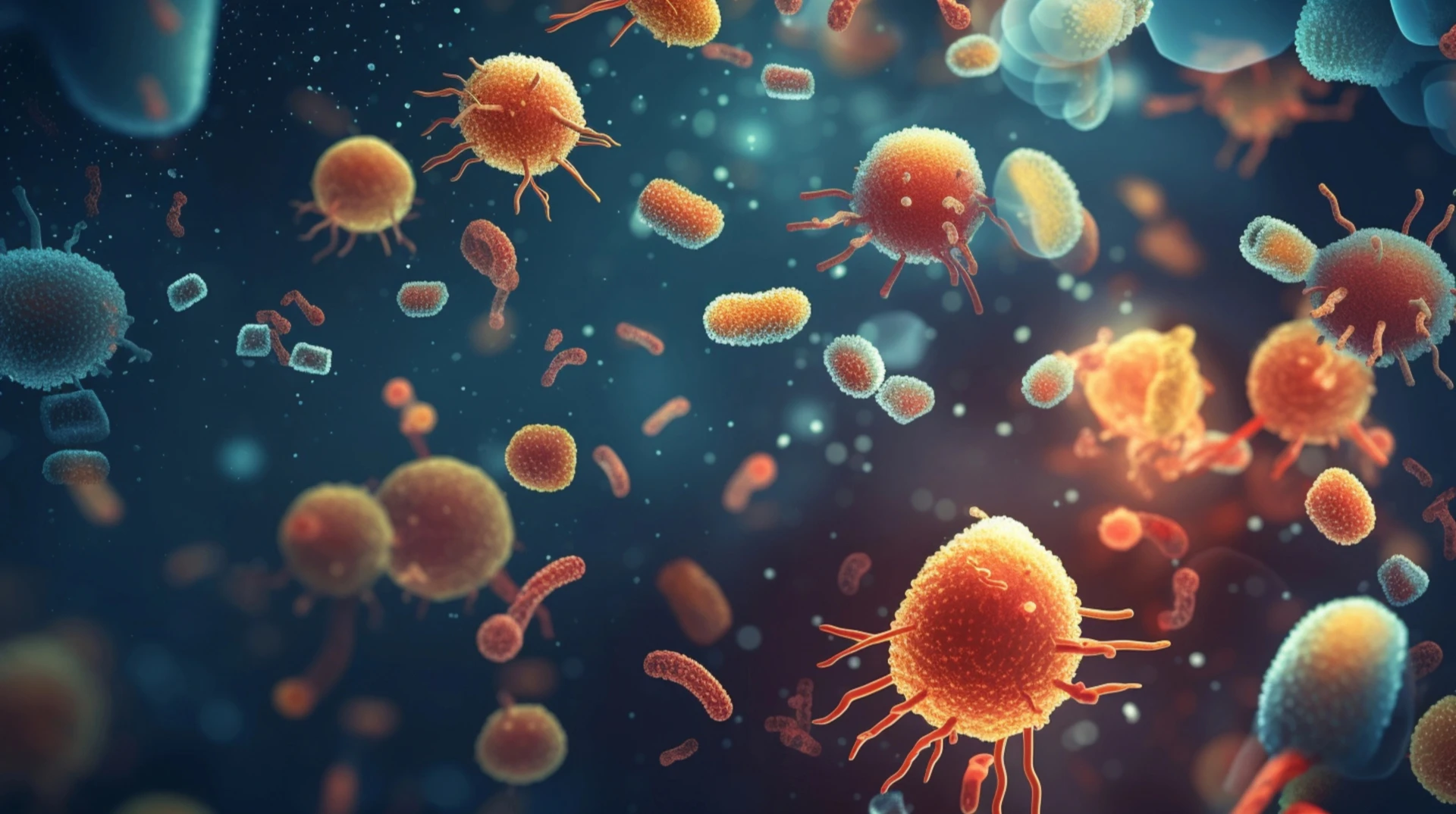
A hypothetical mirror organism would consist of mirror-image versions of proteins, nucleic acids and other components. Individual mirror-image molecules can already be synthesised, particularly for potential medical applications, but a fully-fledged mirror-image cell capable of living and reproducing independently does not yet exist.
WHO In 2026, she noted that the necessary technological capabilities would probably not emerge for at least a decade. The authors of the relevant analysis estimated that it would take 10–30 years to create mirror bacteria.
The immune response may react differently to such bacteria
In 2024, a group of 38 researchers specialising in synthetic biology, immunology, ecology and biosafety published an analysis of the potential risks in the journal *Science*. Some of the authors had previously explored the prospect of creating such organisms themselves.
Their concern stems from the unusual chemical structure of the potential bacterium. A British government scientific review notes that its surface antigens may be recognised by immune cell receptors differently from ordinary biological molecules.
This does not mean that the mirror bacterium will necessarily be invulnerable or deadly. The risk has a theoretical basis, but it is impossible to verify it fully experimentally without such bacteria themselves.
Natural control mechanisms may prove to be less effective
Ordinary bacteria are constantly exposed to bacteriophages, other microorganisms, enzymes and the cells of living organisms. Opposite chirality could, in theory, render some of these mechanisms significantly less effective against the mirror image of a living organism.
Experts suggest that a self-replicating mirror bacterium, once released into the environment either accidentally or deliberately, could spread without the usual biological constraints. The Secretary-General’s Scientific Advisory Board UN In March 2026, it assessed the risk posed by certain mirror molecules as low, but warned that self-replicating mirror life could, in some scenarios, pose a catastrophic threat.
It is proposed that the restrictions be directed towards the creation of organisms rather than molecules
Scientists distinguish between work aimed at creating an entire self-replicating organism and research into individual mirror-image components. The latter may be useful for the development of medicines, as their structure means they are broken down more slowly by the body’s enzymes.
Potential applications for such molecules are also being explored in materials science, agriculture and biotechnology. Participants at an international conference held at the Pasteur Institute in Paris in 2025 recommended against conducting research specifically aimed at creating mirror organisms, whilst permitting safe research that does not lead to self-replicating life.
The WHO, the UN and the UK are already discussing precautionary approaches
In February 2026, the WHO reported that, together with other international organisations, it was monitoring technological developments and discussing ways to mitigate the risks. The UN Secretary-General’s Scientific Advisory Board recommended establishing a coordination platform, defining clear «red lines» and safety rules before the real possibility of creating a mirror organism arises.
In September 2026, the UK Government confirmed that it was continuing to assess the risks posed by new synthetic biology technologies. UK Research and Innovation stated that it had not funded any research directly aimed at creating mirror life.