The US Army demonstrated a new system for the mass launch of drones from a ground-based robotic platform during military exercises in Germany. At the Grafenwöhr training ground, US military personnel launched a swarm of 18 drones, which, once airborne, carried out an autonomous attack on a designated target. The tests took place on 12 November 2026 as part of a programme to develop unmanned systems for future combat operations. This was reported by the US Army Command and the military publication Stars and Stripes.
- The US Army has tested the R3NEGADE ground-based robotic platform, equipped with an HIV3 launcher.
- During the demonstration, the military launched a swarm of 18 drones.
- The drones carried out an autonomous attack on a specified target.
- They also tested a robotic platform equipped with a Javelin anti-tank missile.
The R3NEGADE ground robot launched 18 drones
The exercise was organised by the US Army’s Combat Capabilities Development Command (DEVCOM) Armaments Centre, in conjunction with US forces in Europe and Africa and the 7th Training Command.
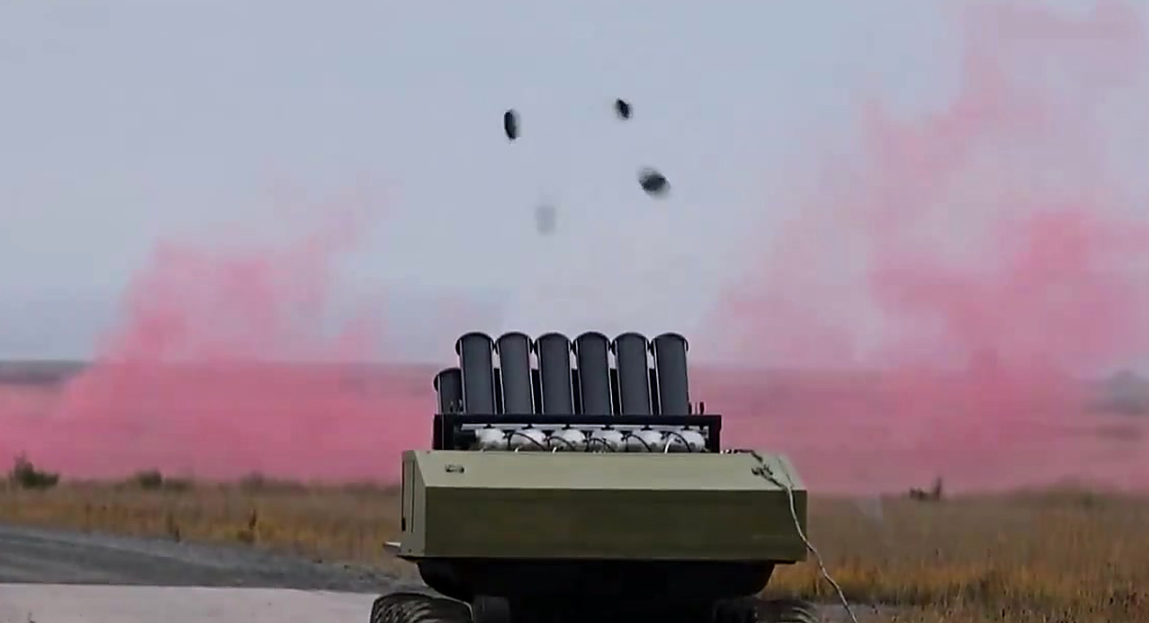
The main feature of the demonstration was an unmanned ground vehicle R3NEGADE, is equipped with a specialised HIV3 launch system. It enables a group of drones to be transported and launched without military personnel being physically present at the launch position.
According to Stars and Stripes, the robotic platform emerged from a pre-positioned shipping container and deployed 18 drones. Following their launch, the drones carried out a coordinated autonomous strike on a training target.
The footage released shows several drones taking off simultaneously from launch modules mounted on a ground platform.
The US military has also tested a robot equipped with a Javelin
The demonstration was not limited to the launch of a swarm of drones. During the exercises, a TRV-150 drone dropped smoke grenades in the vicinity of the simulated target, after which a group of drones launched an attack.
Servicemen from the US 173rd Airborne Brigade separately demonstrated the destruction of a target using FPV drone.
Another R3NEGADE platform was fitted with a remotely controlled weapon system equipped with a Javelin anti-tank missile. This configuration demonstrated the potential for ground robots to be used not only as drone carriers, but also for transporting and deploying other weapons.
In addition, American developers unveiled the TRV-400 unmanned aerial vehicle, featuring the promising FIR3FLY anti-tank system. It was displayed in a static exhibition as part of a concept for the containerised deployment of unmanned systems.
The US is developing autonomous systems for combat operations
One of the areas of testing was the R3ACT programme, which involves the deployment of robotic platforms and drones in modular shipping containers.
This solution makes it possible to deploy equipment to designated positions in advance and activate it remotely to carry out tasks. The US military regards this technology as a means of increasing the range of strikes and reducing the risks to personnel.
Particular attention is paid to production costs. The US Army aims to combine commercially available components with existing military technologies in order to create more affordable strike systems for widespread use.
The exercises in Germany were also conducted as part of the Eastern Flank Deterrence Initiative, which aims to strengthen deterrence and defence capabilities on NATO’s eastern flank.
The US command has not yet announced a timetable for the mass production of the HIV3 system or its introduction into service with combat units.