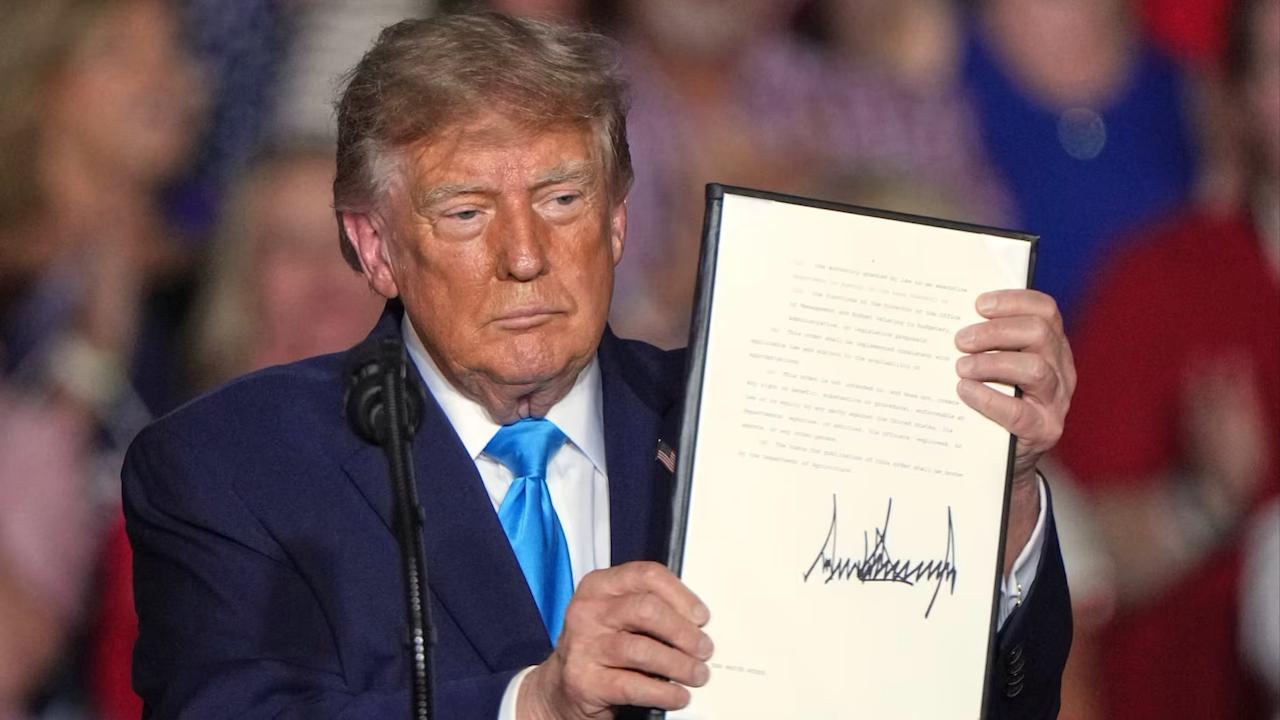
On 5 October, US President Donald Trump signed an executive order temporarily relaxing the regulations on the use of red-dyed diesel fuel in road vehicles. The document sets out a procedure for the possible deferral of the federal excise duty until 31 December 2026, rather than its permanent abolition.
Briefly about the main points
- Trump’s executive order concerns dyed diesel for road use.
- The US Treasury must determine the legal grounds for deferring the excise duty.
- The period during which potential relaxations may apply runs from 5 October to 31 December 2026.
- Trump said that the decision could bring down the prices of goods and food.
What changes does the decree provide for?
Decree «Emergency Tax Relief on Diesel Fuel» instructs the US Department of the Treasury to determine, within five days, whether the law permits the deferral of tax payments for the use of dyed diesel on public roads. If legal grounds for this are found, the deferral will apply to the period from 5 October to 31 December 2026 and is to be granted without the accrual of interest or penalties.
The document also stipulates that the US Internal Revenue Service must announce that no penalties will be imposed for the sale or use of such fuel on the roads during a specified period. The Ministry of Finance is to consider separately the possibility of writing off deferred amounts, in particular through legislative mechanisms.
What is red-dyed diesel?
Coloured diesel is a fuel marked with a red dye for tax and monitoring purposes. When used for non-road applications, such as in agricultural and construction machinery or for heating, it is usually exempt from the standard federal excise duty.
Previously, using this type of diesel on the roads could have resulted in tax liabilities and fines. The novelty of the decree therefore lies primarily in the temporary relaxation of the rules for road transport, rather than the introduction of a new type of fuel for farmers, who were already able to purchase it for off-road use.
- The White House estimates the federal excise duty on diesel at 24.4 cents per gallon.
- According to the administration’s estimates, the potential saving on 250 gallons could be around 60 dollars.
- The actual amount of the benefit will also depend on the tax policies of individual states.
Stated objective and market context
During the event in Nebraska Trump stated that the decision should help to reduce the cost of all goods, including food. This is the administration’s stated aim, rather than a measurable consequence of the decree.
Diesel prices are rising against a backdrop of the war in Iran, tight global supply and tensions in the petroleum products market. According to an assessment by a GasBuddy analyst, as reported by the Associated Press, the easing of restrictions may reduce costs for motorists, but does not resolve the issues with diesel supply. Therefore, the impact of the decision on consumer prices will still depend on its implementation and the future situation in the fuel market.