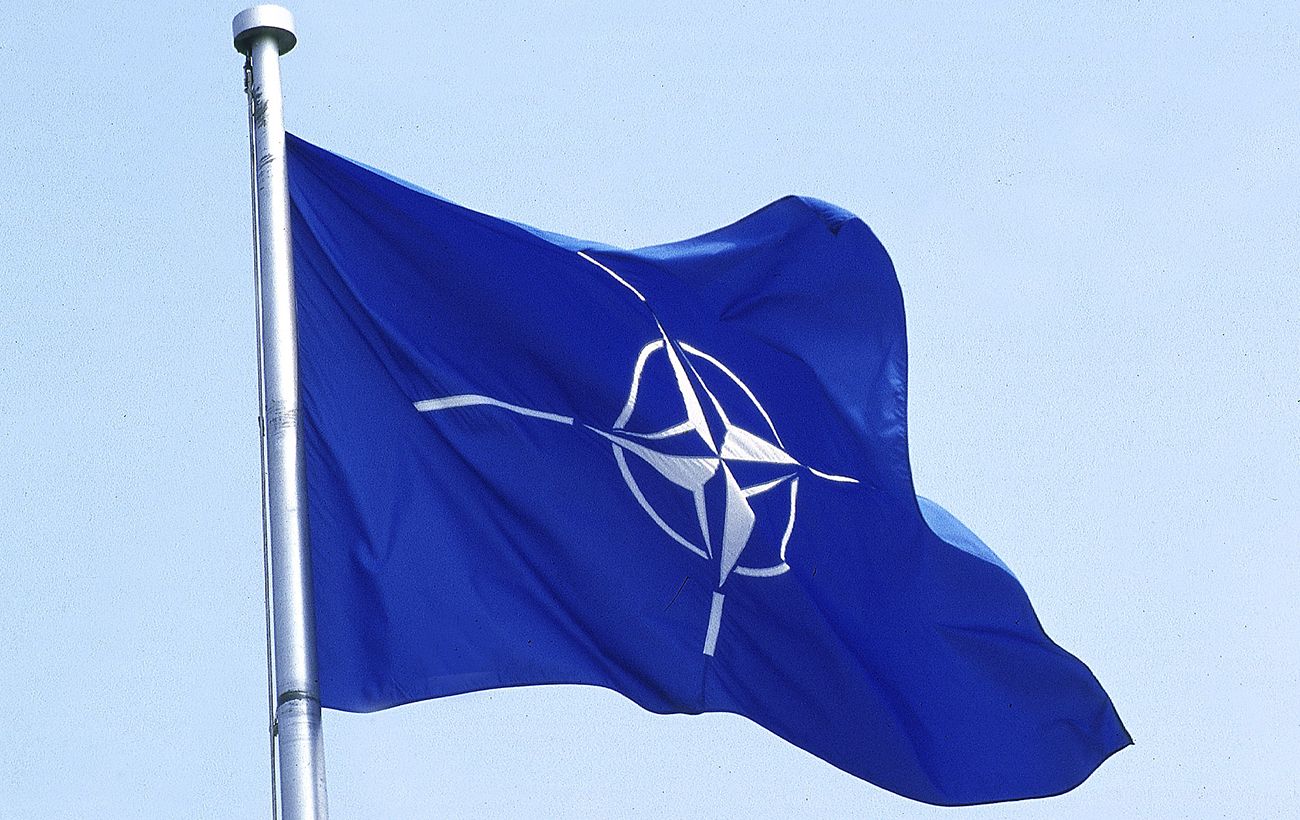
Article 5 of the North Atlantic Treaty forms the basis of NATO’s collective defence system. It stipulates that an armed attack against one member of the Alliance is regarded as an attack against them all. However, this does not imply an automatic declaration of war or a uniform military response from every country: each ally determines for itself what action it deems necessary to assist the state under attack.
- Article 5 enshrines the principle that an attack on one NATO member is considered an attack on all.
- It does not imply automatic war or the mandatory deployment of troops by all allies.
- Ukraine is not a member of NATO, so the guarantee under Article 5 does not currently apply to it.
What exactly does Article 5 say?
The North Atlantic Treaty was signed in Washington on 4 April 1949. Its central feature was a system of collective defence.
The bottom line. Article 5 It is simple: if one or more allies come under armed attack, the other NATO member states regard this as an attack on the entire Alliance. Following this, every country must come to the aid of the ally under attack. However, the text of the treaty contains a crucial provision: each state shall take such actions as she deems necessary, including — though not necessarily — the use of armed force. It is precisely this detail that is often overlooked in brief reports on NATO.
Article 5 does not mean that, following any incident, all 32 countries automatically declare war on the aggressor.
Does Article 5 mean that all countries automatically enter the war?
No. Each ally determines the form of assistance itself. This may include the deployment of armed forces, the strengthening of air defence, intelligence, naval or air operations, logistical support, cyber defence or other measures. In other words, there is a legal obligation to provide assistance, but the format of that assistance is not prescribed as being the same for everyone.
That is precisely why the phrase «An attack on one is an attack on all» accurately describes NATO’s political principle, but does not imply the automatic triggering of a single, pre-determined military scenario.
How Article 5 is implemented
There is no «button» or automatic procedure in the North Atlantic Treaty that instantly ‘triggers’ Article 5.
If one of the NATO member states is subjected to an armed attack, the following measures will be taken North Atlantic Council — the Alliance’s principal political body. The Allies assess the circumstances of the attack and decide whether a particular situation falls within the scope of the collective defence mechanism.
NATO’s official clarification sets out two key conditions: an ally must be the victim of an armed attack, and the state under attack must request or agree to collective action under Article 5.
NATO decisions are taken by consensus — that is, not by a majority vote, but by agreement amongst the member states.
Article 4 and Article 5 of the NATO Treaty — what is the difference?
Article 4 This relates to consultations. Any NATO country may ask its allies to convene if it considers that its territorial integrity, political independence or security is under threat.
There is no need to wait for an actual attack to happen.
Article 5 — this is a collective defence mechanism following an armed attack.
In other words, to put it simply:
- Article 4 — «We are under threat; we need to discuss the situation»;
- Article 5 — «An ally has been attacked; assistance must be provided».
However, the application of Article 4 is not a prerequisite for Article 5.
How many times has NATO invoked Article 5?
Just once.
This happened following the terrorist attacks 11 September 2001 in the USA, when Al-Qaeda militants hijacked passenger aircraft and attacked World Trade Centre and the Pentagon.
On 12 September, NATO declared for the first time in its history that an attack on the United States could be regarded as an attack on the entire Alliance. Once it had been established that the attack had been organised from abroad, the collective defence mechanism was invoked.
NATO subsequently carried out operations to patrol US airspace and conduct maritime surveillance in the Mediterranean Sea.
Does Article 5 apply to Ukraine?
Not at the moment. Ukraine is a partner NATO, but not a member state of the Alliance. Therefore, the collective defence guarantee enshrined in Article 5 does not apply to Ukraine.
This does not prevent individual NATO countries from providing Ukraine with military, financial, intelligence and other forms of assistance. However, legally speaking, such support differs from the collective defence obligation that member states owe to one another as members of NATO.
The Allies continue to state that Ukraine’s future lies with NATO, but accession is only possible following the consent of the Alliance’s member states and the fulfilment of the necessary conditions.
Could a cyberattack trigger Article 5?
Yes — but not automatically.
NATO officially recognises that a large-scale cyberattack can, in terms of its consequences, be equated with an armed attack.
For example, if a cyberattack were to result in widespread destruction of critical infrastructure, loss of life or the paralysis of government systems, the allies might consider invoking Article 5.
Decisions will be taken on a case-by-case basis. NATO deliberately does not publish the exact threshold beyond which a cyberattack automatically triggers collective defence.
And the response need not necessarily be cyber-based. The Alliance may employ political, economic or military instruments.
An attack on a satellite could also constitute grounds
NATO has recognised outer space as a distinct domain of operations. The Alliance acknowledges that an attack on a member state’s satellites or other space systems could have such serious consequences that it would constitute grounds for invoking Article 5.
But even here, there is no automatic process — each incident is assessed on a case-by-case basis.
In modern warfare, this is particularly important, as satellites provide navigation, communications, reconnaissance, banking services and support for many civilian systems.
Could a hybrid attack trigger Article 5?
In theory, yes. NATO’s current understanding of an armed attack is no longer limited to tanks, missiles or aircraft. Large-scale sabotage, cyber-attacks, attacks on critical infrastructure or a combination of various hybrid actions may, under certain circumstances, reach a level that the allies recognise as an armed attack. However, NATO does not lay down a public formula along the lines of «Article 5 is automatically triggered after three acts of sabotage».
This uncertainty is part of the deterrence system: a potential adversary must not know exactly where the line is beyond which the entire Alliance will respond.
Is Article 5 in force anywhere in the world?
Not exactly. The geographical boundaries of collective defence are determined by Article 6 of the North Atlantic Treaty. It covers, first and foremost, the territories of the allies in Europe and North America, the territory of Turkey, as well as certain islands in the North Atlantic north of the Tropic of Cancer.
The treaty also covers NATO forces, ships and aircraft in specified regions, including the Mediterranean Sea and the North Atlantic north of the Tropic of Cancer.
Therefore, an attack on a NATO military facility far beyond this zone would not necessarily automatically fall under Article 5.
Does Article 5 imply the use of nuclear weapons?
No. There is no clause in the contract under which Application of Article 5 automatically triggers a nuclear response.
Nuclear forces form part of NATO’s deterrence system, alongside conventional forces, missile defence, cyber and space capabilities.
The specific response depends on the nature of the attack, the scale of the threat and the allies’ decision. Therefore, even the invocation of Article 5 does not in itself mean the start of a nuclear war.
Why is Article 5 so important?
Its main function is not to respond to the war, but to to prevent it from starting.
A potential aggressor must understand that an attack on one country entails the risk of conflict not only with that country’s armed forces, but with the entire Alliance. This is the principle of collective deterrence.
That is precisely why, following the establishment of NATO, Article 5 became not merely a legal provision of the treaty, but the cornerstone of the Alliance’s entire defence architecture.
At the NATO summit in Ankara in July 2026, the member states once again reaffirmed their commitment to the principle of collective defence — an attack on one ally is regarded as an attack on all.
Short answers
What is Article 5 of the NATO Treaty?
This is a provision of the North Atlantic Treaty on collective defence: an armed attack against one ally is considered an attack against all.
Does it mean an automatic war?
No. Each country decides for itself what form of assistance to provide to an ally under attack.
How many times has Article 5 been invoked?
On one occasion — following the terrorist attacks of 11 September 2001 in the US.
Could a cyberattack trigger Article 5?
Yes, provided that its scale and consequences are sufficiently serious. Decisions are taken on a case-by-case basis.
Does Article 5 apply to Ukraine?
No. Ukraine is not currently a member of NATO.
How does Article 4 differ from Article 5?
Article 4 provides for consultations in the event of a threat, whilst Article 5 provides for collective assistance following an armed attack.