American blogger and Donald Trump supporter Laura Lumer has criticised the US agreement with Russia on the supply of diesel fuel. She believes that Moscow’s revenue from these sales could be used to prolong the war against Ukraine and to support Iran. The deal, announced by Trump following a conversation with Vladimir Putin, provides for supplies to the US and global markets.
Briefly about the main points
- Laura Lumer described the diesel deal as a risk for Ukraine and the US.
- She did not provide any public evidence of the targeted use of the revenue from the supplies.
- Trump has announced several phases for the supply of Russian diesel.
- OFAC has issued a temporary authorisation for certain transactions.
- Both Republicans and Democrats expressed their disagreement with the decision.
Lumer linked Russia’s revenues to the war and Iran
In a post on X on 11 October Lumer She stated that economic cooperation between Washington and Moscow would provide the Kremlin with additional resources. In her view, Russia could use these funds to continue killing Ukrainians and to assist Iran in its attacks on Americans.
The blogger also spoke about military cooperation between Moscow and Tehran. In particular, she claimed that Iran was allegedly offering a reward for the assassination of the US president, whilst Russia was passing on information to the Iranian side satellite images, which could be used against the Americans.
These statements are Lumer’s own assessments: in her post, she did not provide any public evidence that specific funds from the diesel deal had already been channelled towards the purposes she mentioned. Her criticism attracted attention due to her long-standing public support for the political course Trump.
Trump attributed the agreement to a fall in fuel prices
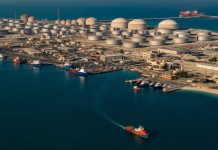
On 9 October, the US President reported on a telephone conversation with Putin and announced the supply of Russian diesel fuel. According to him, over 300,000 tonnes are due to reach the US and global markets in the near future.
Trump also announced 500,000 tonnes in November and a further 1 million tonnes later. Further volumes, he said, would depend on the state of Russian oil refineries.
The US President explained the decision as an effort to bring down fuel prices ahead of the mid-term congressional elections on 3 November. Reuters reported that on 8 October, the average price of diesel in the US reached $6.28 per gallon, whilst analysts surveyed by the agency doubted that the announced supplies would lead to a sustained fall in prices.
The OFAC licence has established an exemption for transactions involving diesel
On the same day, the Office of Foreign Assets Control (OFAC) of the US Department of the Treasury issued General Licence No. 135. It authorises certain transactions involving the sale, delivery, unloading and import of diesel fuel of Russian origin, including into the United States.
The licence is valid until 7 April 2027. It does not mean the complete lifting of US sanctions against Russia, but establishes a temporary exemption for certain transactions involving diesel.
Reuters noted that such supplies could potentially provide Moscow with significant additional revenue, despite Washington’s previous policy of restricting funding for Russia’s war against Ukraine.
Both Republicans and Democrats have joined in criticising the decision
Republican Member of Congress Brian Fitzpatrick, according to the Washington Examiner, announced his intention to table a cross-party bill to block the purchase of Russian oil. The Republican Don Bacon He spoke out against easing the pressure on Moscow and called for sanctions to be imposed to curb the Russian military machine.
Former Vice-President of the United States Mike Pence stated that the agreement could strengthen Russia’s economic capabilities and runs counter to the US’s previous policy of deterring aggression. The decision was also criticised by the President of Ukraine Volodymyr Zelenskyy and Democratic senators Jin Shagin, Chuck Schumer and EElizabeth Warren.
As at 11 October, the supply agreement and temporary authorisation OFAC remain in force.