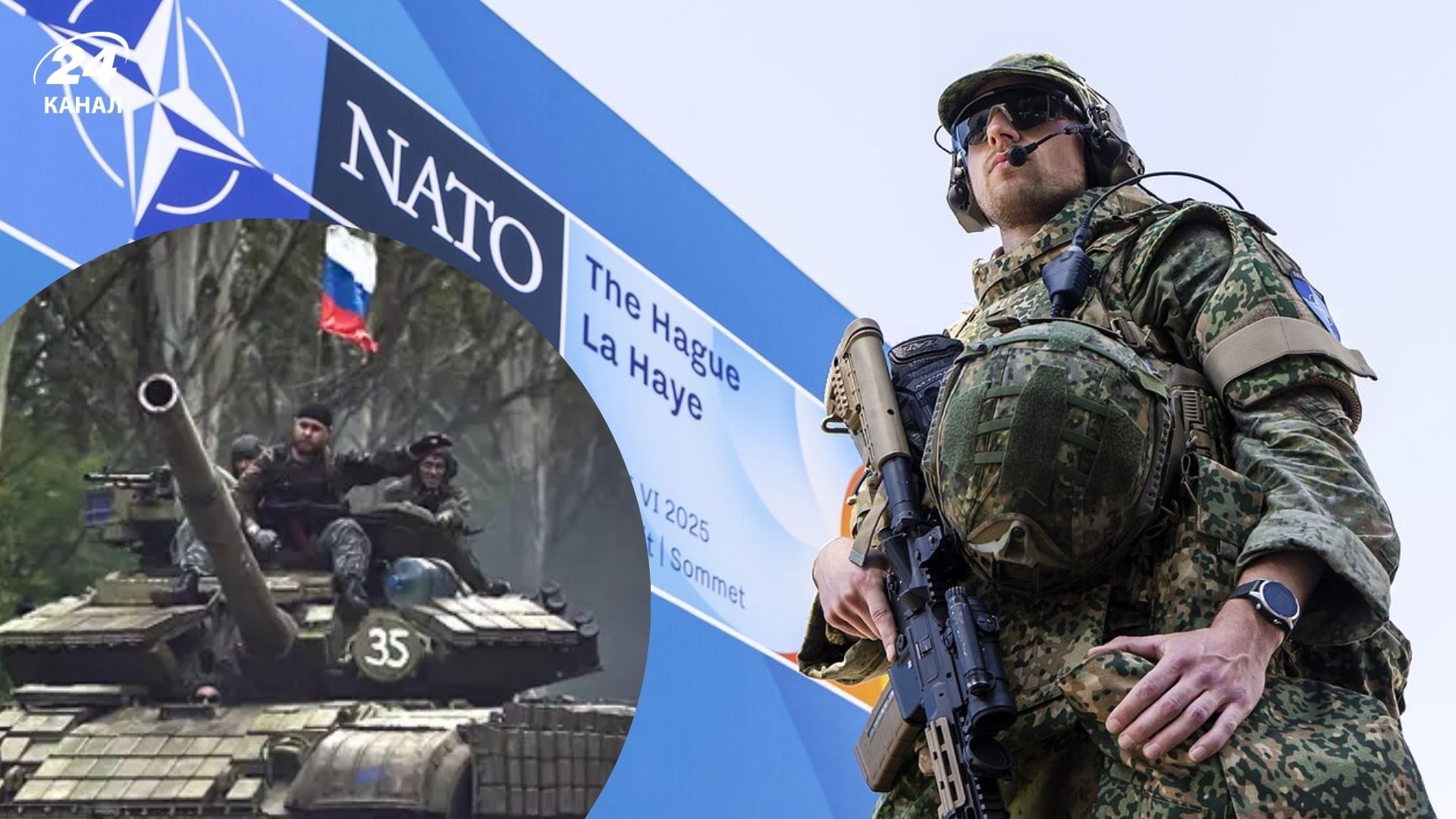
General Alexus Grinkevich, Supreme Allied Commander Europe of NATO’s Allied Joint Forces, presented an approach to repelling a potential attack on the Alliance at the Warsaw Security Forum on 12 October. This involves blocking the initial attack, halting any further advance and, if necessary, destroying the military system supporting the aggression.
Briefly about the main points
- Grynkevych outlined NATO’s approach to repelling potential aggression in Warsaw.
- Planning relies on drones, autonomous systems, sensors and long-range weapons.
- The WSJ has reported on possible strikes against military targets in Russia and Belarus.
- Steadfast Duel 2026 is testing regional plans and inter-headquarters coordination.
- The NATO commander does not consider war to be inevitable or imminent.
From blocking an attack to destroying the security system
Grinkevich He described the Alliance’s response as a sequence of actions: once the initial strike had been halted, to prevent the enemy from advancing; and, should the aggression continue, to deprive the enemy of the capacity to conduct operations.
According to him, the response could be directed not only against advancing troops, but also against command, supply and support systems. To this end, land, air and naval forces must act in concert NATO.
In public discourse, this approach has been termed the «theory of victory». It is linked to the regional defence plans that NATO approved at the 2023 Vilnius Summit.
Drones, sensors and long-range assets in a response scenario
According to The Wall Street Journal, the planning takes into account the experience of the war in Ukraine and envisages the use of drones, autonomous systems, surveillance equipment and long-range weapons. Autonomous defence systems on the eastern flank are intended to deter the enemy and reduce risks to Alliance troops.
According to the WSJ’s account, long-range weapons could be used against command posts and air defence systems in the Kaliningrad region, near St Petersburg and in Belarus. Under this scenario, the air force would be tasked with disrupting the deployment of reinforcements and the supply of offensive forces.
During his public address, Hrynkevych did not specify either the exact location of a potential attack or the composition of the enemy forces. Separately, the Alliance is developing a digital network for the secure exchange of target data, with a view to reducing the time between the detection of a threat and the response.
Steadfast Duel tests the decisions of military headquarters in a simulated conflict
The Steadfast Duel 2026 command-post exercise began on 6 October. Using computer simulation, NATO is testing regional defence plans and inter-command cooperation in Europe and the US.
The NATO Joint Combat Training Centre reports that there are approximately 8,000 military and civilian participants. Three Allied Joint Force Commands, component commands and other organisations are involved in the exercises, with the support of all 32 member states; these exercises are also linked to the US-led Avenger Triad 2026 exercises.
The WSJ cites a different estimate — over 20,000 military personnel in a broader description of the exercises — and mentions simulations of a confrontation between forces numbering approximately one million each. The latter figure relates to a scenario, not the actual number of participants.
Ammunition shortages and conflict risk assessment
The WSJ highlights a shortage of US interceptor missiles in Europe Patriot PAC-3 and missiles ATACMS. According to the publication, the stockpiles were affected by the diversion of ammunition to the Middle East; Hrynkevych did not disclose a specific timetable for strengthening defences.
NATO continues to test defence plans during exercises and to develop systems for detecting and countering threats. Hrynkevych stated that he does not consider the conflict to be either inevitable or imminent, and described defence readiness, alongside maintaining channels of communication, as ways of supporting peace.