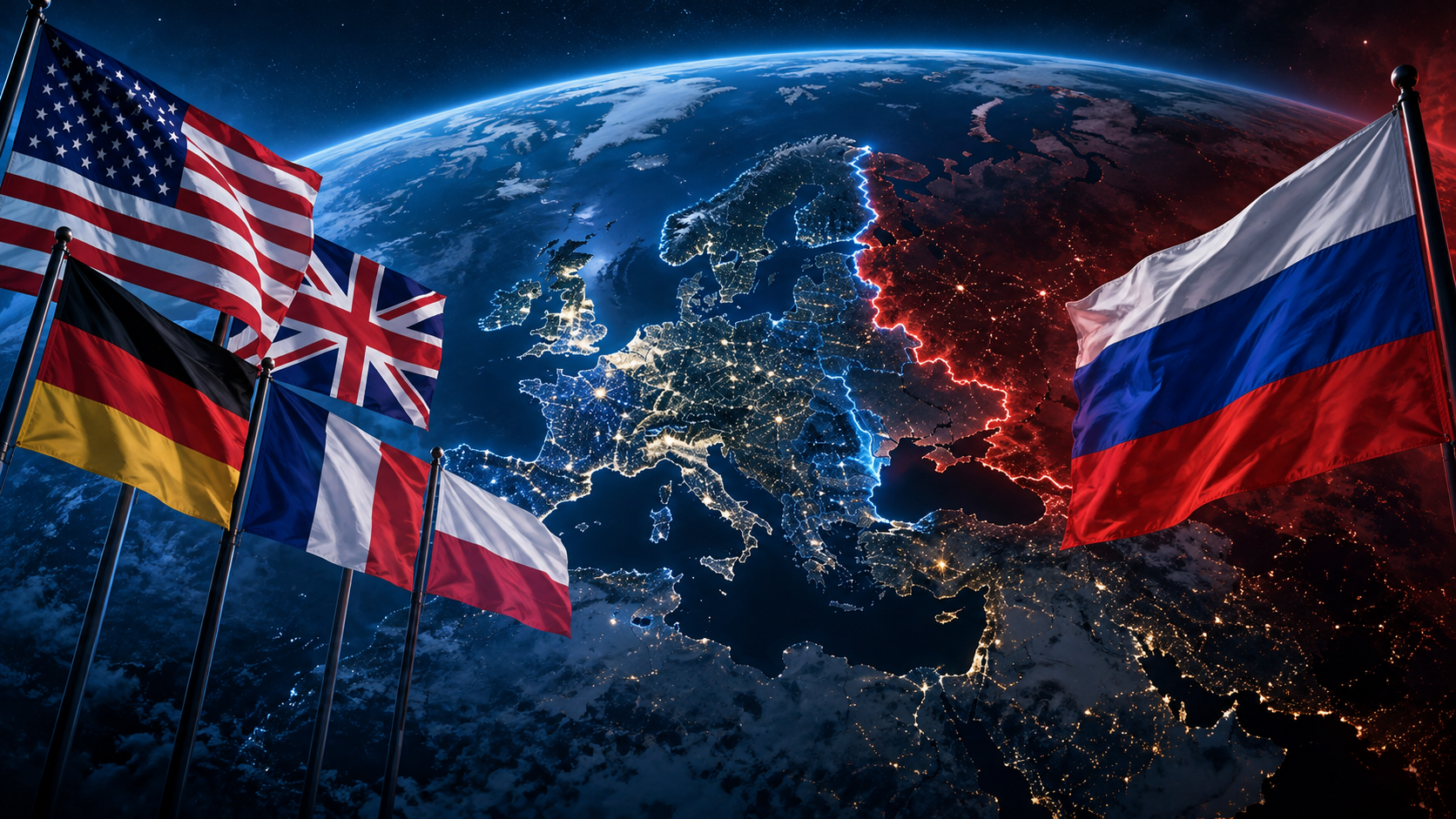
In October 2026, NATO countries will begin negotiations on new requirements regarding troop numbers, armaments and defence capabilities in the event of a military conflict with Russia. According to Politico, the allies are to determine what forces and equipment each of the 32 member states must provide by 2029. European officials fear that by that time, Moscow may have rebuilt its capacity to attack one of the NATO countries. Key issues include defence funding, the potential replacement of US military capabilities, the protection of various regions of Europe, the development of drones and the application of Ukraine’s combat experience.
- In October, NATO is set to begin negotiations on new defence requirements for the period up to 2029.
- The allies will determine the necessary number of troops, equipment and funding.
- Europe is preparing for a possible reduction in the US military presence.
- Particular attention will be paid to defending the southern flank and developing unmanned aerial vehicles.
- NATO will consider ways of making greater use of Ukraine’s combat experience.
NATO will determine how many troops and weapons are needed to defend against Russia
According to Politico, the new talks will mark the first stage of NATO’s five-stage defence planning process — the NATO Defence Planning Process.
The aim is to establish specific requirements for the armed forces and military capabilities of each Alliance member state. This concerns not only the number of military personnel, but also the availability of military equipment, air defence systems, aviation, reconnaissance and logistical infrastructure.
Journalists from Politico spoke to 15 current and former NATO officials and diplomats to identify the main differences between the allies.
One of the most important issues will be the discussion on the level of military commitments. Previously, the allies had envisaged the possibility of maintaining 18 additional brigades, each comprising approximately 5,000 troops, for crisis operations outside NATO territory. Now, member states will have to decide whether to retain such forces or to focus more resources directly on collective defence.
The issue of funding remains particularly pressing. Increasing defence budgets will require substantial public funds, and the economic capacities of the Alliance’s member states vary considerably.
Europe may be left without some of its US military capabilities
The second key issue concerns a possible change in the US’s role within the European security system.
Administration Donald Trump is considering a reduction in the US military presence in Europe. The Pentagon is reviewing the deployment of its forces, with the results expected in December.
Washington has already removed some of its strategic bombers, fighter jets, drones and warships from the list of forces that can be deployed for NATO operations.
European allies fear a further reduction in access to US capabilities, in particular heavy transport aircraft, in-flight refuelling, long-range weaponry and reconnaissance systems. In that case, European countries will have to decide who exactly will make up for the shortfall in equipment and fund new purchases.
NATO will review the defences of its southern and south-eastern flanks
The third area of the talks will concern the allocation of defence resources amongst the various regions of the Alliance.
Following the start of Russia’s full-scale invasion of Ukraine, NATO has significantly stepped up its focus on its eastern flank, particularly Poland and the Baltic states. However, other countries emphasise the need to take into account threats in the Arctic, the Mediterranean and the Black Sea region.
Safety is of particular importance Romania, Bulgaria and Turkey, in the vicinity of which the risks associated with the use of attack drones are increasing.
Recent attacks on civilian vessels in the Black Sea have once again raised the issue of the protection of sea lanes and NATO’s ability to respond to threats near the borders of its member states.
The allies will need to coordinate the deployment of their military forces so that reinforcing one region does not create critical gaps in the defences of another.
Drones will be one of the key issues in defence planning
The fourth topic is the development of unmanned systems and determining their role in NATO’s military plans.
The experience of the Russian-Ukrainian war has demonstrated just how important strike and reconnaissance drones have become, ground-based robotic systems and anti-drone systems.
NATO countries must decide what proportion of their defence budgets to allocate to modern unmanned technologies and what proportion to traditional weapon systems, such as tanks, artillery and combat aircraft.
France has earmarked approximately 8.4 billion euros for the development of drones and loitering munitions. Germany also plans to set up a specialist unit for unmanned systems.
Separately, the allies will discuss the use of artificial intelligence, autonomous platforms and robotic systems on the battlefield.
One of the main challenges remains the extremely rapid pace of technological advancement. Military equipment planned for procurement today may lose some of its effectiveness in a few years’ time due to the emergence of new countermeasures.
NATO wants to make greater use of Ukraine’s combat experience
The fifth topic relates directly to cooperation with Ukraine.
Some Alliance member states are in favour of deepening cooperation with the Ukrainian military and defence industries. Of particular interest is Ukraine’s experience in the use of aerial, maritime and ground-based unmanned aerial vehicles, countering Russian missiles and organising digital command and control of combat operations.
Allies are studying Ukraine’s DELTA situational awareness system, which facilitates the exchange of information and the coordination of military operations. At the same time, there is no complete consensus amongst NATO representatives as to the extent to which Ukraine’s experience can be directly applied to the Alliance’s defence planning.
Some officials emphasise that NATO is counting on greater air power capabilities, the rapid manoeuvring of large military formations and a different structure for supporting combat operations.
Ukraine’s military experience is therefore regarded as an important source of practical knowledge, but not as a ready-made model for all future NATO operations.
Is NATO expecting a Russian attack in 2029?
The year 2029, which is mentioned in the Alliance’s plans, serves as a benchmark for the development of defence capabilities, rather than a fixed date for a possible Russian invasion. Some European defence officials suggest that by that time, Russia may have restored part of its military capabilities and pose an additional threat to NATO member states.
Secretary-General of the Alliance Mark Rütte On 14 October, he emphasised that NATO does not currently see any immediate threat of an attack by Russia.
The Commander-in-Chief of NATO’s Allied Forces in Europe, an American general Alexus Grinkevich He also stated that the Alliance does not seek military conflict, but must be prepared to defend its members in the event of an attack.
In July 2026, NATO leaders at the summit in Ankara confirmed that Russia remains a long-term threat to Euro-Atlantic security. The Alliance’s member states also reaffirmed their commitment to increase defence and security-related expenditure to 5% of GDP by 2035.
The October talks are therefore set to define NATO’s practical requirements for the coming years: from troop numbers to the production of modern weaponry and cooperation with Ukraine. The final allocation of responsibilities amongst the allies will be the subject of subsequent stages of defence planning.