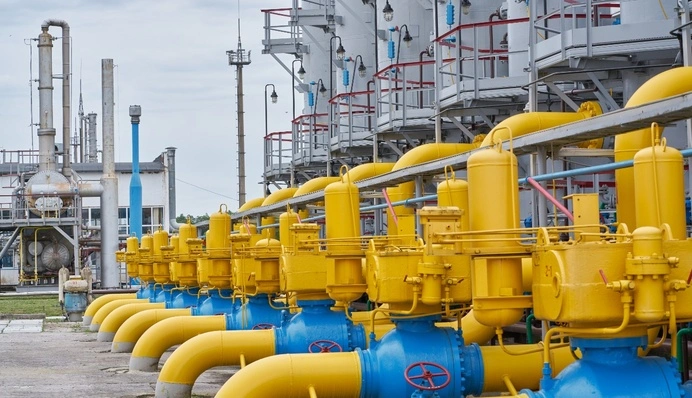
The United States is proposing to resume the transit of Russian natural gas through Ukraine to Europe as part of a potential peace agreement, The New York Times reported on 17 October. American negotiators view gas revenues as an incentive for Moscow, but European officials, particularly those from Germany, are warning against a return of Russia’s energy influence.
Briefly about the main points
- Washington is linking gas transit to a possible cessation of hostilities.
- Russia could earn export revenue, whilst Ukraine could earn transport fees.
- Germany considers a return to imports from Russia to be an unacceptable risk.
- The possible use of «Nord Stream» was discussed separately.
- EU rules provide for a complete phase-out of Russian gas by 2027.
Gas as an economic incentive in peace talks
According to the NYT, the US President’s special envoy Steve Witkoff і Jared Kushner raised this issue in their dealings with Ukrainian and European representatives. In September, the idea was discussed during their meeting with the President Volodymyr Zelenskyy in Kyiv.
The US side assumes that the commissioning of the gas pipelines would provide Russia with substantial export revenues, and Ukraine with income from the transit of fuel through its territory. Washington also believes that European consumers would be interested in cheaper energy sources.
The White House told the newspaper that he is working with Kyiv and European partners on a comprehensive peace proposal that includes economic incentives for Ukraine and Russia. Some of the publication’s sources, including Ukrainian and European officials, fear that the US may lay claim to a share of the revenue from Russian exports, but there are no agreements on how this revenue should be distributed.
Berlin warns against Moscow’s renewed influence on the energy market
Germany is the most vocal opponent of the initiative; prior to Russia’s full-scale invasion, it was one of the largest buyers of Russian natural gas in Europe. Last week, during talks in Florida, the Chancellor’s adviser voiced his opposition Friedrich Merz on security matters Günter Sautter.
In Berlin, it is believed that purchasing Russian gas through intermediaries does not eliminate the risks inherent in direct supplies from the Russian Federation. European officials fear that large-scale imports will once again allow Moscow to influence the energy market and use supplies as a means of exerting political pressure.
Former German Minister for Economic Affairs Robert Habek He also urged that there should be no return to dependence on Russian gas, citing the unreliability of previous supplies. At the same time, some EU member states continue to import Russian energy resources within the limits of the current restrictions.
«Nord Stream» features in some of the contacts between Washington and Moscow
Sources speaking to the NYT reported that US and Russian representatives had separately considered the possible resumption of the «Nord Stream» pipeline as one of the supply routes to Europe following a peace agreement. Reuters had previously reported on discussions regarding the involvement of a US investor in the project; those named as participants in the talks included Kushner and the Russian representative Kirill Dmitriev.
The White House has denied that the subject of «Nord Stream» was raised during the latest talks. The Kremlin welcomed the prospect of resuming energy cooperation with Europe: a spokesperson for the President of the Russian Federation Dmytro PeskoHe stated that this was in Russia’s interests. No decision has been taken to resume operations on any of the gas pipelines.
Following the expiry of the contract, Ukraine lost its transit revenues
The transit of Russian gas through Ukrainian territory ceased on 1 January 2025, when the five-year agreement with Gazprom came to an end. Reuters estimated Ukraine’s annual losses from this decision at up to $1 billion; at the same time, the Russian company lost significantly more revenue from gas sales to European buyers.
Before the shutdown, the Ukrainian gas transmission system was one of the supply routes to Central Europe, in particular to Slovakia and Austria. Following the outbreak of full-scale war, the European Union reduced its dependence on Russian energy resources by increasing purchases of liquefied natural gas and imports from Norway and other suppliers.
According to the Council of the EU, in 2025 Russia accounted for around 13% of the EU’s gas imports, and the value of these purchases exceeded 15 billion euros.
The EU Regulation creates a legal obstacle to the resumption of supplies
On 26 January 2026, the Council of the European Union finally adopted a regulation on the phasing out of Russian pipeline and liquefied natural gas. A complete ban on imports of Russian LNG is due to come into force at the start of 2027, and on pipeline gas in the autumn of the same year; transition periods have been established for previously concluded contracts.
The practical implementation of the US proposal would require harmonisation with European legislation and political decisions involving the relevant parties. As of 18 October, Ukraine had not announced the resumption of transit, whilst European representatives continue to oppose a return to energy dependence on Moscow.