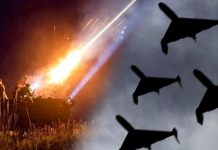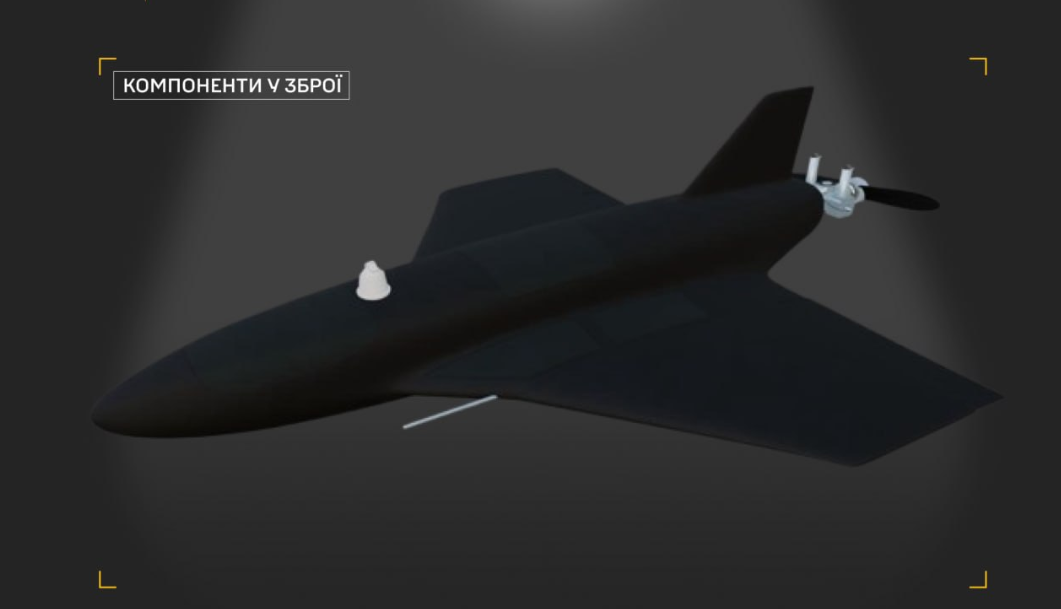
Russian forces have begun deploying an enlarged version of the «Gerbera» drone, which was previously used primarily as a decoy to overwhelm Ukrainian air defences. The new «Gerber-2» variant has a range of up to 1,200 kilometres and, according to its stated specifications, can carry a payload of up to 25 kilograms. The Main Intelligence Directorate of the Ukrainian Ministry of Defence has revealed the drone’s design, its electronic equipment and the origin of its components.
- The Main Intelligence Directorate has revealed the design of the enlarged Russian variant of the «Gerbera-2» attack drone.
- The new version has a range of up to 1,200 km and a wingspan of three metres.
- According to the stated specifications, the drone is capable of carrying a payload weighing up to 25 kg.
- Chinese electronics and an anti-jamming camera were found in the sample examined.
How Russia’s «Gerbera» has changed»
The Main Intelligence Directorate (GUR) has published an interactive 3D model of the «Gerbera-2» drone and details of its main components on the War&Sanctions portal.
The first versions of the «Gerbera» were designed as relatively inexpensive devices to simulate attack drones. They included the «Scout» and «Kamikaze» variants, but featured a simpler design and less sophisticated equipment.
Subsequently, Russian manufacturers began fitting these drones with more sophisticated navigation, communications and video surveillance systems. In particular, these included the «Kometa» anti-jamming navigation modules, mesh modems and cameras mounted on stabilised gimbals.
The new «Gerbera-2» has been fitted with a larger fuselage: its wingspan is three metres and the length of its fuselage is 2.6 metres.
One of the main changes is the 63-litre fuel tank. Inside, it is divided into separate compartments, which helps to maintain the vehicle’s stability during manoeuvres.
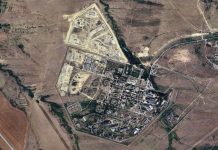
The drone is also fitted with a two-cylinder two-stroke engine, structurally similar to the power unit of the Russian «Gerani-2». According to intelligence reports, production of this engine is localised in the special economic zone «Alabuga» in Tatarstan.
Flight range — 1,200 km: specifications of the «Gerbera-2»
According to War&Sanctions, the new variant has the following specifications:
| Parameter. | Meaning. |
|---|---|
| Length | 2.6 m |
| Wingspan | 3 m |
| Flight range | Up to 1,200 km |
| Flight duration | Up to 10 hours |
| Maximum speed | Up to 200 km/h |
| Cruising speed | Up to 180 km/h |
| Fuel tank | 63 litres |
| Weight of the warhead | Up to 25 kg |
In the sample examined by Ukrainian intelligence, a 10-kilogram OFZBCh-10 high-explosive fragmentation incendiary warhead and individual containers of incendiary mixture were discovered.
At the same time, the stated capability to carry up to 25 kilograms of payload does not mean that the combat unit of the drone under investigation actually weighed that much.
Thanks to its increased fuel capacity, the new drone can be used to carry out strikes at a much greater range than earlier versions of the «Gerbera».
Chinese electronics and cameras for detecting hijackers
The Main Intelligence Directorate has established that «Gerbera-2» is equipped with an upgraded flight controller, a 12-channel «Kometa» satellite navigation system and a mesh modem manufactured by the Chinese company Shenzhen Sinosun Technology.
A unit called «Sosiska», based on the Chinese Coke Pi microcomputer, is used to process the video signal.
A dual IP camera mounted above the fuel tank was also found in the sample examined. According to intelligence reports, it is designed to detect interceptor drones.
In addition, versions have been recorded featuring fixed IP cameras and cameras mounted on three-axis stabilised gimbals.
An analysis of the electronics revealed that the majority of the components identified were sourced from Chinese and American manufacturers — eight and four respectively.
The presence of foreign components in Russian weaponry does not in itself indicate that these components were supplied directly by manufacturers for the Russian Federation’s military needs.
An armed «Gerbera-2» has already been found in Poland
The increased range of the new variant extends its potential scope of application beyond Ukraine.
In mid-September 2026, a Russian «Gerbera-2» drone was spotted on the Baltic Sea coast near the Polish village of Rusinowo.
The Polish public prosecutor’s office reported that the drone was fitted with a fragmentation-high-explosive warhead containing a detonator. The explosive device was detached from the drone and defused, whilst the drone itself was handed over for further investigation.
According to preliminary findings by Polish investigators, the device found was indeed a Russian-made «Gerbera-2». The circumstances surrounding its appearance on the Polish coast have become the subject of a separate investigation.