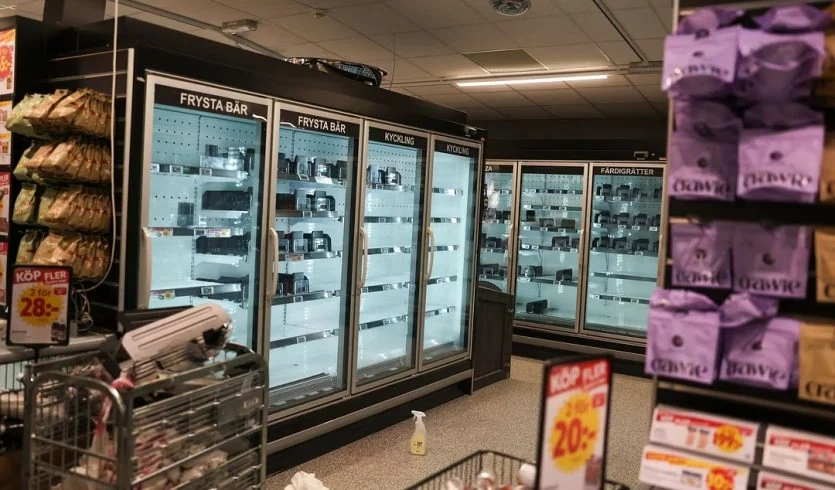
On Monday, 2 November 2026, supermarkets in several European countries suffered a cyberattack on their refrigeration systems. In some shops in Sweden, the temperature in the freezers rose to +50°C, rendering the food unsuitable for sale. Incidents were also reported in Belgium, Luxembourg and Ireland. This was reported by Reuters, citing representatives of retail chains and cybersecurity experts.
Fridges heated up to +50°C: what happened?
The problems began during the night of 2 November. In Sweden, the ICA and Coop chains reported a sudden rise in temperature in their refrigerators and freezers.
An attack took place at one of the ICA shops in Stockholm, according to the manager Engli Ingvall, was recorded at around two o’clock in the morning, but the problem was only discovered several hours later. By that time, the freezers had warmed up to +50°C, and the frozen goods had gone off.
As a result of the incident, staff had to completely empty the freezers and dispose of the food. The ICA chain confirmed that the disruption affected a limited number of its shops.
Coop has reported that seven of its approximately 800 stores have been affected. The company has confirmed unauthorised interference with its temperature control systems.
Which supermarkets were affected by the cyberattack?
The repercussions of the incident extended far beyond Sweden. Major European companies reported faults with their refrigeration equipment retail chains.
According to Reuters, in Belgium cyberattack It affected 15 of Carrefour’s 700 stores, five Spar outlets and a number of Delhaize supermarkets. Disruptions were also reported in Luxembourg.
In Ireland, Musgrave has reported problems at 13 SuperValu stores. Due to temperature control issues, some chilled and frozen goods have been temporarily withdrawn from sale.
In addition, IKEA has confirmed that at least one of its stores in Belgium has been affected. The company has not ruled out the possibility of problems at other outlets.
One of the owners of the Belgian meat chain De Laet & Van Haver told Reuters that the temperature in the refrigerators at his shop had risen to +18°C. He estimated that the business had lost around 15,000 euros due to the meat going off.
How hackers managed to alter the temperature of fridges
Preliminary findings suggest that the attackers gained unauthorised access to the remote control systems for refrigeration equipment. Such systems allow the temperature to be regulated and the operation of the units to be monitored via computer networks.
Some of the affected shops were using technology from the Danish company Danfoss. The manufacturer has stated that it is working with its customers to address the vulnerabilities and implement the necessary fixes.
Cybersecurity experts explain that modern supermarkets use a wide range of connected devices — from fridges and heating systems to CCTV cameras and access control systems. Systems that are not adequately secured can become a point of entry for hackers.
European Commissioner for Agriculture Christoph Hansen stated that repeated attacks on retail chains are a cause for concern due to the threat they pose to food supply chains and consumer confidence.
A similar attack has already taken place in France
This latest incident occurred just a few weeks after a large-scale cyberattack in France. In October, cybercriminals gained remote access to the refrigeration systems of hundreds of supermarkets.
At the time, the intervention led to widespread spoilage of foodstuffs and, in some cases, fires in the equipment. French law enforcement officers have launched an investigation.
As of 2 November, no group had claimed responsibility for the new wave of attacks. Reuters has been unable to establish who exactly is behind the incidents or whether they are linked to the events in France.
National cyber security centres and the affected companies are continuing their investigations. The total extent of the losses incurred by European supermarkets has not yet been determined.