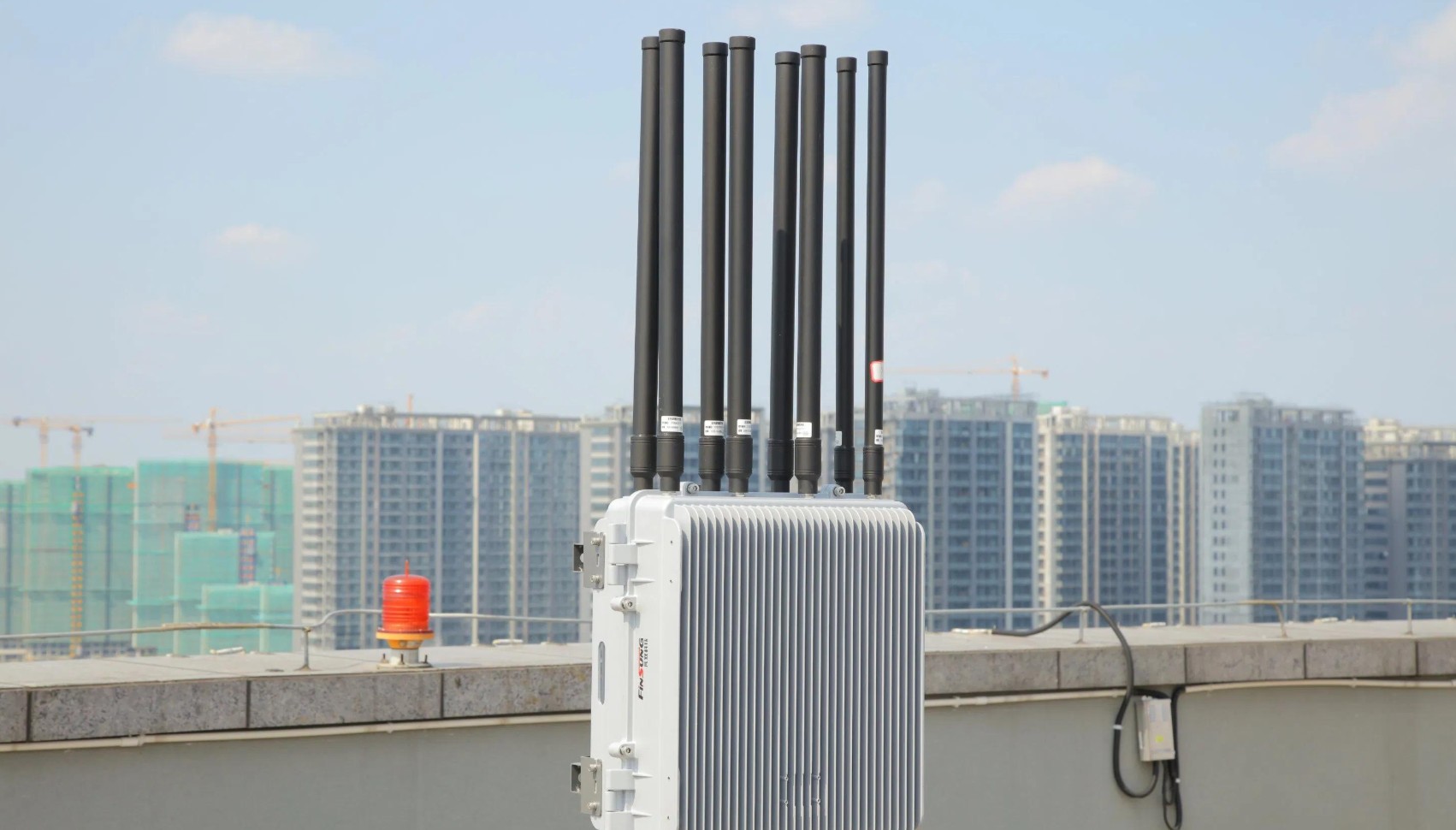
In Ukraine, there is a proposal to allow the military to rapidly deploy electronic warfare and reconnaissance equipment on private land, buildings and the roofs of blocks of flats. In urgent cases, the equipment may be installed without the prior consent of the owners, and obstructing the lawful activities of the military could result in criminal liability. At the same time, the initiative raises concerns about the safety of residents living near powerful radio transmission systems.
- Bill No. 16210 on the deployment of electronic warfare equipment on private property has been tabled in the Verkhovna Rada.
- The military are being asked to be allowed to install equipment on the roofs of buildings without prior consent.
- Criminal liability may be imposed for obstructing the lawful activities of the armed forces.
- Owners are to be compensated for expenses and documented losses relating to equipment.
- The safety of electronic warfare equipment for residents depends on the strength of the electromagnetic field and the installation conditions.
There are plans to allow the military to install electronic warfare equipment on private property
The draft bill provides for the simplification of the procedure for deploying electronic warfare and electronic intelligence equipment to protect Ukrainian settlements from air attacks.
Under current procedures, the use of private or municipal facilities for such purposes may require additional approvals, which delays the deployment of equipment.
The authors of the document propose allowing the Armed Forces and other military formations to use land plots and property, regardless of their form of ownership or intended use.
This also applies to blocks of flats, in particular those managed by CONDOMINIUMS.
For each equipment installation site, a plot of land with an area of no more than 0.05 hectares, or 500 square metres, is to be used.
Can electronic warfare equipment be installed without the residents’ consent?
The draft bill provides for an obligation on the part of property owners and users to facilitate access for the armed forces to facilities required for the deployment of defence assets.
Under normal circumstances, property owners must be notified of the planned installation of equipment. The procedure for such notification is to be determined by the Cabinet of Ministers. However, in the event of an urgent need relating to national security and defence, the military will be able to install the equipment first and notify the property owner afterwards.
Consequently, prior consent from residents or the owners’ association will not be a mandatory requirement in every case.
The proposed rules do not imply a transfer of ownership of the building to the military. They relate to the temporary use of the property for defence purposes.
It is planned that the special measures will remain in force throughout the period of martial law and for a further six months after it ends.
Interfering with the work of electronic warfare units may result in criminal liability
Certain provisions of the draft bill relate to liability for obstructing the installation and operation of electronic warfare and radio-electronic reconnaissance equipment.
The document does not create a new criminal offence nor does it establish a specific penalty specifically for refusing to allow military personnel onto the roof.
The explanatory note refers to the application of the current provisions of the Criminal Code, in particular Article 114-1, which provides for liability for obstructing the lawful activities of the Armed Forces and other military formations.
Consequently, criminal liability should not arise automatically simply because residents object. For this to occur, the elements of a criminal offence as defined by law must be established.
Is electronic warfare radiation dangerous for the building’s residents?
Electronic warfare is based on the use of electromagnetic signals to disrupt the operation of the enemy’s radio communications, navigation systems and other equipment.
Depending on their intended use, such systems may operate at different frequencies and have significantly different radiation power levels.
Unlike X-rays or gamma rays, radio waves are a form of non-ionising radiation. The individual photons do not have sufficient energy to ionise atoms directly. However, this does not mean that intense radio-frequency radiation is completely safe.
According to the World Health Organisation, the main mechanism by which strong radiofrequency fields are known to cause harm is the heating of body tissues.
Excessive exposure to radiation can lead to a dangerous rise in tissue temperature. This is why maximum permissible exposure limits are set for radio transmission equipment.
At the same time, the WHO notes that scientific research has not demonstrated any harmful effects of low-level electromagnetic fields provided that their intensity remains within established limits.
For residents of residential blocks, it is not the mere presence of a radio-electronic system on the roof that is of crucial importance, but the actual level of radiation inside flats and in other areas where people are present.
Are residents on the upper floors likely to be exposed to a higher dose of radiation?
The level of the electromagnetic field depends on several factors: the transmitter’s power, the operating frequency, the type of antenna, the direction of radiation, the distance from the source and the characteristics of the building structures.
It cannot therefore be automatically assumed that residents on the top floor will be most affected.
Many antennas have a directional radiation pattern. Under certain conditions, the highest field strength may not be observed directly beneath the antenna, but in front of it — in the direction of the main radiation lobe.
However, this does not guarantee the safety of the flats located beneath the installation. Different electronic warfare systems may have different antenna designs, operating modes and power levels.
To ensure an objective assessment, technical calculations and measurements of the electromagnetic field are required in areas accessible to the public, in particular on the upper floors and in the surrounding areas.
The International Commission on Non-Ionising Radiation Protection (ICNIRP) has established guidelines on limiting exposure to radiofrequency fields. In Ukraine, there are also national health standards in place to protect the public from electromagnetic radiation.
It is important that, when deploying military equipment, the relevant safety requirements are taken into account and that unauthorised persons’ access to potentially hazardous areas is restricted.
Does the draft bill provide for compensation for homeowners?
The draft law contains provisions on the reimbursement of costs associated with the use of private property for defence purposes. In particular, it provides for compensation for electricity and electronic communications services required for the operation of equipment.
Owners will also be able to claim compensation for documented losses caused by the installation, operation, maintenance or dismantling of electronic warfare (EW) and radio-electronic countermeasures (REC) equipment.
The procedure and timeframes for compensation are to be determined by the Cabinet of Ministers.
Once they have finished using the equipment, military personnel must dismantle the installed systems and, where necessary, restore the land to a condition suitable for future use.
The bill is currently before Parliament. Consequently, the special procedure it proposes for the deployment of electronic warfare equipment on private property has not yet come into force.