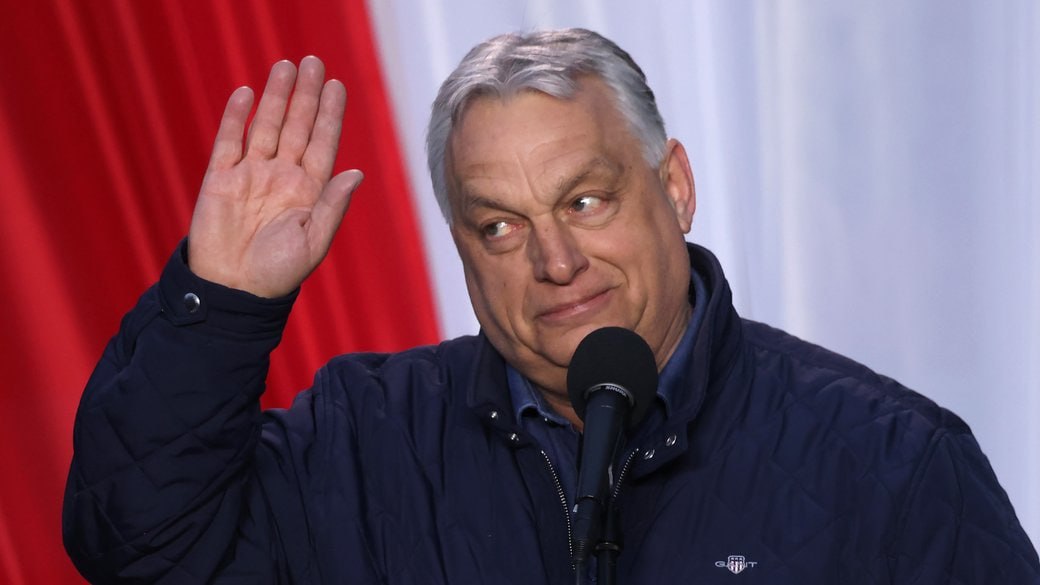
The former Prime Minister of Hungary, Viktor Orbán, may have collaborated with the communist secret services whilst serving in the military in the early 1980s. The former head of the Hungarian government, Miklós Németh, stated that he had personally seen three handwritten intelligence reports allegedly signed by Orbán. This is detailed in an investigation by journalist Szabolcs Páni, published on 5 November on the VSquare platform.
- The former Prime Minister of Hungary has spoken of three intelligence reports attributed to Orbán.
- The documents allegedly contained information about the political and religious views of military personnel.
- Nemet was unable to verify the authenticity of the signatures, and the original documents have gone missing.
- Orbán denies having collaborated with the security services and claims he was the target of a recruitment attempt.
- In Hungary, the archives of the communist state security service, containing tens of thousands of records, have been opened.
The former prime minister claimed that he had seen Orbán’s intelligence reports
Miklós Németh, who served as Prime Minister of Hungary from 1988 to 1990, set out his testimony in a written statement dated 30 March 2026. According to him, shortly before the first free parliamentary elections in March 1990, the then Minister of Defence Ferenc Karpaty handed him three original handwritten documents bearing signatures which were attributed to To Viktor Orban.
The reports were allegedly compiled whilst Orbán was performing his compulsory military service in Zalaegerszeg. They contained observations of other military personnel, including details of their behaviour, political convictions, religious views and personal lives.
At the same time, Nemet admitted that he had been unable to establish with certainty the authorship of the documents. Although the handwriting and signature appeared to him to be similar to Orbán’s, no forensic analysis was carried out. The former prime minister returned the reports to the defence minister without keeping any copies for himself.
Intelligence documents may have gone missing following the death of the head of counter-intelligence
According to Nemet, in 2013 he tried to find out what had become of the documents. Shortly before his death, Ferenc Kárpáti told him that the documents were being kept at Gezi Stefan’s — the former head of Hungarian military counter-intelligence, who had undergone training in Moscow within the KGB.
Stefan died in 2009. Journalist Pani Szabolcs It is reported that, the day after his death, documents disappeared from the safe which may have contained compromising material on Hungarian politicians, businesspeople and officials. It has not been possible to establish whether the reports attributed to Orbán were among them.
In 2015, the Hungarian publication HVG had already published a military counter-intelligence registration card in which Orbán was listed as a «public contact» in 1981–1982. However, this entry alone does not prove that he was recruited or passed information to the secret services.
Orbán denied having collaborated with the communist secret services
Viktor Orbán rejected the allegations, stating that the communist secret services had indeed tried to recruit him whilst he was in the military, but that he had refused to cooperate.
On 3 November, the politician released documents from the communist era relating to himself and his wife, Anikó Levai. According to Orbán, following a failed attempt to recruit him, the security services began monitoring him, his family and other opposition activists. The politician’s spokesperson, Bertalan Havasi, also dismissed the allegations of espionage as false.
Hungary has opened the archives of the communist secret services
The investigation came against the backdrop of a large-scale opening of the archives Hungarian state security. On 4 November, the authorities granted the public access to an electronic database of documents from the communist regime, which contains information on approximately 50,000–60,000 people linked to the state security apparatus.
The decision was taken after the government came to power Peter Magyar, whose party defeated Orbán’s political party in the parliamentary elections in April 2026. Previously, the Fidesz parliamentary majority had repeatedly blocked initiatives to open up the archives more widely.
The database that has been made public does not yet cover all military intelligence and counter-intelligence materials. The next batch of documents is due to be made public by 25 February 2027. Nemet’s written testimony has already been transferred to the state archives, but the originals of the three reports he describes have still not been found.