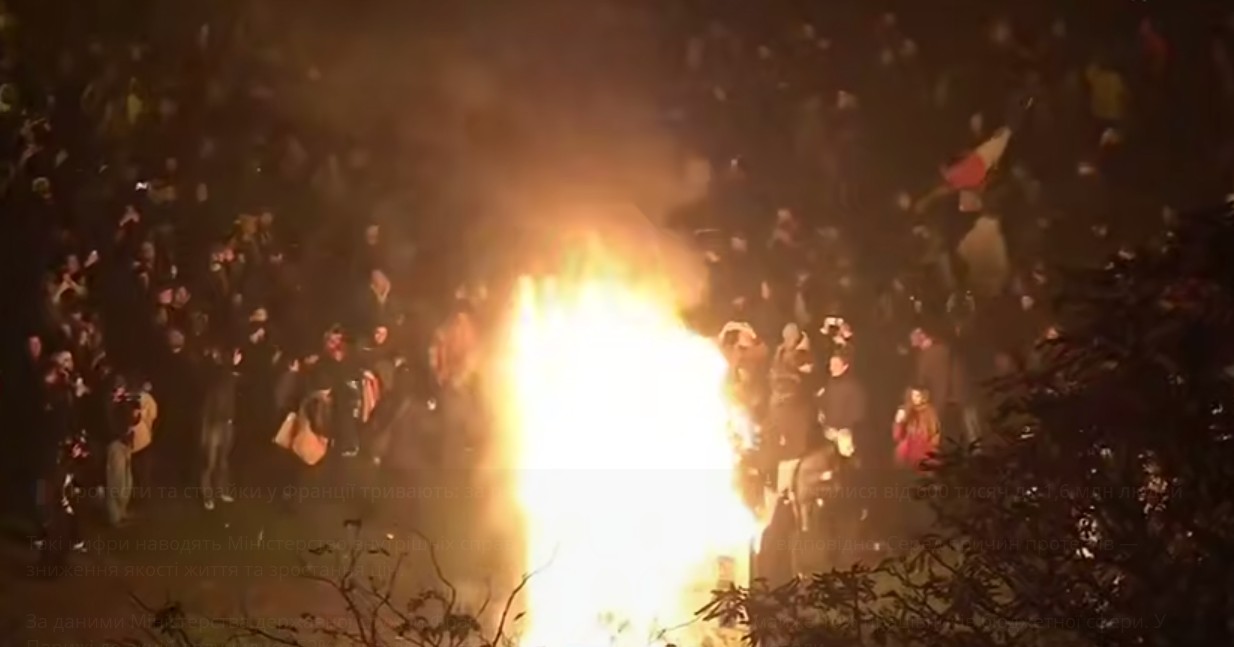
On 5 November, large-scale protests and strikes took place in France against the rising cost of living, low wages and cuts to funding for public services. According to the Ministry of the Interior, 575,000 people took part in the demonstrations, whilst the CGT trade union claimed there were nearly 1.6 million participants. The protests were accompanied by disruption to transport services, the closure of educational institutions and clashes with the police. Law enforcement officers arrested 448 people.
- On 5 November, large-scale demonstrations and nationwide strikes took place in France.
- The Ministry of the Interior put the number of protesters at 575,000, whilst the CGT trade union estimated the figure at nearly 1.6 million.
- During the clashes, 448 people were arrested and 53 law enforcement officers were injured.
- The strikes disrupted transport services, schools, universities and government departments.
- The French government has scheduled talks with the trade unions for 9 November.
Hundreds of thousands of French people have taken to the streets to protest against prices and wages
Mass demonstrations took place in Paris, Marseille, Bordeaux, Lyon, Lille, Toulouse and other cities across France.
According to the Ministry of the Interior’s estimates, 575,000 people took part in 193 demonstrations. The CGT trade union confederation counted 1,573,000 demonstrators across 207 towns and cities.
The biggest discrepancies concern Paris: the authorities reported around 65,000 participants, whilst the CGT put the figure at 350,000.
The protesters are demanding pay rises and higher pensions in line with rising prices, increased funding for education and healthcare, and better working conditions.
Students, schoolchildren, representatives of the «Yellow Vests» movement and private-sector workers have joined the trade unions.
The current wave of protests It began in the autumn and gradually spread to various social groups. The demonstration on 5 November was the largest, according to official figures, since the start of the October protests.
Clashes with the police: 448 people detained and dozens injured
Most of the demonstrations were peaceful, although clashes broke out between protesters and the police in some towns.
Clashes were reported in Paris, Rennes, Marseille, Nantes, Bordeaux and Strasbourg. The police used tear gas to disperse the violent groups.
According to the French Ministry of the Interior, 448 people were detained during the day. It was also reported that 53 law enforcement officers had been injured.
Around 70,000 police officers and gendarmes have been deployed to maintain order across the country.
The strikes disrupted the running of schools, universities and public transport
The wave of protests has disrupted public transport, rail services and schools.
According to the French Ministry of Education, 15.81 per cent of teachers went on strike on 5 November. Meanwhile, the SNES-FSU trade union reported that, according to its own figures, 52 per cent of staff at colleges and lycées took part in the strike.
Trade unions have reported that around a thousand secondary schools have been blockaded or closed, whilst the government has recorded a significantly lower number of schools that have actually been blockaded.
In the national civil service, 9.89 per cent of staff took part in the strike. Among staff in local government bodies, the figure was 4.6 per cent, and in the hospital sector, 3.93 per cent.
Some train services have been cancelled. The Eiffel Tower has also been temporarily closed due to the protests.
The French Government has agreed to hold talks with the trade unions
Against the backdrop of mass mobilisation, the French Prime Minister Sébastien Lecornu announced that a social conference would be held, involving trade unions and employers’ organisations.
The meeting is scheduled for Monday, 9 November. The main topics will be the population’s purchasing power and wage levels.
Protests are taking place against the backdrop of a difficult budgetary situation. The government is trying to reduce the public finance deficit, whilst the trade unions are opposed to cuts to social programmes.
The CGT has stated its intention to continue its mobilisation until the authorities and employers put forward concrete proposals regarding wages, public services and social protection.