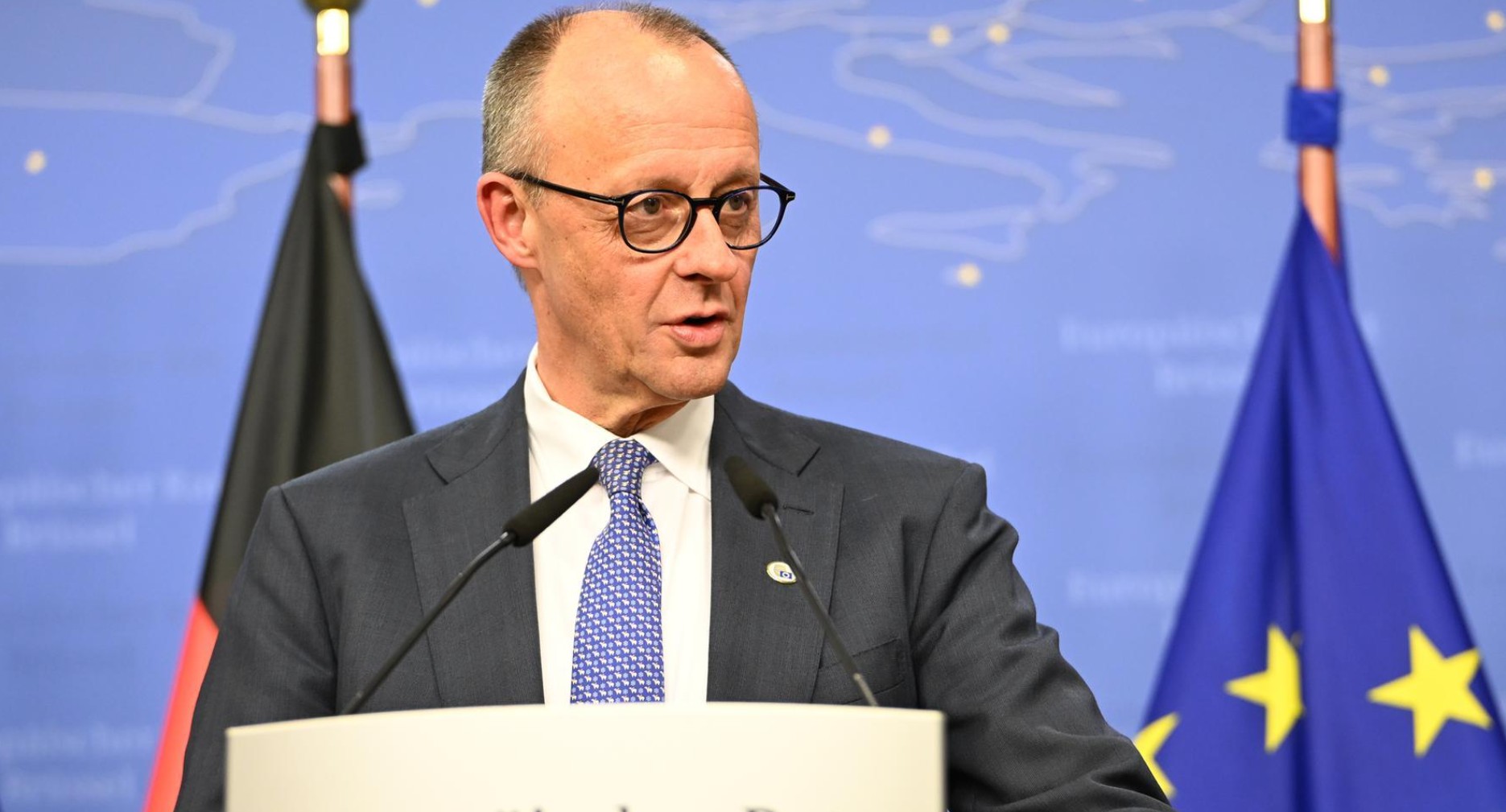
German Chancellor Friedrich Merz has threatened to block the European Union’s next seven-year budget unless all 27 Member States agree to provide financial support to Ukraine in 2027 and in subsequent years. Berlin is insisting on a fair distribution of costs amongst European countries, as Ukraine could face a funding shortfall of 70 billion euros next year. Germany, which is the EU budget’s largest net contributor, intends to use the negotiations on the financial framework for 2028–2034 to secure long-term guarantees of aid for Kyiv.
- Merz is threatening to block the EU budget for 2028–2034 over funding for Ukraine.
- Germany is calling for fair financial contributions from all 27 EU Member States.
- Ukraine’s funding shortfall in 2027 is estimated at 70 billion euros.
- Hungary, Slovakia, Bulgaria and the Czech Republic are opposed to the new contributions.
- The EU plans to discuss financial aid for Ukraine at the summit in Dublin.
Merz set a condition for the European Union regarding its support for Ukraine
In a letter to António Coşti The German Chancellor has linked the approval of the new EU multiannual budget to a commitment by all Member States to contribute to the funding of Ukraine.
Merz He emphasised that no country should stand aside when it comes to meeting Kyiv’s financial needs. According to him, a joint contribution is an essential prerequisite for further budgetary agreements, particularly those involving significant financial outlay.
Germany is using its influence in the budget negotiations to ensure assistance to Ukraine not only next year, but also beyond 2027. Berlin is insisting on the establishment of a predictable, long-term funding mechanism, in particular to service Ukraine’s debt obligations.
Ukraine will face a shortfall of 70 billion euros in 2027
According to estimates cited by the Financial Times, Ukraine may face a shortfall in external funding amounting to around 70 billion euros. The European Union has pledged to provide approximately 45 billion euros, although the final mechanism for raising the funds has not yet been agreed.
Among the options being considered by the European Commission is additional joint borrowing. Such an approach would make it possible to raise significant funds, but it requires a political agreement on how the financial burden is to be shared.
At the summit on 15–16 October, EU leaders instructed the European Commission to draw up proposals to cover Ukraine’s budget deficit in 2027. The issue is due to be discussed again at a meeting of European leaders in Dublin this week.
Four EU countries are refusing to make further contributions
The greatest disagreements arose over the stance taken by Hungary, Slovakia, Bulgaria and the Czech Republic. These countries made it clear that they were not prepared to make additional contributions to fund Ukraine.
Hungary, Slovakia and the Czech Republic have previously secured an exemption from paying interest on on credit for Ukraine, totalling 90 billion euros. Germany is now keen to avoid a repeat of the situation where financial obligations are shared only amongst some of the bloc’s member states.
The new EU budget for 2028–2034 requires the unanimous approval of the Member States. This gives Berlin the opportunity to block the agreement if the demands regarding funding for Ukraine are not met. According to the European Commission’s proposal, the total volume of the seven-year budget will amount to nearly 2 trillion euros.
Germany is insisting on long-term funding guarantees
Berlin has confirmed that the participation of all EU member states in providing financial support to Ukraine is a prerequisite for the conclusion of negotiations on the new budget.
Merz is also calling for a change to the procedure for taking future decisions on funding for Ukraine. In particular, the possibility of using a qualified majority rather than unanimity is being discussed, so that individual states cannot block the allocation of aid. This may require specific legal measures.
The European Commission expects that an agreement on funding for Ukraine will be reached by the end of 2026. At the same time, forthcoming elections in some EU Member States may further complicate negotiations between governments.