During closed-door talks with representatives of US President Donald Trump, Russia demanded that NATO’s military presence in Eastern Europe be effectively scaled back to 1997 levels. Moscow is also insisting on a halt to Western arms supplies to Ukraine, the Alliance’s refusal to expand further, and a review of the nuclear deterrence system in Europe. This was reported on 13 November by The New York Times, which had obtained a Russian negotiating document. A significant portion of the conditions set out echoes the Kremlin’s ultimatum issued in December 2021 prior to the full-scale invasion of Ukraine.
- Moscow is demanding that NATO’s military presence be reduced to 1997 levels.
- Russia is insisting on a complete halt to Western arms supplies to Ukraine.
- The Kremlin wants to limit the nuclear guarantees provided by the US, France and the UK.
- Ukraine has been offered EU membership without having to participate in the common defence policy.
The Kremlin wants to reduce NATO’s military presence to 1997 levels
Pros. information According to *The New York Times*, Russian representatives circulated a document setting out their negotiating demands, dated 10 November. Its authenticity was confirmed to journalists by two sources familiar with the course of the consultations.
Moscow is demanding that NATO refrain from further expansion and military activities in Ukraine, Eastern Europe and the South The Caucasus and in Central Asia.
A separate clause provides for the withdrawal of Alliance troops and military infrastructure to 1997 levels, that is, prior to NATO’s enlargement to include countries in Central and Eastern Europe.
This will primarily affect Poland, Estonia, Latvia and Lithuania. At the same time, this requirement does not mean that these countries will automatically leave NATO, but rather entails restrictions on the presence of allied troops on their territory.
Russia is demanding an end to military aid to Ukraine and restrictions on its involvement with the EU
The document also calls for a complete cessation of supplies of Western weapons to Ukraine, military equipment and related defence-related products.
Moscow does not rule out Ukraine’s future membership of the European Union, but has set an additional condition: Kyiv must not participate in the EU’s common defence policy.
This approach would entail restrictions on Ukraine’s military cooperation with its Western partners, even in the event of its European integration.
Moscow wants to review Europe’s nuclear security system
Another aspect of Russia’s demands concerns nuclear deterrence. The Kremlin is insisting on an end to the mechanism whereby NATO allies share the use of US nuclear weapons.
Furthermore, Russia wants France and the United Kingdom to renounce the option of extending their own nuclear guarantees to other European states.
As the NYT points out, these demands go even further than Moscow’s proposals at the end of 2021, when the Russian side demanded that restrictions on the Alliance’s military activities be enshrined in law.
European leaders reject Russia’s conditions
Prime Minister of Poland Donald Tusk stated that acceding to Russia’s demands would pose a direct threat to his country’s security.
According to the publication, the document bears no official signature or letterhead and reflects Moscow’s initial negotiating position. It is not an agreed peace plan, nor is it a decision taken with the involvement of Ukraine and NATO.
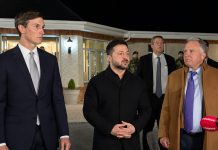
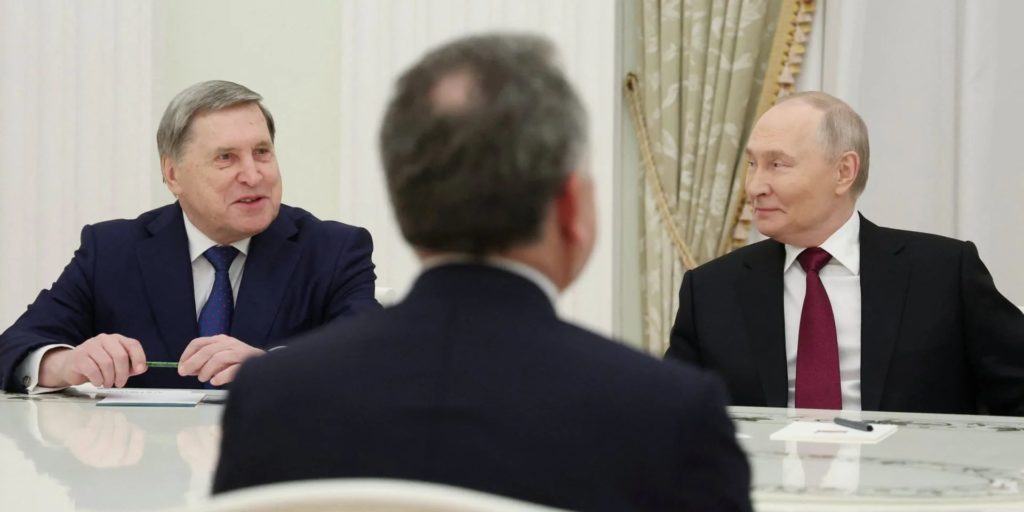
American envoys Steve Witkoff і Jared Kushner Following talks with Vladimir Putin, it was announced that diplomatic contacts would continue. At the same time, Washington recognises the need for European countries to be involved in discussions on the future security architecture.