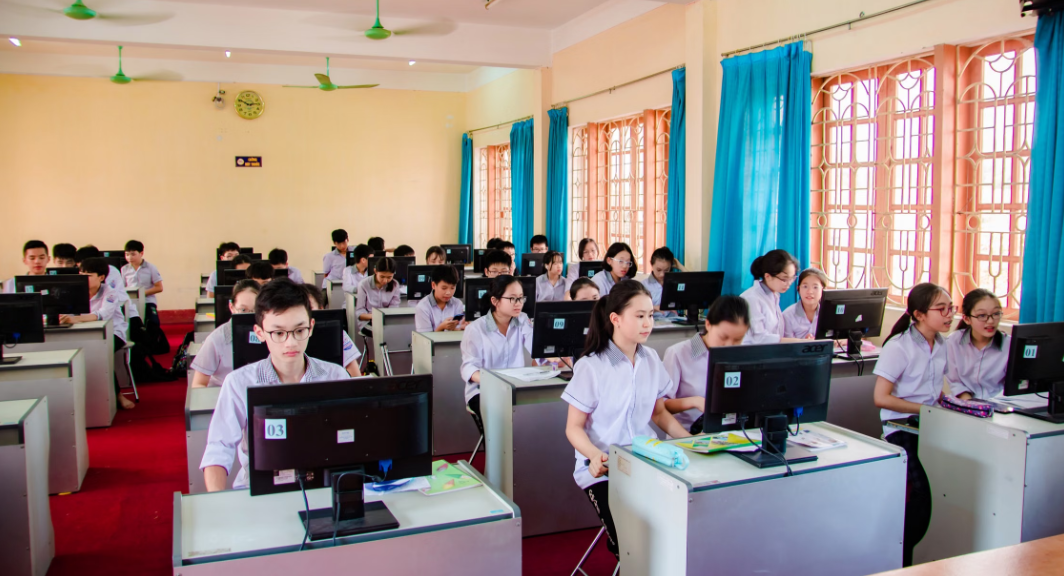
China plans to make the study of artificial intelligence an integral part of school education by 2030, reaching nearly 200 million pupils. Beijing regards the training of a new generation of specialists as one of the key factors in the country’s economic development and its technological rivalry with the United States.
How artificial intelligence is transforming education in China
In April 2026, the Chinese Ministry of Education, in collaboration with four other government departments, launched the «Artificial Intelligence + Education» programme. It aims to integrate technology into the learning process at all levels — from primary school to university.
The education reform has become part of Beijing’s broader strategy aimed at developing its own technologies and strengthening its position in competition from the US.
The curricula will be tailored to the children’s ages. In the lower years, pupils will be introduced to the basic principles of artificial intelligence; in the middle years, they will learn to apply neural networks to carry out practical tasks; and in the upper years, pupils will work on their own technology projects.
The authorities are also encouraging universities, research institutions and technology companies to open their laboratories to school pupils.
Pupils are creating their own apps
In Shanghai, pupils in Years 4 and 7 attend at least 30 lessons on the basics of AI during the school year. In Beijing, a minimum of eight teaching hours per year has been set, whilst in Ningxia and Gansu there are plans to include artificial intelligence in entrance examinations as early as 2027.
In some educational institutions, children are already using neural networks to create software. For example, a 13-year-old pupil at a private school in Beijing has used AI to develop over 200 apps, including a platform for submitting homework and a marketplace for selling second-hand items.
AI helps to make up for the shortage of teachers
In rural areas of China, technology is being used to tackle another problem — a shortage of qualified teachers. At a school in Anhui Province, around four thousand pupils are studying using materials created with the help of neural networks.
At the same time, the Chinese authorities are planning to introduce nationwide AI literacy standards for teachers. Knowledge of the relevant technologies will be included in teachers’ qualification examinations and certification procedures. Artificial intelligence will also be used to mark assignments, prepare lessons and personalise learning.
Restrictions on the use of neural networks
Despite the widespread adoption of AI, the Chinese Ministry of Education is seeking to prevent children from becoming overly reliant on technology. Restrictions have been put in place for primary school pupils on the independent use of generative neural networks without adult supervision.
Teachers are advised to teach children to verify the accuracy of the answers they receive, to evaluate information critically and to comply with data protection rules. The use of artificial intelligence should not replace the independent completion of learning tasks.