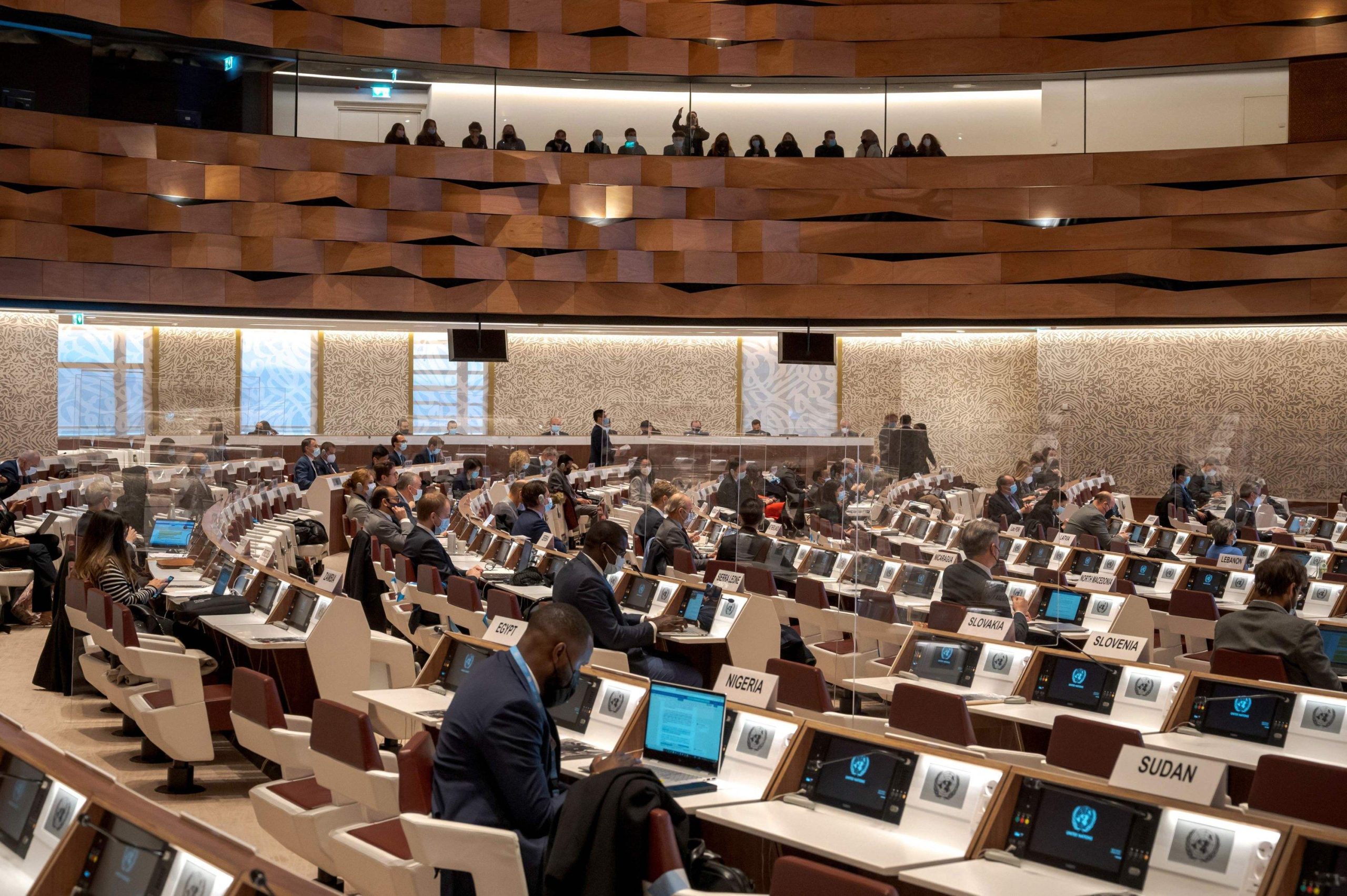
The US and Russia may block the start of negotiations on legally binding international restrictions on autonomous weapon systems capable of selecting and engaging targets without direct human intervention. The issue is being discussed at a UN conference in Geneva, which began on 16 November 2026. As Reuters reports, the majority of the 128 States Parties to the Convention on Certain Conventional Weapons support the introduction of binding rules, but the US, Russia and Israel oppose this approach.
- On 16 November 2026, a UN conference on the international regulation of autonomous weapons began in Geneva.
- The majority of the 128 member states support negotiations on legally binding limits.
- The US, Russia and Israel are opposed to the proposed binding treaty.
- Washington is proposing five years of negotiations on recommendations that will have no legal force.
- The International Committee of the Red Cross has warned of the risks associated with the use of autonomous weapons without adequate human oversight.
Why are the US and Russia opposed to new restrictions?
At the conference of the States Parties to the Convention on Certain Conventional Weapons, delegates are discussing the possibility of launching negotiations on an international instrument that would establish prohibitions and restrictions on lethal autonomous weapon systems (LAWS).
Such systems can use artificial intelligence to detect, select and engage targets without the operator having to make a separate decision at each stage of the weapon’s deployment.
The United States believes that existing international humanitarian law already sets out the necessary rules for the conduct of war. Washington is proposing a five-year negotiation process, which will result in recommendations that are not legally binding.
Russia had previously also opposed a legally binding agreement. However, according to Reuters, Moscow did not issue a separate official statement immediately prior to the start of the current negotiations.
In addition, a senior Western diplomat told the agency that the Russian side plans to prevent representatives of the European Union, who are attending the conference as observers, from speaking.
Israel is also among the states that do not support the proposed framework for mandatory international regulation.
Autonomous weapons are already being used on the battlefield
Development of artificial intelligence has accelerated the development of unmanned aerial vehicles, ground-based robotic systems, tanks and naval systems capable of carrying out combat missions with varying degrees of autonomy.
According to Reuters, semi-autonomous weapons and systems supported by artificial intelligence have already been used in combat operations in Ukraine, Sudan and the Middle East.
At the same time, the use of AI to assist the operator does not mean that the weapon makes decisions about lethal strikes entirely on its own. It is precisely the distinction between these capabilities that remains a subject of international debate.
Human rights organisations warn that autonomous systems may behave unpredictably, misidentify targets and pose a threat to the civilian population.
The International Committee of the Red Cross emphasises that existing rules of humanitarian law are insufficient to address the specific risks associated with the use of autonomous weapons.
Anna Gegir, a representative of the Future of Life Institute, pointed out that such technologies are no longer the stuff of science fiction, and that their practical application requires international regulation.
What restrictions are being proposed?
The chief negotiator proposed a two-year mandate to draw up a legally binding protocol setting out the rules for the use of autonomous combat systems.
Instead United Kingdom, Germany and France support the start of negotiations without first determining the legal status of the future document.
This approach leaves open the possibility of adopting either an international treaty containing binding provisions or political recommendations.
UN Secretary-General Antonio Guterres called on states to agree on clear bans and restrictions on autonomous weapons. He highlighted the humanitarian, legal, ethical and security risks associated with the use of such technologies.
According to Reuters, diplomats have not ruled out a compromise solution that would combine legally binding provisions with recommendations.
Will the countries be able to reach an agreement by the end of the week?
Negotiations in Geneva will run until 20 November 2026. Participants must decide whether to begin the process of developing new international standards for autonomous weapon systems.
Earlier, in September, differences between the states had already complicated the process of agreeing on a joint document concerning such technologies. The current conference is set to reveal whether the countries are ready to move from discussing the risks to reaching concrete international agreements.
As of 16 November, no legally binding agreement has been concluded. A final decision on the format of further negotiations is expected following the conference, whilst the positions of key military powers remain the main obstacle to reaching a consensus.