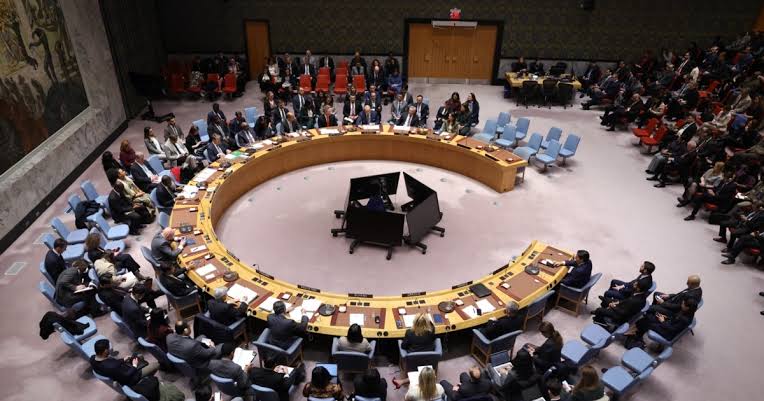
The International Peace Council (Board of Peace), which monitors the implementation of the ceasefire agreement in the Gaza Strip, warned the UN Security Council on 17 November 2026 of the risk of the truce between Israel and Hamas breaking down. In its first annual report, the organisation emphasised that the parties had failed to implement a number of key provisions of the peace plan, and that further delay could lead to a resumption of large-scale hostilities.
- The Peace Council has warned the UN of the risk of the ceasefire between Israel and Hamas breaking down.
- Key provisions of the peace plan for the Gaza Strip remain unfulfilled.
- The Palestinian Interim Administration and the international stabilisation force have not yet begun their work.
- Since the ceasefire began in the Gaza Strip, at least 1,600 Palestinians have been killed.
- More than 950,000 residents of Gaza are at risk of their temporary shelters being flooded.
Why did the Peace Council warn of a possible breakdown of the ceasefire?
The Peace Council has presented its first annual report on the implementation of the agreements reached through US mediation in 2025.
The document calls on Israel and HAMAS to fulfil the commitments it has made, and the UN Security Council to step up its support peace process.
The authors of the report emphasise that the main threat lies in the discrepancy between the agreed terms of the ceasefire and the actual situation on the ground.
The document states that any further delay in implementing the agreements could undermine the mechanisms necessary for the administration of Gaza, the withdrawal of Israeli troops and the start of reconstruction.
The Peace Council also warned that a ceasefire without tangible results for the population cannot remain stable indefinitely.
Which agreements have Israel and Hamas still failed to fulfil?
The report identifies several key obstacles to the implementation of the peace plan.
Firstly, despite the ceasefire agreement, the Israeli military continues to carry out strikes on the Gaza Strip. At the same time, the Peace Council points to Hamas’s military activity, which also complicates the implementation of the agreed measures.
Secondly, the Palestinian technocratic body set up to provide temporary civilian administration of Gaza has still not been able to begin operating directly within the enclave.
According to the Peace Council, Israel did not allow the administration to begin exercising its powers.
This has delayed the deployment of the international stabilisation forces, which are intended to provide a transitional security framework.
The absence of these forces, in turn, is hindering the further withdrawal of Israeli troops, the disarmament of Hamas and the start of a large-scale reconstruction of Gaza.
People continue to die in Gaza despite the ceasefire
The ceasefire agreement, which came into force on 10 October 2025, brought the main phase of hostilities to a halt, but did not put an end to the violence.
According to Reuters, on 17 November alone, as a result of Israeli fire and air strikes At least four Palestinians were killed, including a six-year-old boy.
Local medical staff have reported fatalities in Deir al-Balah, Khan Yunis and the Bir al-Naja area. At the time of publication, the Israeli military had not commented on these reports.
According to Gaza’s health authorities, at least 1,600 Palestinians have been killed since the ceasefire began. During the same period, five Israeli soldiers have been killed.
These figures show that the end of large-scale warfare did not mean a complete cessation of armed conflict.
The authors of the report paid particular attention to the critical situation facing the civilian population.
As a result of the destruction of residential buildings and infrastructure, a significant proportion of the residents of the Gaza Strip are forced to remain in tent camps or damaged buildings.
According to the United Nations Office for the Coordination of Humanitarian Affairs, more than 950,000 people are in temporary accommodation at moderate or high risk of flooding.
Heavy rain in early November caused tents to be flooded and property damage affecting at least 26,000 households.
International humanitarian organisations are warning of an acute shortage of safe accommodation, mattresses, blankets and materials for repairing temporary shelters.
On 17 November, UN representatives also warned of the risk of deaths from hypothermia if essential aid did not reach Gaza. The Israeli agency COGAT, which coordinates humanitarian deliveries, has, for its part, reported that preparations are underway for the winter season and that the import of supplies and medicines is continuing.
What needs to happen to maintain the ceasefire
The Peace Council has called on the UN Security Council to step up pressure on the parties to the agreements in order to speed up the implementation of the agreed plan.
Among the top priorities are putting an end to breaches of the ceasefire, getting the temporary civilian administration up and running, deploying international forces, and creating the conditions for the reconstruction of the destroyed infrastructure.
The report emphasises that delays on the part of one party cannot justify a failure to fulfil obligations on the part of the other.
According to the Peace Council, the ultimate aim of the process should be not only to bring an end to hostilities, but also to pave a realistic path towards Palestinian self-determination and statehood.
As of 17 November 2026, the ceasefire in Gaza remains formally in force, but its key provisions have yet to be implemented. The Peace Council warns that without concrete steps by Israel, Hamas and international mediators, the peace process could collapse.