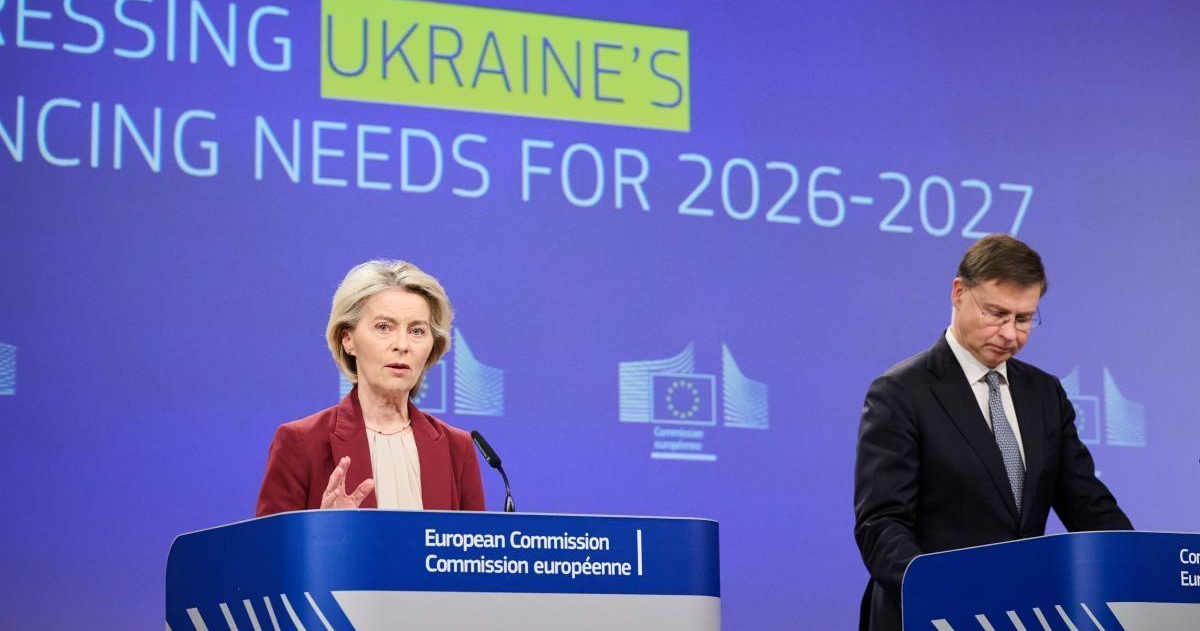
On 18 November, the European Commission unveiled a new financial support mechanism for Ukraine for 2027, which provides for an additional loan of 45 billion euros. According to European Commission President Ursula von der Leyen, these funds will cover almost two-thirds of Ukraine’s projected funding shortfall for next year.
Key points at a glance:
- The European Commission has proposed providing Ukraine with an additional 45 billion euros in 2027.
- It is planned to allocate 25 billion euros for defence purposes.
- A further 20 billion euros has been earmarked to support the national budget.
- Ukraine will repay the principal amount of the loan once it has received reparations from Russia.
What does the EU plan to spend the 45 billion euros on?
The new funding will supplement the European Union’s previously agreed €90 billion loan programme for 2026–2027.
According to the European Commission’s estimates, even taking into account the partners’ previous commitments Ukraine’s funding shortfall in 2027 will amount to around 70 billion euros.
The proposed loan will be allocated across two areas:
-
€25 billion — military aid and the procurement of weapons;
-
€20 billion — budgetary support through macro-financial assistance programmes and the Ukraine Facility.
Andrius Kubilius, the European Commissioner for Defence, noted that the priority areas for military funding will be air defence systems, drones, electronic warfare equipment, missiles and ammunition.
Ukraine will repay the loan once Russia has paid reparations
European Commissioner for Economic Affairs Valdis Dombrovskis explained that the European Union would raise funds on international financial markets backed by guarantees from the European budget.
Ukraine will only be obliged to repay the principal amount of the loan once it has received reparations from Russia for the damage caused by the war.
Ukraine will be responsible for paying the interest on the loan; however, the European Commission has provided for the possibility of this being reimbursed at the EU’s expense. The first interest payments are expected in 2028.
Funding will depend on the continuation of reforms
The disbursement of the budgetary component of the aid will be conditional upon Ukraine’s implementation of reforms in the areas of the rule of law and the fight against corruption, as well as its fulfilment of commitments made in the context of EU accession negotiations.
The European Commission’s proposal is to be considered by the leaders of the European Union member states. Following political agreement, amendments to the EU’s multiannual financial framework will also be required, and these will need to be approved by the European Parliament.