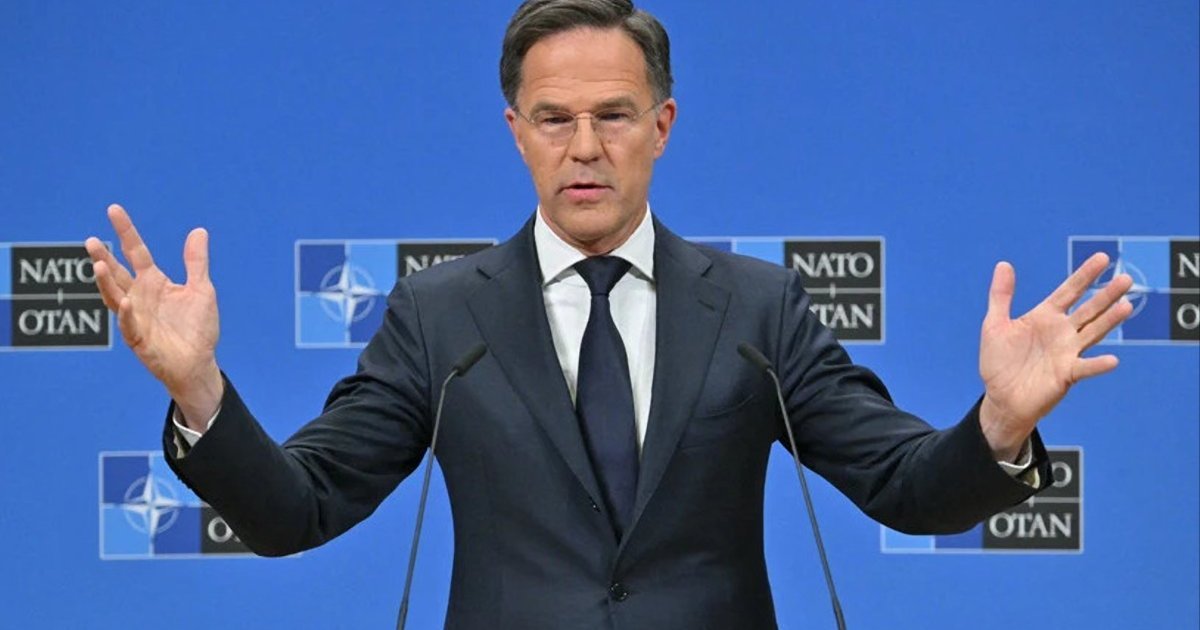
NATO Secretary-General Mark Rutte stated that it is not only the armed forces of Alliance member states that must prepare for a possible war, but also the civilian population, businesses and government bodies. According to him, the Russian military machine is operating at full capacity and will not stop even after the war against Ukraine has ended. The Secretary-General called on allies to follow the example of Norway, Sweden, Denmark and Finland, which have already developed mechanisms to prepare society for crisis situations. Rutte made these remarks on 23 November during a speech at the NATO Parliamentary Assembly in Berlin.
- Rutte called on all NATO countries to prepare their populations, businesses and institutions for a possible war.
- The Russian war machine will continue to operate even after the war in Ukraine has ended.
- The Secretary-General cited Norway, Sweden, Denmark and Finland as examples of preparedness.
- The civilian population needs to know how to assist the military in the event of a threat.
- NATO is stepping up the protection of critical infrastructure and defence production.
The Russian war machine will not stop once the war in Ukraine is over
During a speech in Berlin Mark Rütte He emphasised that Russia has redirected a significant part of its economy towards military needs and continues to ramp up arms production. Even if hostilities in Ukraine were to end, in his view, this would not automatically mean the end of the threat to European states.
The NATO Secretary-General highlighted the strengthening of Moscow’s cooperation with China, Iran and North Korea. He identified sabotage, cyber-attacks, damage to undersea cables, airspace violations and attacks on transport infrastructure as particular threats.
The increase in these risks is already forcing the Alliance to reconsider preparations for a possible war with Russia. This is not just a question of increasing troop numbers, but also of states’ ability to keep the economy, transport and public services running during a major crisis.
Rutte named four NATO countries that are already preparing their civilian populations
The Secretary-General called on other allies to follow the example of Norway, Sweden, Denmark and Finland. These countries explain to their citizens in advance how to act in the event of a military conflict and how to interact with the armed forces and the emergency services.
According to Rutte, civilians should know how not to hinder the movement of military personnel and, where necessary, to assist them. He described the coordination of the police, medical staff, firefighters and other services that ensure the functioning of the state as an important part of this preparation.
However, responsibility cannot be limited solely to the government or the military command. The business sector, local communities, public bodies and citizens must all be involved in the preparations.
NATO is preparing the energy sector, transport and hospitals for possible attacks
Rutte paid particular attention to the resilience of critical infrastructure. Even in the event of large-scale threats, the public must have access to electricity, heating, medical care, transport and communications.
To this end, the Alliance is developing joint measures to protect energy networks, sharing information on potential threats and cooperating with energy suppliers. Cyber defences and the security of underwater infrastructure in the Baltic Sea are also being strengthened.
The Secretary-General emphasised that the defence industries of NATO member states must ramp up arms production more quickly. According to the Alliance’s forecasts, as early as 2027 its manufacturers will be able to produce approximately four million artillery shells a year — almost twice as many as in 2025.
Support for Ukraine remains one of the Alliance’s priorities
Rutte called on NATO member states to continue the supply of air defence systems to Ukraine, ammunition and other weapons. According to him, such aid is necessary not only to defend Ukrainian cities, but also to strengthen Kyiv’s position in any potential negotiations with Russia.
He reiterated the allies’ commitment to provide Ukraine with military aid, equipment and training worth 70 billion euros in 2026 and a similar amount in 2027.
At the same time, Rutte’s call for society to prepare does not mean that NATO has announced the imminent outbreak of war with Russia. The aim is to strengthen defence capabilities and civil preparedness so that Alliance member states can counter potential threats.