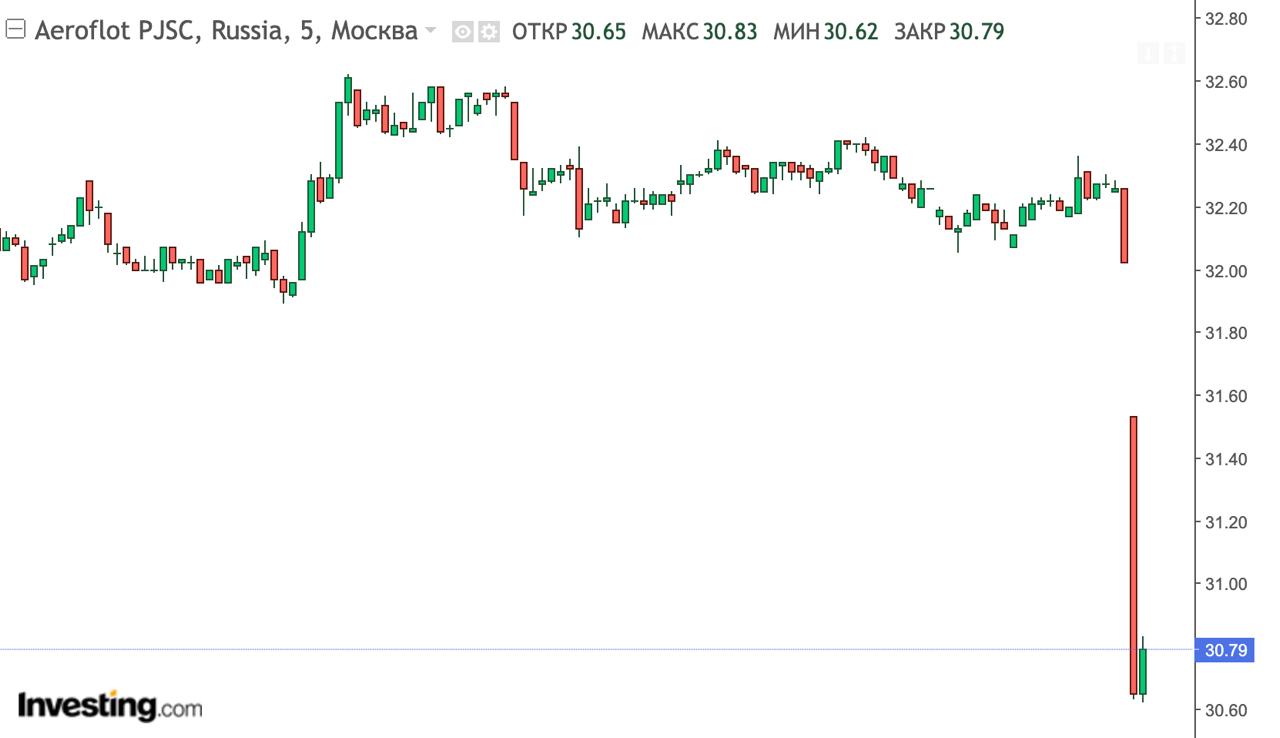
Shares in Russian airlines fell on 1 September and showed heightened volatility on the Moscow Stock Exchange, against a backdrop of frequent restrictions on airport operations due to drone attacks and a warning from Ukrainian President Volodymyr Zelenskyy about the danger to civil aaviation in Russian airspace. At the same time, stock market data does not establish a direct link between his statement and the movement in share prices.
Briefly about the main points
- «At one point, Aeroflot’s share price fell below 32 roubles per share.
- UTair shares were also trading below their previous closing price.
- Zelenskyy has called on hauliers and insurers to take into account the risks in the Russian Federation.
- Restrictions were introduced overnight at nine Russian airports.
- EASA has extended its risk assessment for Russian airspace until 2027.
Zelenskyy has called on airlines and insurers to take these threats into account
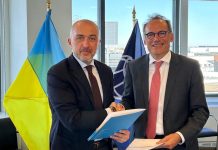
President of Ukraine said., …that airlines, insurers and governments must take account of the new reality in Russian airspace. He emphasised that Ukraine does not pose a threat to civil aircraft as such, but the presence of drones in Russian airspace creates circumstances that carriers must take into account.
According to Zelenskyy, this applies in particular to airlines that continue to fly to Moscow, St Petersburg and other major Russian aviation hubs. The Ukrainian Ministry of Foreign Affairs and other state bodies are to provide international organisations with information on the increased risks.
This is not about Ukraine legally closing Russia’s airspace, but about a warning regarding the actual risk to the normal operation of civil aviation in wartime.
Night-time restrictions have been imposed on airports in St Petersburg, the Volga region and southern Russia
On the night of 1 September, Rosaviatsiya temporarily restricted the arrival and departure of aircraft at Pulkovo Airport in St Petersburg, as well as in Kazan, Nizhnekamsk and Bugulma. Earlier that same night, restrictions had been introduced in Samara, Sochi, Penza, Saratov and Ulyanovsk.
The Russian authorities explained these measures as necessary to ensure flight safety. For airlines, airport closures may result in flight delays and cancellations, route adjustments, as well as additional costs for fuel, crew wages and passenger services.
The European regulator is maintaining its risk assessment for a significant portion of Russian airspace
The European Aviation Safety Agency (EASA) has extended the risk bulletin for Russian airspace west of 60° east longitude until 31 January 2027. The document covers, in particular, the flight information regions of Moscow, St Petersburg, Rostov-on-Don, Yekaterinburg and Samara.
EASA attributes the threats to the operations of Russian air defences in response to missile and drone strikes, potential shortcomings in civil-military coordination, the risk of aircraft being misidentified, as well as the jamming and spoofing of satellite navigation signals. The agency notes that most of the incidents recorded during periods of heightened air defence activity or drone attacks occurred in airspace that the Russian authorities had not closed.
The bulletin does not impose an automatic flight ban and does not imply an inevitable rise in insurance premiums. However, if insurers assess certain areas as higher-risk, insurance may become more expensive, and foreign carriers may review their routes. For the Russian sector, an additional constraint is the difficulty of rapidly expanding the fleet given the sanctions against the supply of aircraft, spare parts and related services.