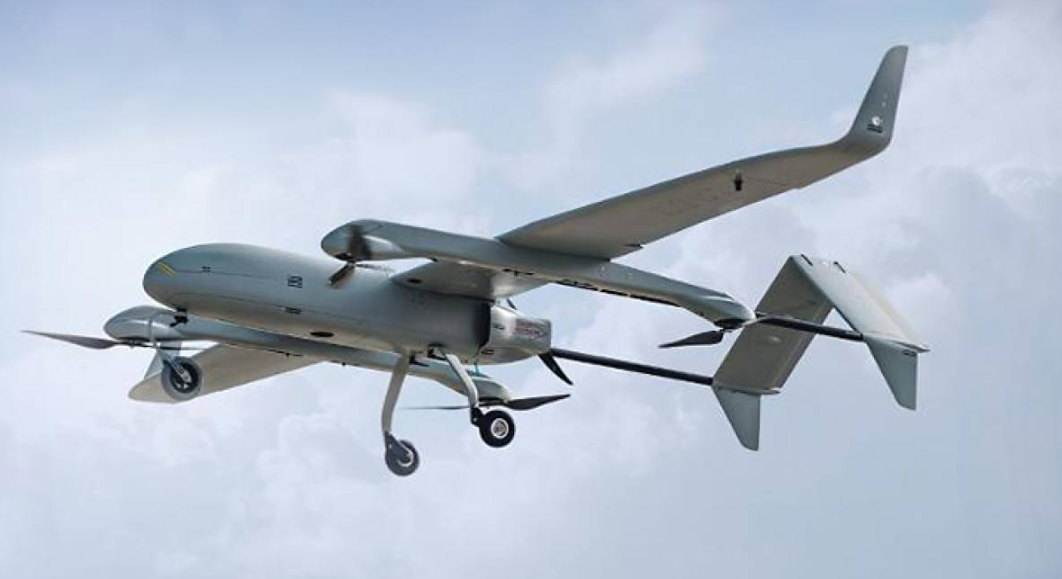
A pilot project is being prepared in Ukraine to transport donor organs, blood, medicines and medical devices using drones. The first participant is set to be the Heart Institute of the Ministry of Health, which already has three drones for such tasks. In 2026–2027, medical professionals plan to carry out eight deliveries to test the feasibility of using drone logistics during wartime. One of the drones being tested is capable of travelling up to 700 kilometres. On 16 October, MP Olga Vasylevska-Smaglyuk announced the preparations for the project. However, regular medical flights have not yet commenced: a corresponding government decision is required to launch the trial.
Ukraine is preparing its first medical transport operations using drones
The Ministry of Health has developed a mechanism for the pilot transport of medical supplies using unmanned aerial vehicles. The initiative is primarily aimed at supporting transplant medicine, where the speed of delivery of a donor organ can directly affect whether an operation can be carried out.
According to the Member of Parliament Olga Vasilevska-Smaglyuk, the pilot project will be carried out by the Heart Institute of the Ministry of Health of Ukraine. The institute already has three drones, and eight trial flights are planned for 2026–2027.
Approximately 1 million hryvnias has been earmarked for the project. The Heart Institute itself plans to fund it. The trial is set to run for the duration of martial law, but for no longer than two years. Once the trials are complete, the government will be able to assess the results and decide whether to adopt this logistics system on a permanent basis.
Why do medical professionals need drones?
During a transplant, it is extremely important to get the donor organ to the hospital quickly. The time for which a heart remains suitable for transplantation whilst outside the human body is limited.
Under normal circumstances, specialised vehicles or aircraft can be used to transport organs between remote medical centres. However, due to the full-scale war, Ukrainian airspace is closed to civil aviation, whilst road transport is hampered by checkpoints, damaged roads, traffic restrictions and the risk of Russian attacks.
According to the director of the Heart Institute Boris Todurov, drones could potentially deliver donor organs almost twice as fast as cars. This would help to reduce the time between the organ being removed from the donor and the start of the transplant operation.
What are the specifications of the Heart Institute’s medical drones?
Back in 2025, Boris Todurov spoke about trials of Ukrainian military drones adapted for transporting medical supplies. One of them is a hybrid aircraft capable of vertical take-off and landing. Once it has gained altitude, it transitions to horizontal flight.
According to the specifications provided, the drone is capable of:
-
reach speeds of up to 150 km/h;
-
cover a distance of up to 700 km;
-
to carry goods weighing up to 10 kg;
-
to take off and land without a conventional runway.
For shorter routes, the Heart Institute has also been testing a copter-type drone with a payload capacity of up to 20 kg and a range of approximately 50 km. However, these specifications relate to individual models tested, rather than all three drones planned for use in the experiment.
How the safety of transporting a donor heart was checked
The Heart Institute has already carried out experiments to investigate the effects of flight on biological materials. A special thermal chamber was used for the tests, into which a pig’s heart and red blood cell suspension were placed. After the flight, specialists checked the temperature, the condition of the tissues and blood cells, and the effects of vibrations. In particular, experiments were carried out at air temperatures of around –10 and +30 degrees.
According to Todurov, both trials yielded positive results. However, the successful transport of experimental biological samples does not automatically mean that the transport of donor organs for actual operations will be permitted.
How flights will operate during martial law
Due to military risks, medical UAV logistics will require special permits and strict security measures. The draft resolution of the Cabinet of Ministers provides for each flight to be approved by the General Staff of the Armed Forces of Ukraine. Applications to use the airspace will need to be submitted at least one hour before the scheduled departure.
In addition, the draft imposes restrictions on flights over Kyiv, regional centres and critical infrastructure sites. Separately agreed routes may be provided for take-off and landing directly at hospitals. Specific requirements will apply to control systems, cargo security and the maintenance of the required temperature. Should it be impossible to continue the flight, the medical cargo will have to be collected by a ground-based rapid response team.
When will drone-based medical deliveries begin in Ukraine?
The Ministry of Health published the draft of the relevant government resolution for public consultation as early as 3 August 2026. On 30 September, on the official website MINISTRY OF HEALTH A report on the outcome of the discussion has been published.
As of 16 October, there has been no confirmation that the Cabinet of Ministers has approved the resolution. It is therefore too early to talk about the launch of regular flights. Once the trial has concluded, the government will assess the safety, economic viability and practical effectiveness of using drones.
If the trials prove successful, the technology could be considered for wider use in Ukrainian healthcare.