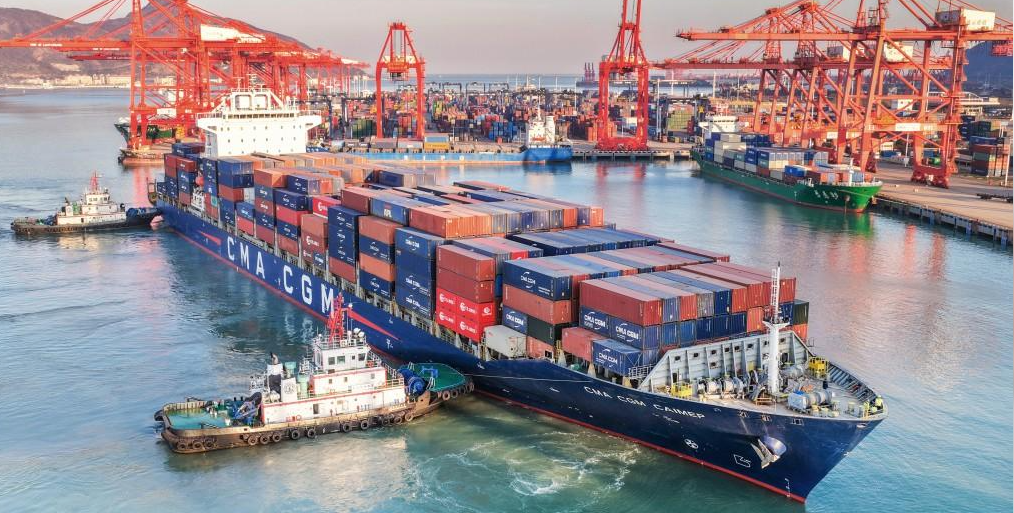
China’s trade surplus for the first ten months of 2026 reached $1.04 trillion against a backdrop of rapid growth in exports of high-tech products. The global boom in artificial intelligence and large-scale investment in data centres have led to a sharp increase in overseas sales for Chinese manufacturers. At the same time, record export volumes are helping Beijing to offset weak domestic demand, but are exacerbating trade disputes with the US and the European Union.
- China’s trade surplus for the first ten months of 2026 reached $1.04 trillion.
- In October, exports rose by 35.2 per cent, whilst imports rose by 41.6 per cent.
- Semiconductor exports rose by 111.1 per cent over the ten-month period.
- Global investment in artificial intelligence is bolstering Chinese electronics manufacturers.
- A record surplus could exacerbate China’s trade disputes with the US and the EU.
China’s exports rose by 35 per cent month-on-month on a year-on-year basis
In October, Chinese exports rose by 35.2 per cent compared with the same month last year. The figure exceeded economists’ forecasts, who had expected growth of 33.5 per cent. In September, the growth rate stood at 36.3 per cent.
According to figures for January–October, China’s foreign trade surplus reached $1.04 trillion. China has exceeded the trillion mark for the second year running, and did so a month earlier than in 2025.
Imports also showed significant growth — up 41.6 per cent in October, compared with the forecast of 32 per cent. Due to an acceleration in overseas purchases, the monthly trade surplus fell from $133.5 billion in September to $105.3 billion in October.
The artificial intelligence boom has become one of the main drivers of exports
A significant proportion of this growth was driven by global demand for artificial intelligence infrastructure equipment. Companies continue to invest billions of dollars in building data centres, purchasing electronic components and expanding computing capacity.
In the first ten months of the year, the value of China’s semiconductor exports rose by 111.1 per cent, whilst total exports of high-tech products increased by 47.9 per cent.
At the same time, Chinese car manufacturers are expanding their presence in international markets. Domestic car sales in China have been falling for the twelfth month running, prompting companies to seek buyers abroad more actively.
Economists point out that strong external demand is partly offsetting the prolonged downturn in the property market and subdued domestic consumption. However, the growing dependence on exports is making the Chinese economy more vulnerable to changes in global economic conditions.
Record surplus threatens to spark new trade disputes
The rapid growth in Chinese exports is causing concern amongst Beijing’s largest trading partners. The European Union is already considering additional restrictions on certain categories of Chinese goods in an attempt to protect its own manufacturers from increased competition.
On 9 November, the United States and China officially extended trade truce for a further two months. At the same time, disputes over tariffs, access to technology and international trade conditions remain unresolved.
Analysts at Macquarie expect strong demand for artificial intelligence products to underpin Chinese exports until 2027. However, growth could slow as early as the first quarter of next year.
According to ING economists, trading in artificial intelligence-related commodities is set to remain buoyant in the coming months, despite the volatility in the stock markets.