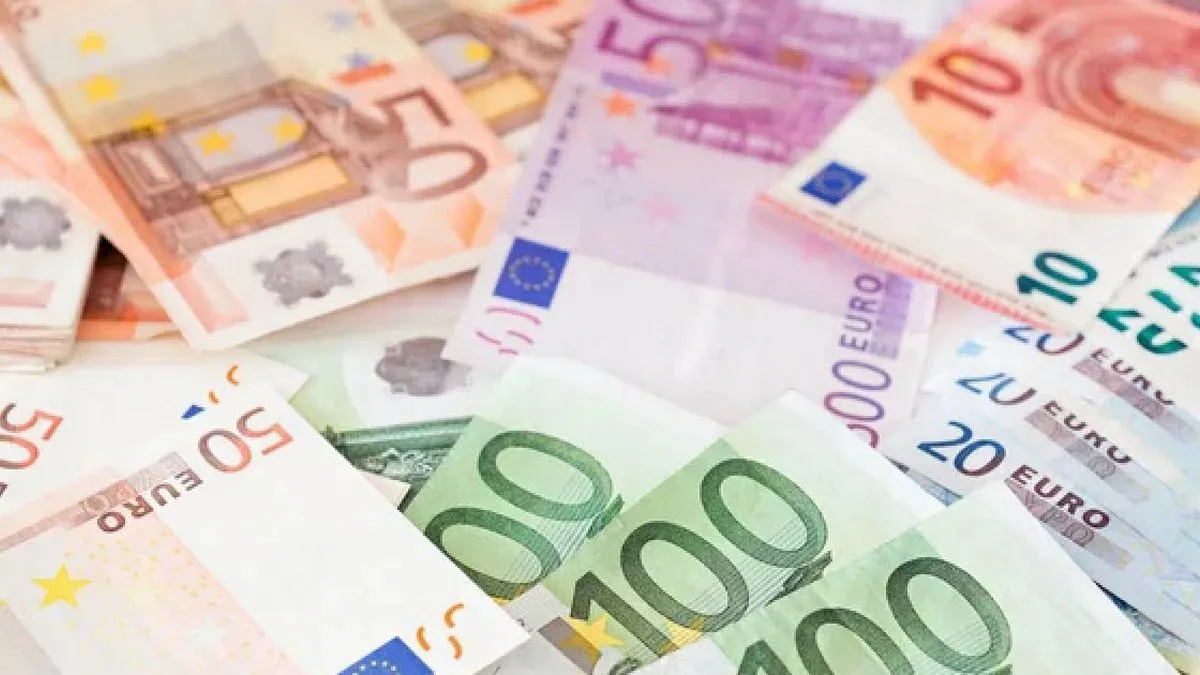
Ukraine's economic and defence capabilities in times of major crises are based on clear, calculated figures of external support. As of 2026, the European vector has become a key financial source for our country, and the total amount of assistance in euro from the EU institutions and individual member states has already exceeded the psychological mark of 200 billion euros.
Global balance sheet: total volumes of European money
According to the official reports of the European Parliament's Research Service, the total assistance under the Team Europe approach reached 200.4 billion euros. These funds are divided into three large baskets:
-
Military sector - 75.2 billion euros. This includes direct supplies of equipment, ammunition and financing of joint defence production.
-
Macro-financial direct assistance - 43.3 billion euros. Loans and grants to close “holes” in the state budget.
-
Special programmes (including the European Peace Facility) - 36.8 billion euros. The funds are intended to compensate EU countries for the weapons transferred to Ukraine.
A separate historic step was the recent adoption and ratification by the Verkhovna Rada of a large-scale of the loan package in the amount of up to 90 billion euros, The loan is secured by the proceeds of frozen Russian assets and will ensure long-term financial stability.
Who pays the most: Top 5 donor countries in euros
Within the European Union, the financial burden is unevenly distributed. The five most powerful economies on the continent provide the bulk of financial and military tranches.
| Country / Institution | Amount allocated (in euros) | Main funding focus |
| Germany | 44.4 billion euros | Air defence systems (Patriot, IRIS-T), armoured vehicles, humanitarian demining and energy financing. |
| France | 24.1 billion euros | Long-range missile systems, artillery (Caesars), aviation component. |
| United Kingdom | 20.0 billion euros | Missile weapons, massive supplies of drones, military training. |
| Italy | 15.6 billion euros | Humanitarian projects, critical infrastructure protection, financial stability. |
| Netherlands | 14.4 billion euros | Joint procurement of shells, F-16 financing and IT coalition. |
What exactly are the funds spent on: breakdown by area
Each tranche in the euro, The money that comes into Ukraine has a clear purpose. The money does not lie in accounts, it works in specific sectors of the economy and defence.
1. The military sector and the drone revolution
The defence sector has undergone significant changes. If previously the funds were spent exclusively on the purchase of off-the-shelf Western weapons, in 2026 funding was reoriented to Ukrainian defence industry.
-
In the first four months of 2026 alone, European countries allocated 12.33 billion euros in a straight line military assistance.
-
Of this amount, record-breaking 1.5 billion euros went directly to the drone production in Ukraine and in cooperation with Ukrainian companies. This is more than in the whole of last year. The main sponsors of the Ukrainian drone sector are United Kingdom, Germany and Norway (allocated 500 million each). euro), as well as the Netherlands (250 million euro).
2. Social sector and state apparatus (Ukraine Facility)
Through the large-scale Ukraine Facility programme of 50 billion euros (designed for 2024-2027), Ukraine has already received more than 26.8 billion euros. At the end of May 2026, the EU Council approved the next tranche of 2.8 billion euros.
Where this money goes:
-
Payment of salaries to doctors, teachers and civil servants.
-
Provision of pensions and social benefits for IDPs.
-
Implementation of structural reforms necessary for EU accession.
3. Energy security and utilities
As the country's energy system is constantly under attack, European partners have allocated more than 2 billion euros exclusively on energy security.
-
320 million euros is aimed at humanitarian demining of territories around infrastructure facilities and farmland.
-
The funds will be used to purchase and deliver more than 11,300 industrial generators, high-voltage transformers and the deployment of gas-powered mini-power plants to decentralise the power grid.
Who controls the targeted use of billions of euros?
Western donors have introduced an unprecedented level of monitoring. To oversee the spending of every hundred euros, a special The Audit Board, based in Brussels and Kyiv.
Economic summary for Ukraine
Direct financing and investments in billions euro allow the Ukrainian economy to avoid hyperinflation, stabilise the national currency and enable it to finance its own military expenditures (as all domestic taxes in Ukraine go exclusively to the frontline, while social security and reconstruction are covered by European money).
The transition from simple aid to domestic purchases of weapons and drones is stimulating domestic production, making European financial packages a powerful driver for Ukrainian technology businesses.