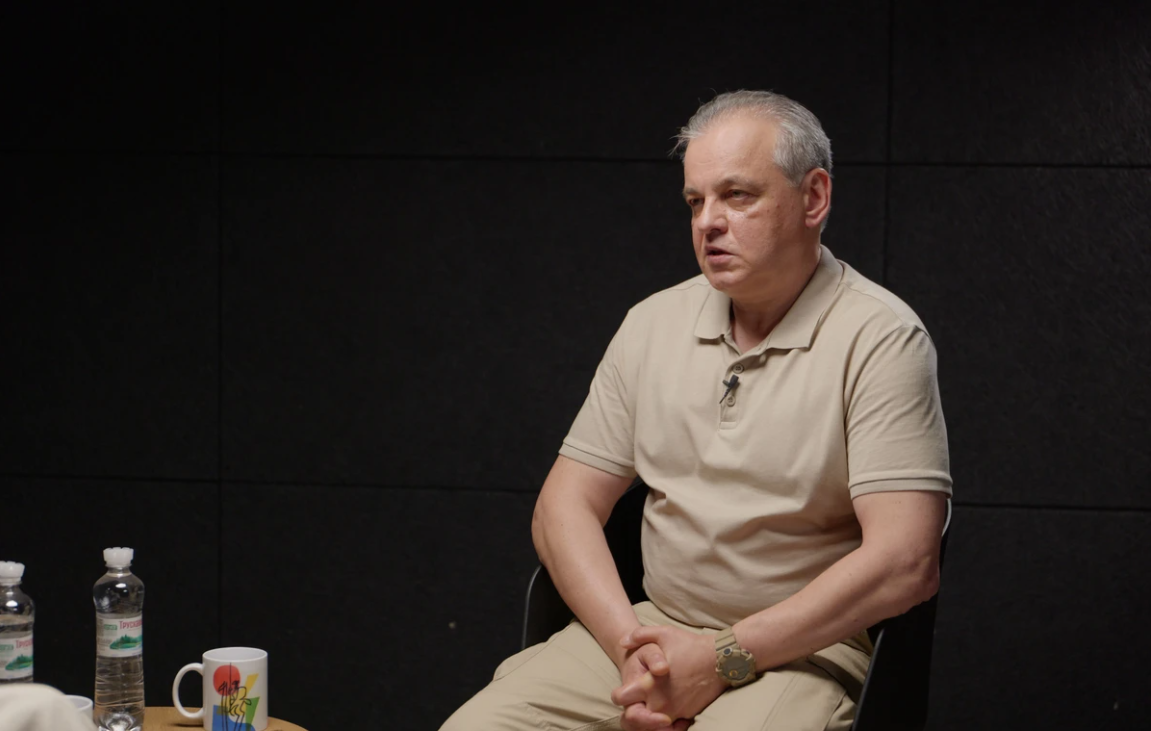
Serhiy Rakhmanin, a member of the parliamentary committee on national security, defence and intelligence, described the dismissal of Mykhailo Fedorov as defence minister as a mistake. In an interview with «Ukrainska Pravda», he said that the acting minister, Yevhen Khmara, had inherited financial problems, supply issues and an unresolved mobilisation crisis.
Briefly about the main points
- Rakhmanin believes that six months was not long enough to assess Fedorov’s performance.
- The MP described Fedorov’s return to the Ministry of Defence as unlikely.
- Khmara will have to cover the costs of pay and supplies.
- Mobilisation requires coordinated decisions by the President, the Government and the security forces.
An assessment of Fedorov’s resignation
Sergey Rakhmanin stated that in order to assess the work Mikhail Fedorov Six months in the post of Defence Minister were not enough. In his view, there were no valid grounds for his dismissal, although the former minister did make some mistakes.
The MP cautioned against taking a simplistic view of the personnel history. He considers both the excessive idealisation of Fedorov and attempts to place all the blame for the failure of the mobilisation reforms on him to be misguided. Rakhmanin emphasised that reform must be systemic, enshrined in law and change the way things are done, whereas, in his view, many of Fedorov’s team’s initiatives remained at the level of ideas, presentations or diagrams.
At the same time, Rakhmanin acknowledged the former minister’s contribution to streamlining some of the supply processes for the Armed Forces of Ukraine. In particular, he spoke about scaling up drone supply, fibre-optic cables and the development of capabilities to strike at the enemy’s logistics and rear services.
The MP considers it unlikely that Fedorov will return to his post as minister. He attributed this to the president’s reluctance to admit mistakes, as well as the risk of further personnel upheaval within the ministry, where Khmara has already taken up the post of acting minister.
What the new management needs to decide
According to Rakhmanin, Cloud He inherited some serious financial challenges. He referred to Fedorov’s public statement regarding the use of the financial allocation to purchase drones, in order to ensure an uninterrupted supply and build up stocks. The MP described addressing this need as one of the tasks facing the department’s new head.
Among other issues, Rakhmanin mentioned catering contracts, fuel supplies, the operation of the TCC and mobilisation. He is convinced that this last problem cannot be solved by a single person or a single ministry: it requires coordination between the Ministry of Defence, the General Staff, the Ministry of Finance, the Ministry of Economy, human rights activists, demographers and other bodies.
Rakhmanin identified four aspects of the mobilisation problem: violations of citizens’ rights by the Territorial Recruitment Centres and the police, corruption schemes, unauthorised desertion from units, and evasion of conscription. In his view, the decisions must be enshrined in law, and the President must take responsibility for initiating this process.
The Khmara and Drapaty Duo
Rakhmanin said that Yevhen Khmara and the new commander-in-chief Mikhail Drapaty have a normal working relationship. However, their relationship is yet to be put to the test by their new posts, as the interaction between the Minister of Defence and the Commander-in-Chief is not usually straightforward.
In his view, both leaders are level-headed, but did not prepare for their appointments in advance. The MP also noted that the posts of Minister of Defence and Commander-in-Chief have a political dimension: they require the ability to defend one’s position convincingly before the President and to resist unwanted influence from those around him.
Rakhmanin believes that Drapatiy should assess the issue assault regiments primarily from a military rather than a socio-political perspective. The success of the new leadership duo, he said, will depend on their ability to set priorities and prevent inter-agency conflicts, which have previously hampered the defence sector.