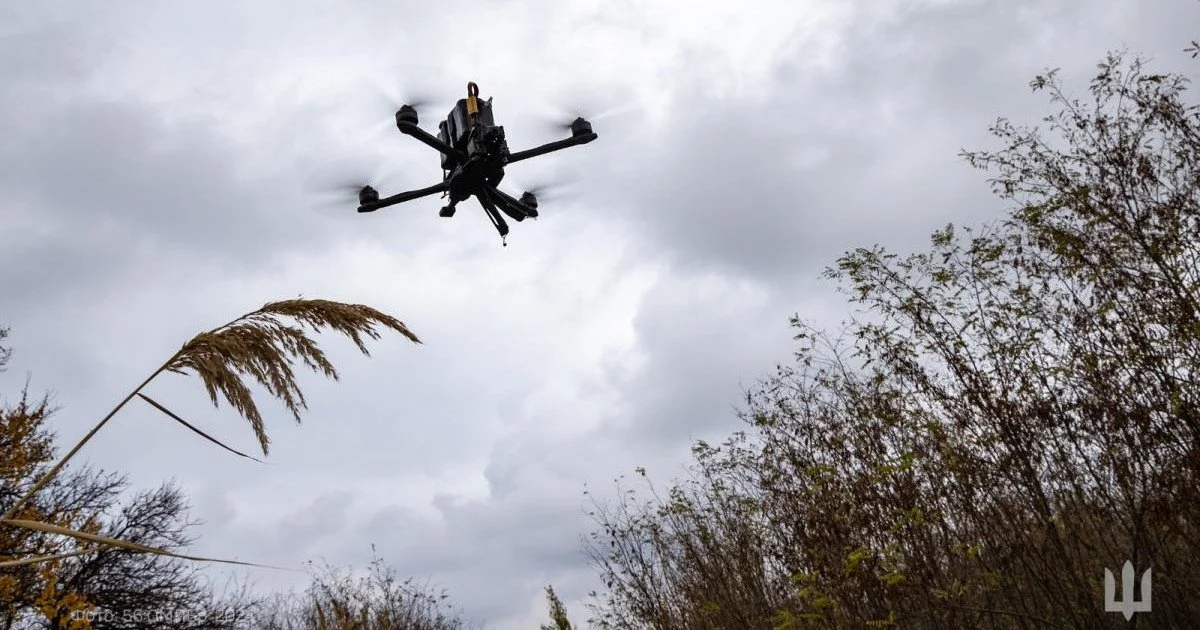
In certain sectors of the front line, the area where Russian and Ukrainian drones pose a high risk to transport can extend up to 40 kilometres, reports *Die Zeit*. The publication described the work of the «Da Vinci Wolves» battalion in the Dnipropetrovsk region, where heavy drones deliver water, food, medicines and ammunition to the front lines.
Briefly about the main points
- *Die Zeit* estimates the drone zone in certain areas to be up to 40 kilometres.
- «The »Da Vinci Wolves’ provide cover with heavy drones.
- Land-based freight transport is becoming increasingly dangerous.
- The Ministry of Defence had reported on an FPV with a claimed range of over 30 kilometres.
- AI is used for data analysis, target identification and mission planning.
Deliveries where transport becomes a target
У reports Die Zeit Two soldiers from the «Da Vinci Wolves» battalion are preparing for the eighth flight of the day by a heavy bomber drone. Its mission is to deliver supplies to two Ukrainian positions.
In areas where drones are attacking transport, water, food, medical supplies and ammunition are delivered to some infantry positions almost exclusively by air. This changes the logistics of the so-called ‘last mile’ — the relatively short stretch between the supply route and the position itself.
The range of drones increases the risks to road traffic
Die Zeit cites the estimate of a range of up to 40 kilometres for specific directions, rather than as a single figure for the entire front line. The distance at which transport may be vulnerable depends on the type of drone, the terrain and the countermeasures in place.
The emergence of such zones can be partly explained by the development of long-haul FPV drones. In February, the Ukrainian Ministry of Defence announced that the «Baton Optic» fibre-optic FPV, with a claimed engagement range of over 30 kilometres, had been cleared for operational use. According to the ministry, it is designed to engage, in particular, artillery, lightly armoured vehicles, motor vehicles and field fortifications, and its control channel is protected against electronic warfare measures.
This does not mean that armoured vehicles will disappear completely from the battlefield. Rather, the increasing range and prevalence of UAVs are forcing units to change the way they move, deploy and resupply.
The widespread use of drones
The Commander-in-Chief of the Armed Forces of Ukraine reported that in April 2026, unmanned systems carried out nearly 357,000 combat missions and struck over 160,700 verified targets. Systems Middle Strike, according to this information, 424 Russian targets were struck at ranges of between 20 and 250 kilometres.
The National Security and Defence Council states that FPV drones create areas of destruction in specific locations and significantly hamper the movement of Russian military vehicles and transport. Russia is also expanding its unmanned capabilities: according to the Commander-in-Chief of the Armed Forces of Ukraine, Russia plans to manufacture 7.3 million FPV drones by 2026.
Autonomous functions are becoming part of the «chain of engagement»
Die Zeit also reports on remote flight control and the use of artificial intelligence, which helps drones recognise equipment and positions. The Ukrainian Ministry of Defence has reported that AI-based solutions are used to analyse combat data, detect Russian targets, plan missions and improve the effectiveness of operations.
However, this does not render the operator’s role obsolete. The introduction of such systems can reduce the time between target detection and action, and also help crews to operate at a greater distance from hazardous areas.