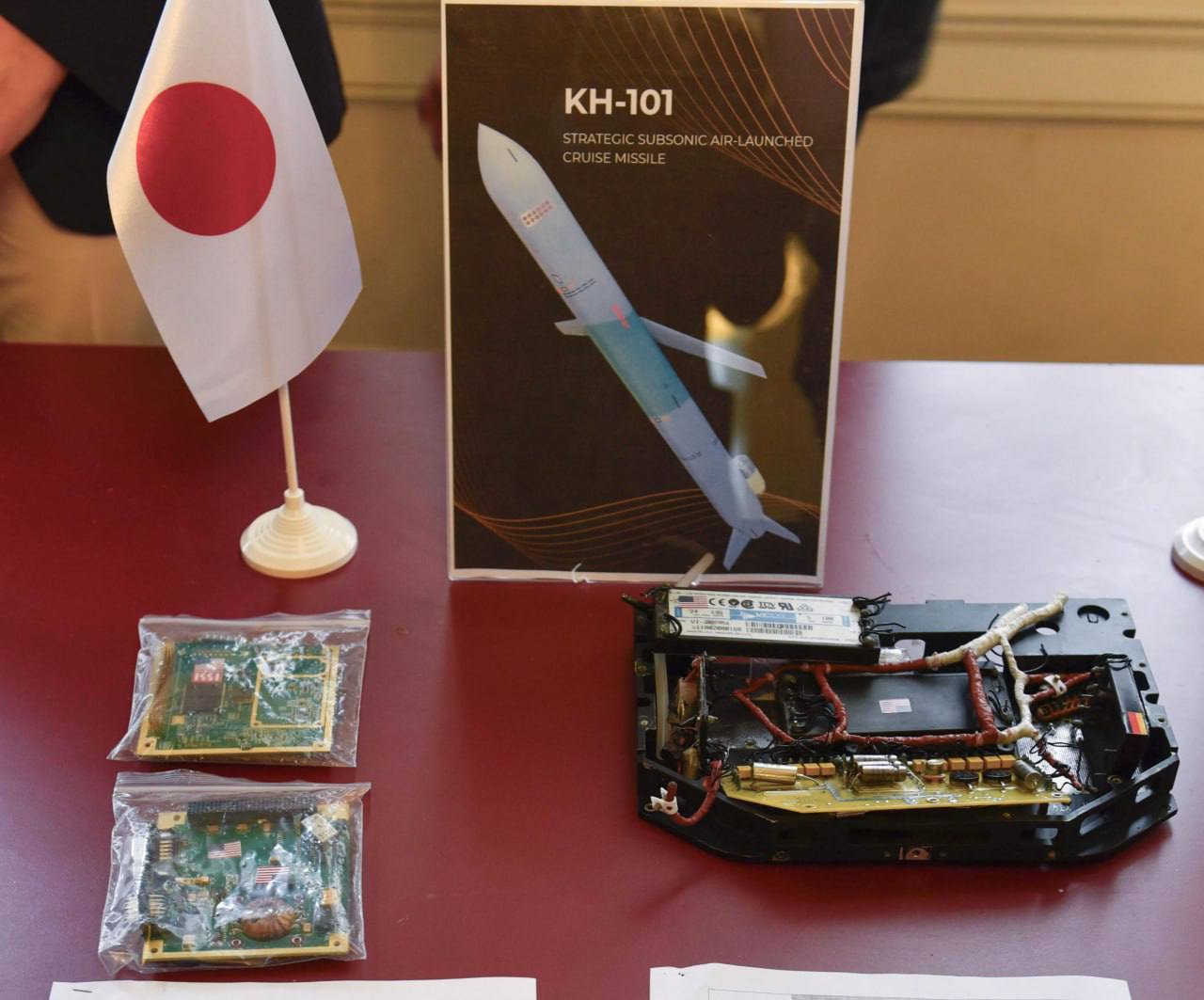
Japanese-made components found in Russian missiles are increasingly turning up on the desks of Ukrainian experts. Vladislav Vlasyuk, the President of Ukraine’s Representative for Sanctions Policy, has reported that nearly 90% Russian cruise and ballistic missiles contain Japanese components.
- 90% Russian missiles contain Japanese electronic components.
- Japanese components are used for both civilian and military purposes.
- Russia is circumventing sanctions through shell companies.
- Ukraine is calling for tighter controls on technology exports.
Japanese technology in Russian weapons
Ukrainian forensic experts are currently identifying an increasing number of Japanese components in Russian missiles. This has been made possible by the fact that most of the parts used for military purposes are general-purpose goods. As noted by the President of Ukraine’s Representative for Sanctions Policy Vladislav Vlasyuk, nearly 90% Russian cruise and ballistic missiles, as well as unmanned aerial vehicles, contain components manufactured in Japan.
These statistics have caused concern within the international community. Japanese manufacturers are often unaware of where their products are actually ending up. Experts explain that controlling the export of such vast quantities of consumer electronics in a globalised world is an extremely complex task. Many of these electronic components, which are freely sold for civilian use, can be utilised in military applications, such as missiles.
«Most of the parts found in the weapons were electronic components that were freely available for civilian use in Japan,» the analysts note.
Off-the-beaten-track routes around Tokyo
Despite the tough Japan’s position With regard to Russian aggression, the Russian security services have learnt to circumvent sanctions through complex supply chains. Goods officially purchased by shell companies are often resold via Hong Kong or Dubai, and within a matter of weeks these components end up at Russian defence factories. Kyodo News sent enquiries to 13 Japanese manufacturers whose components had been identified in Russian weapons. Some of the companies acknowledged that it is almost impossible to trace the end user, whilst others expressed suspicions that their goods were being illegally diverted.
What is Ukraine demanding?
The disclosure of these facts is a direct appeal to Tokyo and other countries G7 change the approach to sanctions. The Ukrainian authorities are insisting on several measures: tightening criminal liability for foreign distributors who resell electronics to dubious firms, introducing a “Know Your Customer” system for companies selling high-tech components, and expanding the lists of goods prohibited from export to third countries that help the Russian Federation circumvent restrictions. Without cutting off these “grey” technological channels, it will be extremely difficult to halt the operations of the Russian military-industrial complex.