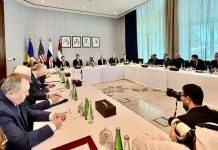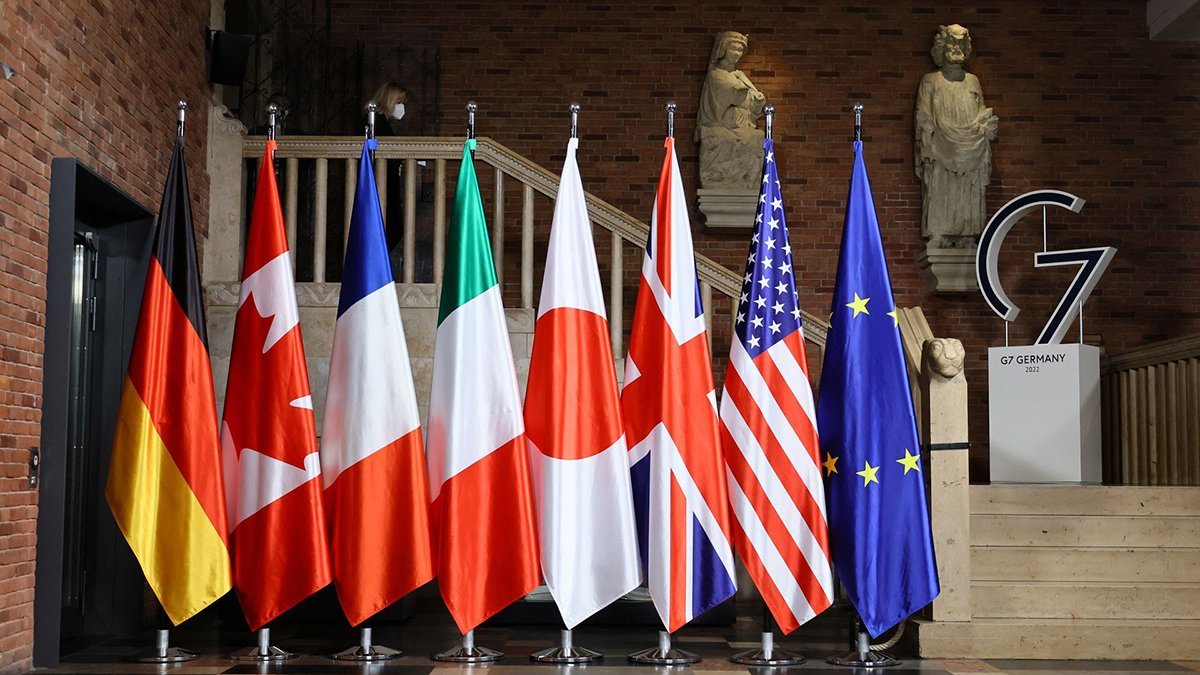
The countries of the «Group of Seven» (G7) have decided to increase financial and material aid to Ukraine to help it get through the winter of 2026–2027. This agreement was set out in a joint statement by the foreign ministers of Canada, France, Germany, Italy, Japan, the United Kingdom and the United States following their meeting on 9–10 November in Paris. The document was published on 11 November on the official website of the German Foreign Ministry. The partners focused primarily on Ukraine’s energy security, the reconstruction of damaged infrastructure and meeting budgetary needs in 2027. However, the G7 joint statement did not specify any concrete figures for the new winter aid package. The countries also reaffirmed their readiness to continue supplying arms and to step up economic pressure on Russia.
- On 11 November, the G7 announced its decision to increase financial and material support for Ukraine ahead of winter.
- Energy security, infrastructure reconstruction and the protection of the civilian population remain priorities.
- The G7 countries emphasised the need to secure funding for Ukraine in 2027 and beyond.
- According to the Ministry of Finance, the unfunded shortfall in the state budget for 2027 stands at $32.6 billion.
- The partners also backed the strengthening of air defence capabilities and continued sanctions pressure on Russia.
The G7 will increase aid to Ukraine’s energy sector
In a joint statement, the foreign ministers G7 They emphasised that Russian strikes on civilian infrastructure pose additional risks to Ukrainians as winter approaches.
The partners reaffirmed their support for Ukraine’s energy security and decided to step up the provision of financial and material assistance.
Particular attention was paid to the restoration of damaged energy infrastructure, on which a stable electricity supply, heating and water.
The ministers also expressed their support for international efforts to refurbish the New Safe Confinement Chernobyl Nuclear Power Station, which was damaged as a result of a Russian attack. This issue was discussed on 9 November at a donor conference in Paris attended by France, Ukraine and the European Bank for Reconstruction and Development.
During the conference, the issue of raising funds for the repair of the Chernobyl Nuclear Power Station’s containment structure was raised. However, funding for this project constitutes a separate area of assistance and does not imply the allocation of a similar amount for the energy sector’s winter needs.
Ukraine is facing a shortfall of $32.6 billion for 2027
The issue of further international support was also discussed on 10 November in Lviv at a meeting of the Ukrainian Donors’ Platform, attended by representatives of the G7, the EU and international financial organisations.
According to the Ukrainian Ministry of Finance, the state’s external financing requirement for 2027 stands at $52.6 billion, of which $32.6 billion has not yet been secured.
The calculations are based on the International Monetary Fund’s scenario, which envisages the full-scale war continuing throughout 2027.
Ukraine is counting on the European Union to cover around two-thirds of its financial needs next year. The remainder is to be provided with the help of international partners.
Those attending the meeting also agreed to step up support for businesses and frontline communities affected by Russian attacks.
The G7 countries have backed the strengthening of air defence capabilities and new sanctions against Russia
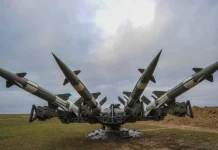
In addition to economic aid, the G7 foreign ministers discussed the extension of military support for Ukraine.
This involves the supply of additional air defence systems, interceptor missiles, long-range weaponry and the granting of licences necessary to expand Ukraine’s defence production.
A separate area remains sanctions pressure on Russia. The G7 countries have announced their intention to step up the fight against Russia’s shadow fleet, including vessels, insurers, oil traders and intermediaries who help circumvent restrictions.
The participants at the meeting also backed US efforts to bring about a diplomatic resolution to the war and emphasised that a halt to attacks on energy infrastructure and in The Black Sea could be the first step towards a lasting peace.
At the same time, the ministers emphasised that discussions on Europe’s future security must involve European states.
As of 11 November 2026, the G7 countries had officially confirmed their decision to step up winter support for Ukraine, but had not disclosed the total amount of the new package, the timetable for its provision, or how it would be allocated amongst the member states. The next step is expected to involve specific financial decisions and the coordination of deliveries of equipment necessary for the operation of Ukraine’s power grid.