On 11 November, Poland marks the 108th anniversary of the restoration of its independence. In Warsaw, thousands of people took part in the traditional Independence March, which this year is being held under the slogan «A Pole in Poland is the master!». Participants are carrying national flags, chanting patriotic slogans and setting off flares, despite a ban on pyrotechnics. President Karol Nawrocki joined the march, whilst the police have implemented heightened security measures against the backdrop of political tensions following the fatal shooting in Kraków.
Briefly about the main points
- Poland is marking the 108th anniversary of the restoration of its independence with large-scale events in Warsaw.
- Thousands of people are taking part in the Independence March, attended by President Navrotsky.
- Despite the ban on fireworks, marchers are setting off flares and smoke bombs.
- The police have stepped up security following a fatal shooting in Kraków.
- The march is accompanied by disputes between the authorities and representatives of nationalist organisations.
Thousands of Poles took to the streets of Warsaw
Traditional Independence March It began in the centre of the Polish capital on 11 November. Participants gathered at the Roman Dmowski roundabout, from where the procession set off along Jerusalem Avenue, across the Poniatowski Bridge, to the National Stadium.
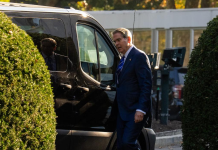
The President of Poland joined the march Karol Navrotskyi. The participants also included representatives of right-wing political parties and nationalist organisations.
This year’s march is taking place under the slogan «A Pole in Poland is master of his own house!». The organisers stated that they were expecting a record number of participants, including representatives of right-wing movements from other European countries.
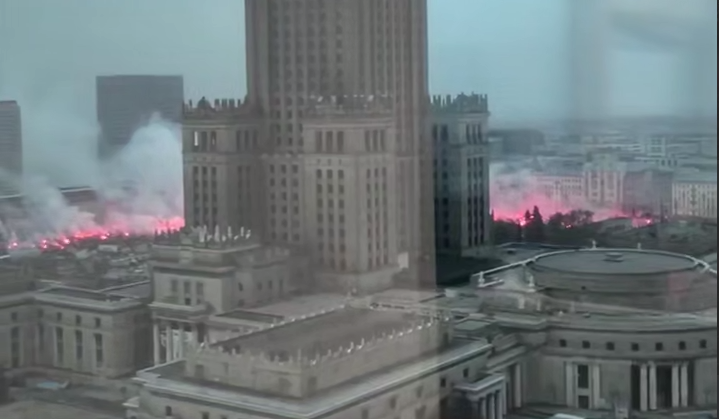
During the march, people unfurled Polish flags and set off numerous flares. Plumes of red smoke rose above the centre of Warsaw, even though the local authorities had banned the use of pyrotechnics in advance.
The authorities have stepped up security due to the threat of provocations
The Polish Ministry of the Interior has deployed additional police units to maintain order during the celebrations. Concrete barriers were erected near the gathering point, whilst law enforcement officers patrolled the surrounding areas.
In Warsaw, on 11 November, there are also restrictions on carrying weapons, using fireworks and flying drones.
The heightened security measures are linked, in particular, to the tragedy in Kraków, where, on 7 November, an armed man opened fire in the town’s main square. Six people were killed and a further 15 were injured.
Polish officials have suggested that the attacker may have been motivated by far-right views. These statements have sparked outrage amongst nationalist circles. The investigation is continuing to establish the motives behind the crime.
The Independence March has once again sparked political controversy
The Independence March traditionally sparks disagreement amongst Polish political forces. Representatives of the ruling centrist camp have criticised the event due to the presence of radical nationalist groups and instances of racist and anti-Semitic rhetoric.
The organisers reject these accusations, describing the march as an expression of patriotism and national unity. They have also called for the tragedy in Kraków not to be exploited for political purposes.
Prime Minister Donald Tusk He appealed to those taking part in the celebrations to refrain from provocations. He emphasised that Poland’s independence, freedom and security must remain shared values, regardless of political views.
On 11 November, Poles celebrate the restoration of their national independence in 1918, following 123 years during which the country had been partitioned amongst neighbouring states.