Ukraine has proposed carrying out humanitarian operations in a further ten settlements in the temporarily occupied territories of the Kherson and Zaporizhzhia regions. This was announced on 17 November 2026 by President Volodymyr Zelenskyy, as he outlined the priorities for the next stage of peace talks. Key issues include preparations for a prisoner-of-war exchange, the release of civilian hostages, the involvement of European partners in negotiations with Russia, and the agreement of security guarantees for Ukraine. An agreement on preparations for a new exchange was reached during trilateral meetings between Ukraine, the US and Russia in Abu Dhabi on 10–11 November.
- Ukraine has proposed humanitarian operations in a further 10 settlements in the occupied parts of the Kherson and Zaporizhzhia regions.
- Kyiv is drawing up proposals for the US regarding a new prisoner-of-war exchange, which it hopes to carry out in the coming weeks.
- A key priority in the negotiations is the release of Ukrainian civilians being held by Russia.
- A meeting of the Coalition of the Willing is scheduled to take place in Berlin on 19 November to agree on further diplomatic steps.
Humanitarian operations in the occupied territories: what Ukraine has proposed
According to the report Zelensky, the Ukrainian side put forward an initiative to hold additional humanitarian operations in ten settlements in the occupied parts of the Kherson and Zaporizhzhia regions.
A specific list of these settlements has not yet been published. Nor is there any confirmation that the Russian side has agreed to the proposed operations or set out the conditions for carrying them out.
The initiative came about following a humanitarian mission to the occupied territories Oleshky in the Kherson region, during which several hundred people were able to reach territory controlled by the Ukrainian government. The Ukrainian authorities and Radio Free Europe had previously reported on the outcome of this operation.
In early November, Zelenskyy stated that such a mechanism could help residents of other towns and villages where active hostilities are ongoing or where there are serious threats to the civilian population.
At the same time, each such operation requires separate agreement on security conditions.
Ukraine is preparing a new prisoner-of-war exchange
One of the key outcomes talks in Abu Dhabi, which took place on 10–11 November, resulted in an agreement to organise a new exchange of prisoners of war.
Zelenskyy stated that Ukraine plans to submit specific proposals regarding the exchange to the US and is ready to carry them out in the coming weeks.
During the previous round of talks, the parties discussed possible exchange formats of «1,000 for 1,000» or «1,500 for 1,500». However, these figures do not represent the final agreed terms for the forthcoming release of prisoners.
On 13 November, the President stated that Kyiv is counting on a large-scale return of Ukrainian servicemen. According to Mr Zelenskyy, US partners are using the phrase ‘the largest exchange since the start of the full-scale war’.
Separately, the Ukrainian side is raising the issue of the release of civilian hostages held by Russia, some of whom have been detained since before the full-scale invasion.
Talks in Berlin: who will be taking part
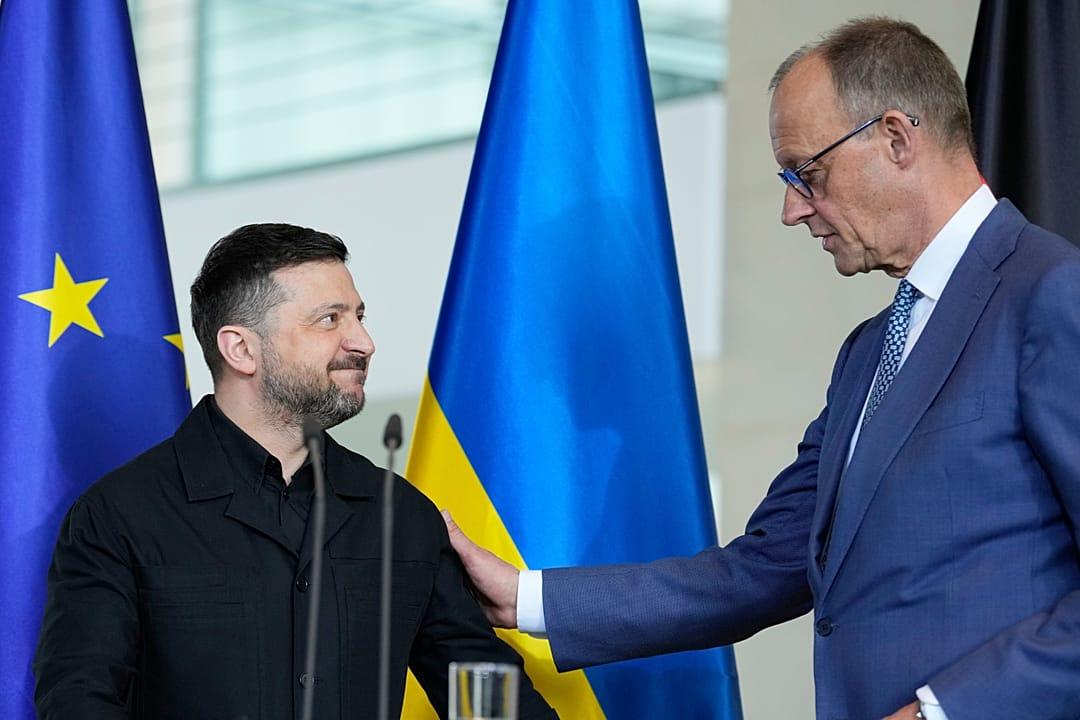
The next stage in the diplomatic consultations is set to be a meeting of the Coalition of the Willing, scheduled for 19 November in Berlin.
Ukraine and its partners are seeking to agree on a common position regarding the end of the war, security guarantees, post-war reconstruction and further negotiations with Russia.
According to Zelenskyy, the European side in the negotiation process is to be represented by the United Kingdom, Germany, France, Italy and Poland, as well as representatives of the European Commission, the European Council and NATO.
However, differences remain regarding the participation of Europeans in direct negotiations with Russia.
American representatives Steve Witkoff і Jared Kushner reported that an agreement had been reached to involve European partners in the next round of talks. At the same time, an aide to the Russian President Yuriy Ushakov On 16 November, he stated that Moscow had not agreed to the expansion of the format.
Consequently, the participation of European states in the consultations in Berlin does not imply that Russia automatically agrees to their presence at the next trilateral meeting.
What issues will Ukraine’s partners be discussing?
In addition to humanitarian agreements, the Ukrainian side has identified the development of mechanisms for ending the war and security guarantees as a priority.
During the talks in Abu Dhabi, representatives from Ukraine, the US and Russia had already discussed possible steps towards de-escalation, the cessation of hostilities and post-war security guarantees. However, on 10–11 November, the parties failed to reach an agreement on a ceasefire.
At the forthcoming consultations, Kyiv aims to agree with its partners on a course of action, including on security and economic recovery.
Zelenskyy also stated that the Ukrainian negotiating team had been given a set of tasks for the coming weeks.
As of 17 November, the agreement to organise a new prisoner exchange has been confirmed; however, the date, the final number of participants and the procedure for carrying it out have not yet been announced. The proposal for ten humanitarian operations also requires further agreement. The next important stage of diplomatic consultations is scheduled for 19 November in Berlin.