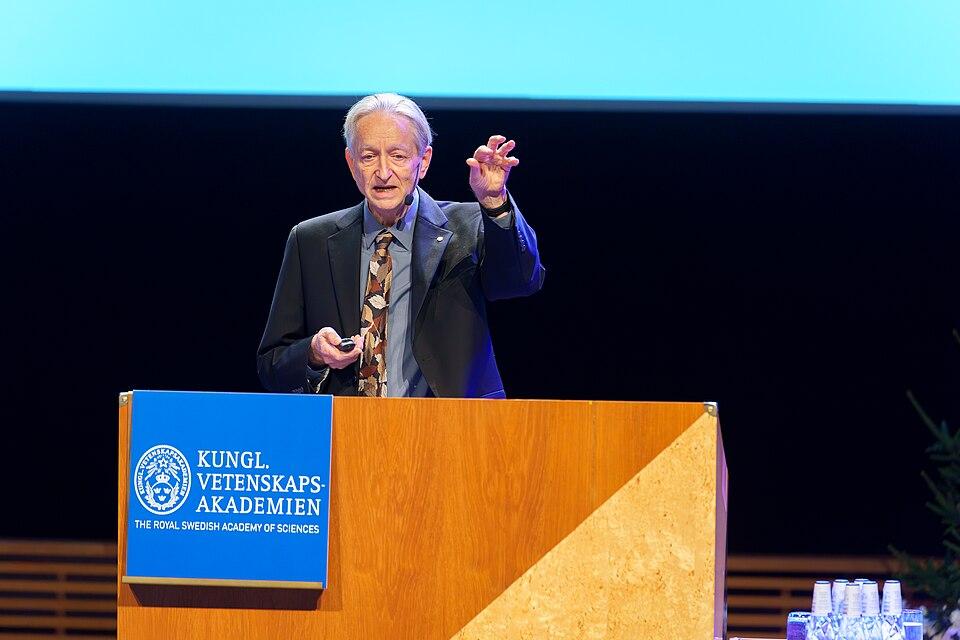
Jeffrey Hinton, one of the leading researchers in artificial intelligence and a Nobel laureate in physics, has warned of the risk of a major technological crisis as early as the end of 2026 or during 2027. The scientist compared the potential consequences of uncontrolled AI development to the Chernobyl disaster. He made these remarks in an interview with The Guardian, published on 3 November. Hinton also expressed his concerns to the Austrian newspaper Die Presse on 7 November.
- Geoffrey Hinton has warned of the risk of a major crisis caused by artificial intelligence in 2026–2027.
- Possible scenarios include prolonged power cuts and the shutdown of financial systems.
- The scientist compared the potential incident to the Chernobyl disaster, but did not predict a nuclear accident.
- Hinton criticised the heads of major technology companies for not paying enough attention to security.
- The researcher called for independent testing of powerful AI models before they are released.
What kind of disaster could artificial intelligence cause?
According to Hinton, humanity is gradually approaching the moment when artificial intelligence systems could pose threats whose consequences would be difficult to predict.
The researcher suggests that a serious incident could occur as early as next year. He gave an example cyberattacks involving AI, which is capable of disrupting the operation of electricity grids or temporarily paralysing the international financial system.
This is not about a repeat of the 1986 nuclear accident. Hinton uses the comparison with Chernobyl as a metaphor for a large-scale event, following which governments and society might reconsider their attitude towards technological risks.
In an interview with The Guardian, he suggested that such a crisis might force world leaders to take AI safety more seriously. However, the researcher did not provide any concrete evidence that a catastrophe in 2026–2027 was inevitable.
The development of this issue is a particular cause for concern autonomous AI agents, which are capable of performing multi-step tasks and interacting with digital systems without constant human supervision.
Hinton criticised the heads of technology companies
The researcher expressed doubts about the approach taken by the largest technology companies to artificial intelligence security.
In particular, he criticised the head of OpenAI Sema Altman, founder of Meta Mark Zuckerberg and the entrepreneur Elon Musk. According to Hinton, market competition and financial interests may prompt companies to roll out increasingly powerful systems without adequately testing their safety.
This is the researcher’s personal assessment, not a proven fact regarding the motives of company directors.
Hinton, who left Google. in 2023, he repeatedly warned that the development of artificial intelligence could lead to mass job cuts, the widening of inequalities and the emergence of new cybersecurity threats.
The researcher acknowledges that the technology has the potential to bring significant benefits to society, but considers the current level of oversight over its development to be insufficient.
What does the «godfather» of artificial intelligence have to offer?
Hinton is calling for the creation of an international system for the verification of cutting-edge AI models, which would involve an independent risk assessment before new products are launched on the market.
He compared this approach to the regulatory process for medicines, where manufacturers must demonstrate their safety and efficacy before they can be used on a large scale.
According to the researcher, voluntary commitments by technology companies are not enough. What is needed are common standards, international cooperation and oversight by independent bodies.
Despite the pessimistic scenarios, Hinton does not believe that losing control of artificial intelligence is inevitable. He is convinced that humanity is still capable of preventing dangerous consequences if it devotes more resources to researching the safety of new systems.
At present, the large-scale disaster predicted by the scientist has not occurred. His warning remains an assessment of potential risks, rather than a confirmed prediction of future events.