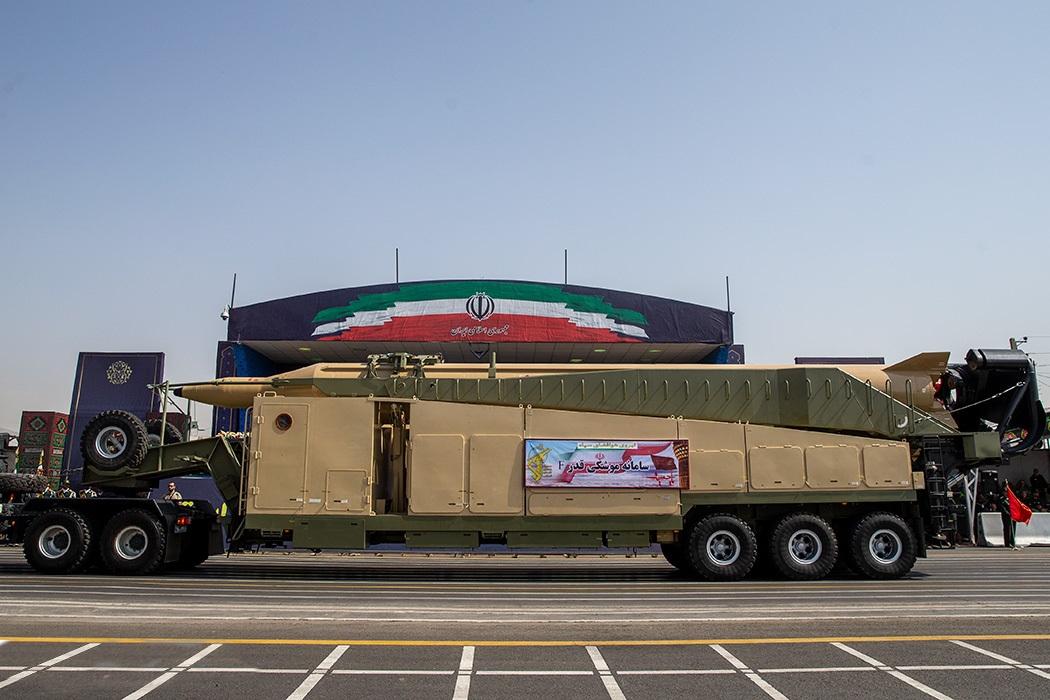
Iran has lifted the previously imposed restriction on the range of its ballistic missiles, which stood at 2,000 kilometres. This was announced on 7 November 2026 by Brigadier General Hossein Mohoggi, a spokesperson for the Islamic Revolutionary Guard Corps (IRGC), during a press conference in Tehran. According to the Associated Press, the decision was taken against a backdrop of tensions in Iran’s relations with the US and Israel.
- Iran has announced that it is lifting its voluntary 2,000 km range limit on ballistic missiles.
- The decision was announced on 7 November by Hossein Mohoggi, a spokesperson for the IRGC.
- Tehran has not confirmed that it already possesses missiles with a range of over 2,000 km.
- The Iranian leadership had previously threatened the US and Israel with a response that would know no geographical bounds.
- According to the AP, the stated range of the missile currently in service enables Iran to reach parts of Southern Europe and the Middle East.
What Iran has said about the new capabilities of its missiles
During a press conference in Tehran general Hossein Mohoggi answered journalists’ questions about the current restrictions Iran's missile programme.
According to the spokesperson IRGC, voluntary range limitation ballistic missiles is no longer in use. He also stated that Iran intends to demonstrate its military capabilities in practice, rather than confine itself to mere statements.
At the same time, Mohoggi did not specify whether Iran has missiles capable of striking targets at a range of over 2,000 kilometres. Consequently, the announcement does not automatically confirm the development of new long-range weapons.
Which countries are within range of Iranian missiles?
According to the Associated Press, a range of 2,000 kilometres already enables Iranian missiles to reach a significant part of the Middle East, including the entire Arabian Peninsula and the countries of the Levant.
Certain areas of Greece, the Balkan Peninsula and most of Egypt may also fall within this range. The exact range depends on the launch site and the missile’s specifications.
US officials had previously warned that the technology Iran is using in its space programme could potentially be used to develop intercontinental ballistic missiles.
However, the AP points out that there is currently no publicly confirmed evidence that Iran has deployed missiles with a range of more than 2,000 kilometres.
Why did Iran withdraw from the missile restrictions?
The statement by the IRGC came a few days after the Iranian leadership issued a warning to the US and Israel. Tehran threatened to respond to military threats without geographical restrictions.
According to the Iranian news agency Tasnim, the country’s leadership has also ordered an update to the list of potential military targets. Iranian officials state that they view the expansion of military capabilities as a means of deterring adversaries.
Separately, the IRGC reported on the construction of underground complexes for the production and storage of weapons. According to Mohoggi, moving part of the production underground should enable the manufacture of missiles and drones to continue even during intense bombing. These claims have not been independently verified.
As of 7 November, Iran had officially announced that it was abandoning its previous missile range restrictions, but had not provided verified evidence of systems capable of exceeding that range. Further tests and official announcements may shed light on the true capabilities of Iran’s missile programme.