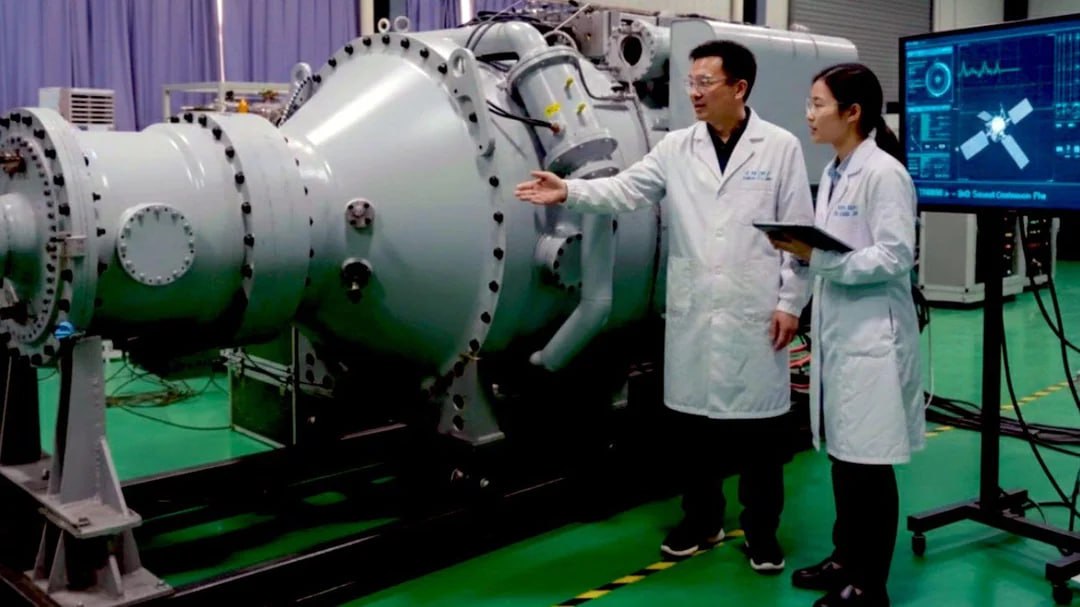
Chinese researchers from the National University of Defence Technology have announced the development of a high-powered microwave weapon capable of disabling satellites in low Earth orbit. The system uses concentrated electromagnetic energy to damage the satellites’ electronics without creating debris in space.
Briefly about the main points
- China has unveiled a concept for a high-powered microwave weapon for use in orbit.
- The system is capable of disabling satellite electronics.
- It uses an innovative lithium-ion power supply system.
- The weapon does not create space debris when hitting targets.
- The project is aimed at neutralising large satellite constellations.
Technical features of the Chinese HPM system
Researchers from China have unveiled a system that generates ultra-powerful microwave pulses for satellite damage. The array of emitters can generate pulses with a power of up to 100 gigawatts, and even at lower power levels, the system is capable of disabling the electronics of satellites in low Earth orbit.
One of the key innovations was the development of a hybrid lithium-ion power supply system that operates effectively at temperatures as low as −40 °C. This makes it possible to deploy the systems in challenging climatic conditions, particularly in high-altitude areas.
The operating principle and objectives of microwave weapons
Microwave weapons do not physically destroy satellites, but affect their electronics by causing electromagnetic overload. A powerful pulse induces excessive currents in the circuits, leading to damage to microchips and sensors.
It has been stated that the main aim of the development is to neutralise large satellite constellations, such as Starlink, which are of vital importance for military communications and intelligence.
Strategic advantages and prospects for development
Unlike kinetic weapons, microwave weapons do not create space debris, which allows for a less conspicuous approach and reduces the risks of political escalation.
Future areas of development include the miniaturisation of systems, reducing production costs and improving guidance systems for engaging moving targets in orbit.
Why it matters
China’s development of microwave weapons could change the approach to protecting satellite systems and pose new challenges to international security in space. The absence of debris following a strike makes it difficult to detect attacks and creates a need for new international arms control protocols.