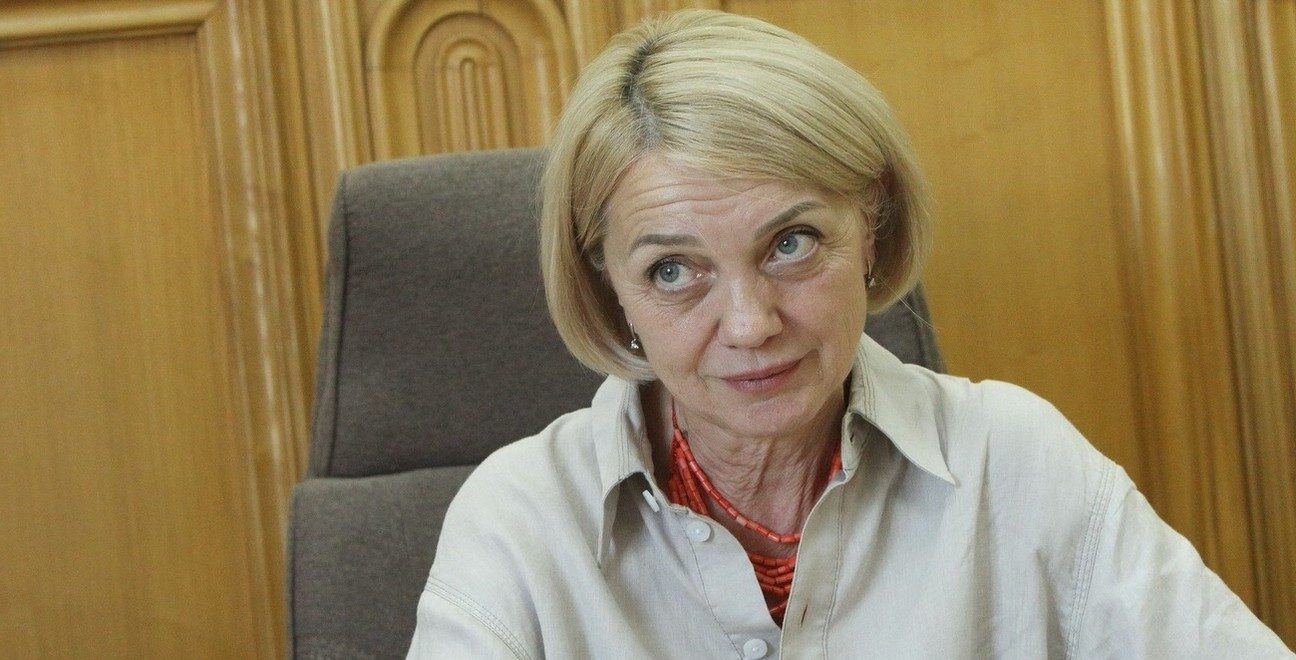
The Commissioner for the Protection of the State Language, Olena Ivanovska, reported that an official complaint had been lodged with Google’s head office regarding the appearance of Russian-language results in response to search queries in Ukrainian. The issue was raised by Ukrainian servicemen and veterans, who noted that the language of search results depended on the user’s geographical location.
- The Language Ombudswoman, Olena Ivanovska, announced that an official letter had been sent to Google.
- The reason is that Russian-language results appear in response to Ukrainian search queries.
- Ukrainian military personnel and veterans have drawn attention to the issue.
- In the first nine months of 2026, 28% broadcasting complaints related to the internet.
Why did the language ombudswoman contact Google?
According to Olena Ivanovska, the issue of the use of the Ukrainian language in the digital sphere has been raised on numerous occasions by veterans and service personnel on the front line.
They reported instances where, following a search query in Ukrainian, the search engine returned results in Russian. One of the reasons for this situation, as highlighted by the complainants, is that the search engine takes the user’s geographical location into account.
«We have already sent an official letter to Google’s head office regarding the accuracy of its search algorithms,» said Ivanovska.
The Ombudswoman did not specify when exactly the letter was sent, nor whether her office had received a reply from the American company.
Furthermore, there is currently no information regarding any agreement to change Google’s algorithms or to introduce specific rules for search queries from Ukraine.
Why does Google show Russian-language websites in response to Ukrainian search queries?
According to official explanations Google: the language of the search query is an important factor, but not the only one that influences the results.
The search engine takes into account the browser and device language, the user’s region, Google settings and how well the pages found match the search query.
As a result, the results may include content in another language, even if the user is searching for information in Ukrainian.
Google attributes this behaviour to the nature of multilingual search. In particular, the system may suggest pages in other languages if it considers them relevant to a specific query.
Users can apply a language filter in the search settings. However, this does not guarantee that absolutely all search results will be displayed in the selected language only.
Consequently, the appearance of Russian-language results does not in itself indicate a technical fault on Google’s part. At the same time, the issue of meeting the language expectations of Ukrainian users has been the subject of an official complaint.
A proposal has been put forward in Ukraine to create an electronic thesaurus of the Ukrainian language
Olena Ivanovska emphasised that the issue of the Ukrainian language’s presence on the internet cannot be resolved solely by changes to search algorithms. She identified the creation of a comprehensive State Electronic Thesaurus of the Ukrainian Language as one of the strategic objectives. This would be a digital language resource covering word forms, dialects and other linguistic features. Such a database could be used to develop automated systems for processing Ukrainian-language texts.
The project is of particular significance for artificial intelligence. According to the ombudswoman, high-quality Ukrainian-language data is essential for training the large language models used by modern AI services.
Ivanovska believes that without systematic state support and investment in the digitalisation of the Ukrainian language, there is a risk that its standing will weaken amongst young people, for whom the internet is one of the main sources of information.
Almost a third of language complaints relate to the internet
In the interview, Ivanovska also cited statistics on complaints from members of the public regarding breaches of language legislation.
In the first nine months of 2026, the Ombudsman’s Secretariat received 2,245 complaints. Of these, 633, or approximately 28%, related to the internet. This category includes complaints about websites, social media pages and the automatic opening of Russian-language versions of web resources.
A further 426 complaints related to advertising and public information, 339 to the service sector, and 145 to education.
By way of comparison, the organisation received 2,888 complaints throughout 2025, and 2,314 in 2024.
These statistics reflect reports of breaches of language legislation in general and do not constitute a separate tally of complaints about Google.
Will Google’s search results in Ukraine change?
At present, the only thing that has been confirmed is that the language ombudswoman has made an official approach to Google.
There has been no public response from the corporation to this letter, nor have any technical changes been agreed upon, nor have any deadlines been set for their possible implementation.
At the same time, the issue of the Ukrainian language in the digital sphere encompasses much more than just search engine results. It relates to the availability of Ukrainian-language content, software, digital dictionaries and training data for artificial intelligence.
Ivanovska emphasised the need for systematic cooperation between government bodies, academics and technology companies to promote the Ukrainian language in today’s digital environment.