
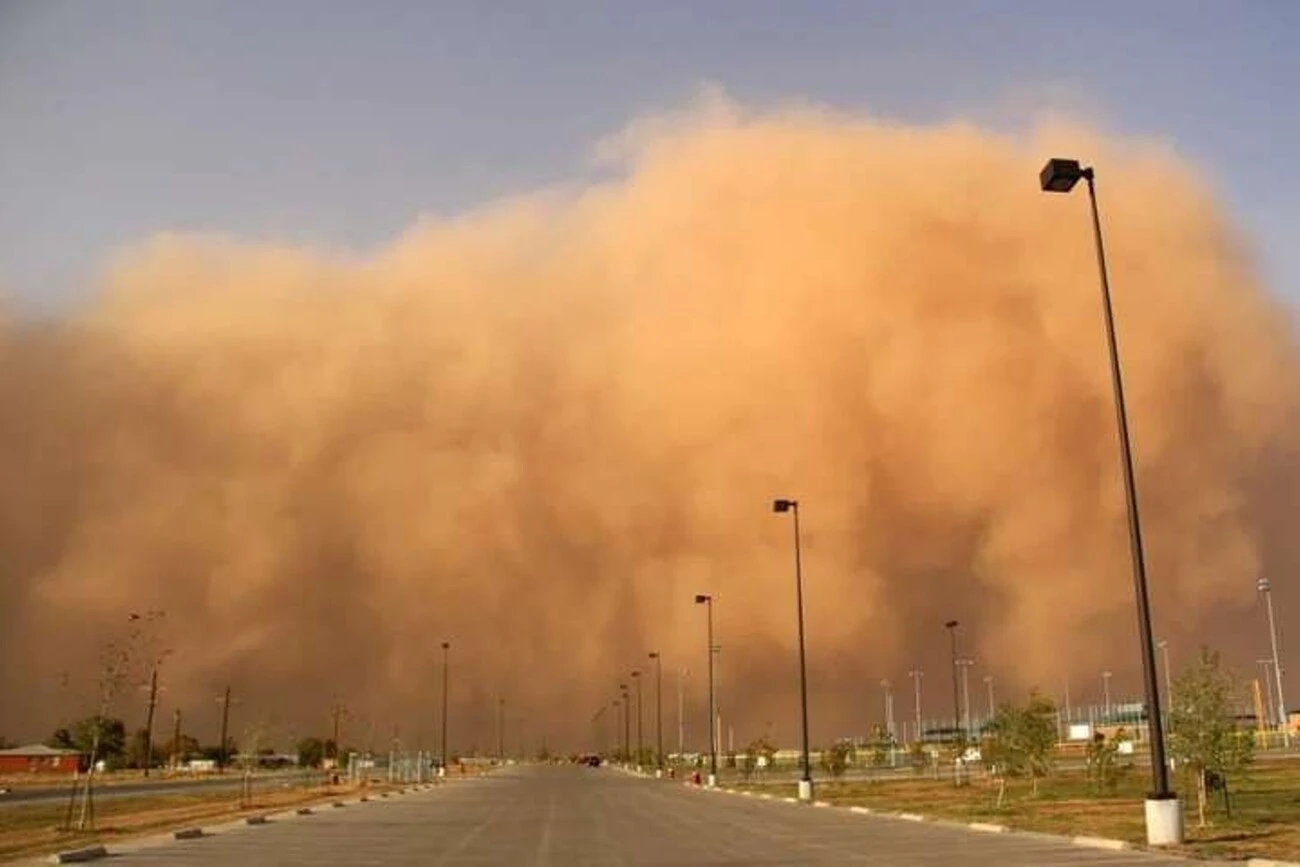
Concentrations of mineral dust in the air over Europe rose between 2012 and 2021, according to a study published on 15 July in the journal *Nature*. The researchers combined more than 18,500 daily measurements from 103 urban and rural stations with satellite, meteorological and modelling data. The highest levels of dust were found in southern Europe.
Briefly about the main points
- The Nature study covered 103 stations and the period 2012–2021.
- In southern Europe, the average concentration of particulate matter was 2.5 times higher.
- It was the intensity of dust episodes that increased, rather than their overall frequency.
- Fine PM2.5 particles accounted for almost 28% of the total dust mass transported.
Southern Europe receives the most dust
The average concentration of mineral dust in southern Europe was 5.28 micrograms per cubic metre for PM10. In the northern and central parts of the continent, this figure stood at 2.09 micrograms per cubic metre.
For most of Europe, the model showed an increase of approximately 0.055 micrograms per cubic metre each year. The most pronounced trend was recorded over Italy, the Adriatic and the Aegean Seas — 0.074 micrograms per cubic metre per year.
In southern Europe, an average of around 46 dust intrusions were recorded each year. During such episodes, the average concentration of transported dust reached 9.68 micrograms per cubic metre.
This refers to more intense episodes, rather than more days with dust
Researchers found no overall increase in the frequency of dust intrusions. On the contrary, the number of days classified by the methodology as such episodes has been falling across Europe.
At the same time, the intensity of individual incursions was increasing in the south, whilst in the north — particularly in the British Isles and Scandinavia — background dust levels were rising. This does not mean that concentrations in the north have reached the same levels as in the south: they are still significantly lower there.
The authors attribute this trend to a combination of changes in atmospheric circulation, aridity and land degradation in North Africa. It is from there that a significant proportion of the mineral dust originates.
Particles can penetrate deep into the airways
According to the operational calculations, 27.7% of the total mass of mineral dust carried consisted of the fine PM2.5 fraction. Such particles are capable of penetrating deeper into the respiratory tract.
In 2021, airborne particulate matter in southern Europe amounted to 31% of the World Health Organisation’s annual guideline value for PM10 and 25.8% of the guideline value for PM2.5. This is a fraction of the recommended level WHO level, rather than an indicator of the increase in pollution by 25% across Europe.
The authors also assessed the statistical association between short-term exposure to particulate matter during episodes and its contribution to daily mortality and respiratory hospitalisations in southern Europe. These results are model-based estimates based on previous epidemiological risk ratios, rather than a count of recorded cases.
Study points to more ambitious targets for clean air
The study describes a long-term trend, rather than a forecast of specific dust storms or so-called “blood rains” in the coming days. Such precipitation can leave a rusty film on surfaces due to the presence of mineral dust.
Rising particulate matter levels may hinder efforts to improve air quality, particularly in southern Europe, where absolute concentrations are highest. At the same time, the authors note the uneven distribution of measurements, in particular the limited data available for north-eastern Europe, the Balkans and Scandinavia.