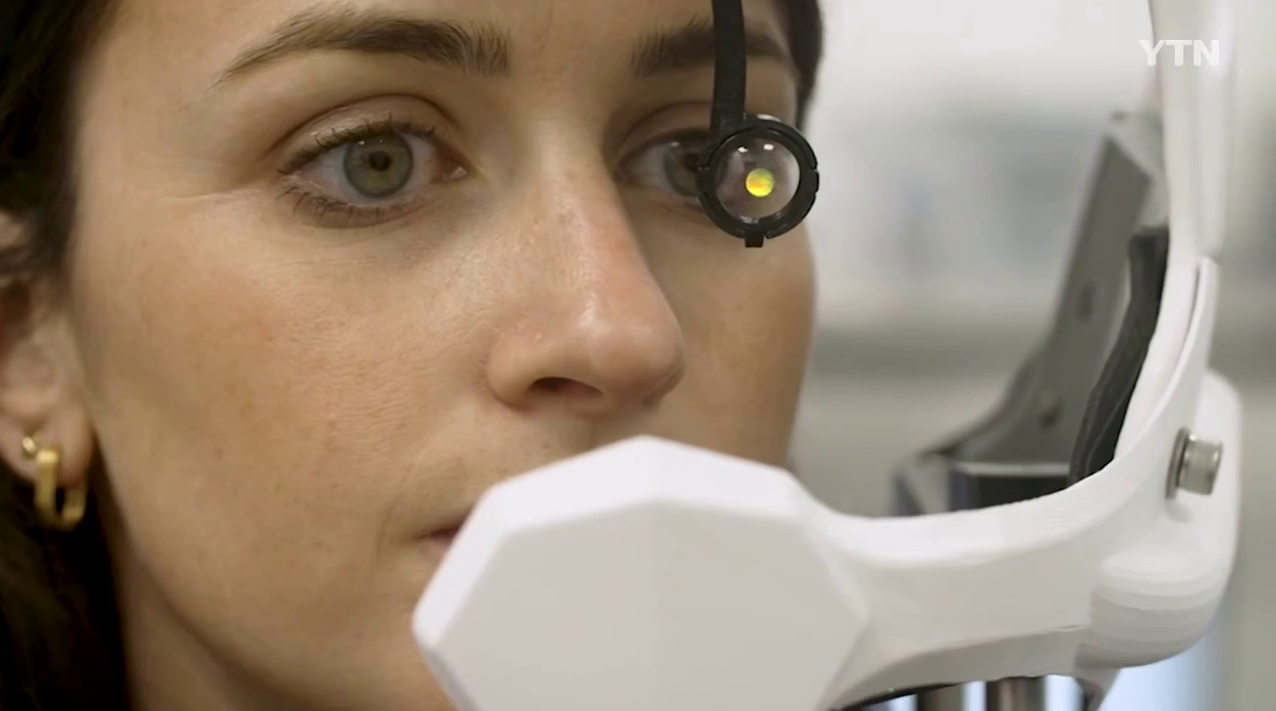
Researchers from the United Arab Emirates and China are working on smart contact lenses equipped with artificial intelligence and miniature displays. The technology is designed to replace the usual use of a smartphone by projecting important information directly in front of the wearer’s eyes.
- Scientists from the UAE and China are developing smart contact lenses featuring AI and miniature displays.
- The device will display messages, notifications, reminders and navigation instructions in the field of view.
- Users will receive real-time prompts from artificial intelligence.
- You’ll no longer need to take your phone out of your pocket to check basic information.
How smart contact lenses will work
The main idea behind the project is to move the digital interface from the familiar smartphone screen directly into the user’s field of vision. Miniature displays built into the lens will be responsible for visually displaying data without obstructing the user’s view of the world around them.
According to the developers’ plans, the system will be able to display the following elements to the user:
Communication: incoming messages and operational alerts.
Orientation: routes and turn-by-turn navigation instructions whilst driving.
Layout: reminders about events or important matters.
AI assistance: contextual suggestions from artificial intelligence.
Thanks to this approach, people won’t need to take out their phone every time to check the time, a route or a new notification.
Why is the industry looking for an alternative to smartphones?
A joint initiative by researchers from the UAE and China is part of a global trend towards interfaces without traditional screens. In particular, the wearable computing sector is already developing rapidly in the Emirates — for example, the Xpanceo project, which is also testing ultra-thin contact lenses featuring augmented reality, biosensors and alerts.
At the same time, tech giants are changing the very way we interact with our gadgets: instead of manually switching between apps, the focus is now on the development of autonomous AI agents…which take care of routine tasks. Combining such assistants with miniature optics could be the next step in personal electronics.
What challenges do developers face?
At the research stage, such devices typically face several engineering challenges: the miniaturisation of power sources, safety for the cornea, heat dissipation and stable data transmission. How successfully researchers tackle these challenges will determine when smart lenses can make the transition from the laboratory to mass production.