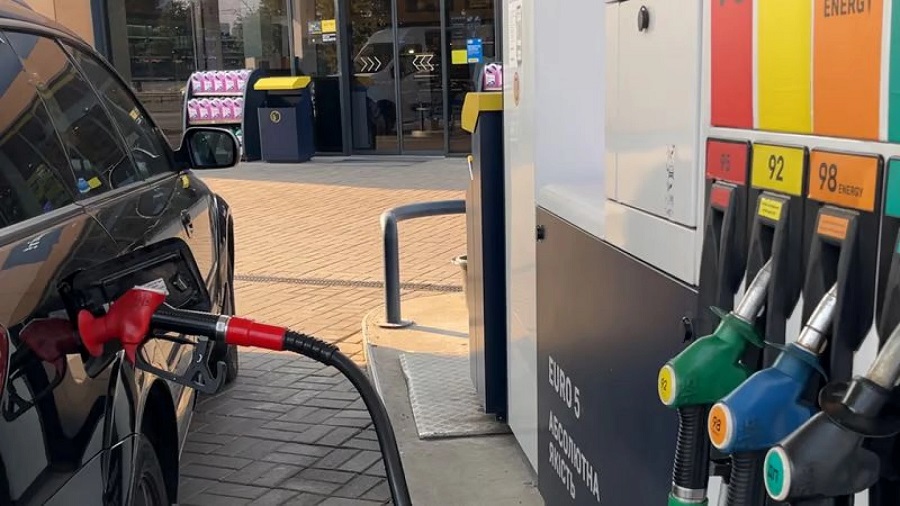
A system is being tested in Ukraine that will automatically alert petrol station staff to airborne threats and the approach of Russian drones. Prime Minister Serhiy Koretskyi announced the strengthening of security measures at fuel facilities. The alert is intended to give staff extra time to safely halt operations and take cover, against the backdrop of systematic attacks by the Russian Federation on petrol stations.
Briefly about the main points
- The system is being tested to enable petrol station staff to be alerted to a threat more quickly.
- It will operate as a supplement to the nationwide air-raid alert system.
- The Kyiv region is reviewing guidelines, shelter arrangements and vehicle movements at petrol stations.
- When the danger level is red, businesses must cease operations.
- According to *Der Spiegel*, more than 200 petrol stations have been attacked since April.
The signal is intended to reduce response times
The aim of the system is to reduce the time between the detection of an airborne threat and the issuance of a warning to petrol station staff. Once the alert is triggered, staff will be able to halt dangerous operations, leave the danger zone and take shelter.
This refers to a site-specific solution that will complement a nationwide air-raid warning system, rather than replacing it. The practical value of such an alert will depend on the coordinated actions of staff and the ability to reach a safe place quickly.
In the Kyiv region, shelters and operational procedures are being reviewed
In the Kyiv region, it was reported that special alarm systems had been introduced for staff PETROL STATION and tightening the guidelines for air-raid alerts. They are also checking whether staff and drivers have access to shelters.
For stations located far from existing protective structures, plans are being drawn up to build shelters nearby. Separately, the authorities plan to regulate vehicle traffic at petrol stations to prevent cars from crowding round the fuel tanks and to ensure that emergency vehicles can pass unhindered.
These measures are being introduced as part of a new government response model. The yellow alert level has been designated for drone threats: businesses may continue to operate provided they comply with safety requirements and ensure access to shelters. The red alert level will be applied in the event of a missile, missile-and-drone or large-scale drone attack; in such cases, operations must be halted and people moved to shelters.
Attacks on fuel facilities are continuing in various regions
Russian forces are systematically attacking fuel infrastructure in Kyiv, Zaporizhzhia, Dnipropetrovsk, Kharkiv, Sumy and other regions. On 11 September, Russian drones struck petrol stations in the Obolon and Troieshchyna districts of Kyiv, causing fires.
According to reports in the Ukrainian media, citing *Der Spiegel*, more than 200 Ukrainian petrol stations have been attacked since April 2026. Some of the sites temporarily cease operations following the attacks, but these have not yet led to a widespread fuel shortage across the country. Localised disruptions are possible in regions that are regularly targeted.