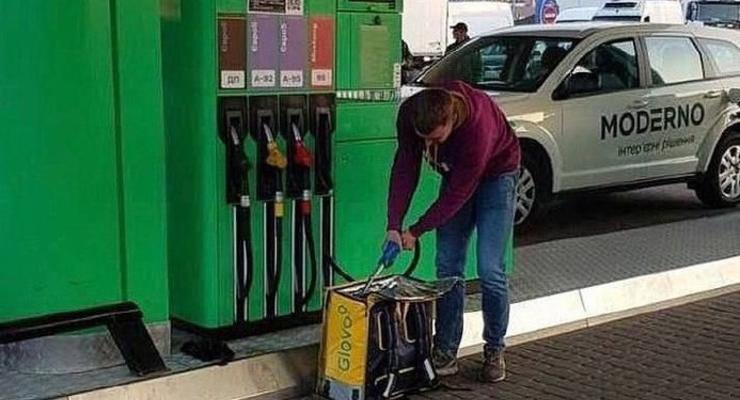
Ukraine may introduce a service to deliver petrol and diesel directly to vehicles using mobile refuelling units. This model has been proposed by Dmytro Lyoushkin, founder of the Prime group of companies, as an option for regions where Russian attacks are putting fixed petrol stations out of action. At the same time, the government is discussing «on-the-go» fuel supply with the market.
Briefly about the main points
- They are offering to deliver fuel to vehicles using specialised vehicles.
- Applications can be submitted via the app or the chatbot.
- The model is being considered for regions at risk of attacks on petrol stations.
- For a retail launch, the regulations and licensing arrangements need to be adapted.
- The government states that there is no systemic fuel shortage.
How does a mobile refuelling service work?
According to the plan Dmitry Lyoushkin, the customer will specify the location and the required amount of fuel, and then wait for a specialised vehicle to arrive. This is a small refuelling vehicle, not a large petrol tanker; orders can be placed via an app or a simple chatbot.
This format could partially replace trips to fixed filling stations in dangerous areas. According to the expert, it is the existing fuel companies – which already have the logistics, a fleet of vehicles and access to the resource – that should develop the network.
The mobile format is linked to attacks on infrastructure
The proposal came against the backdrop of the Russian Federation’s regular attacks on petrol station infrastructure. A fixed facility has a permanent location, whereas a mobile unit can change its route and the location where it dispenses fuel.
Lyushkin had previously called for petrol stations to be protected with anti-drone nets, for gas dispensers to be camouflaged, and for the regulations governing mobile refuelling stations to be simplified. According to his estimates, there are approximately 5,000–6,000 petrol stations operating in Ukraine, and a significant proportion of them are located in areas at risk of attack.
The government is discussing fuel supplies without large stockpiles
In early July, the Minister for the Economy Alexey Sobolev He reported on the government’s daily consultations with regional administrations and fuel companies regarding fuel supplies to the regions. Among the options mentioned was the delivery of fuel «directly from the lorries» without building up large stocks in one place.
At the same time, this is a separate government review, rather than an approval of the service proposed by the business sector. The government has stated that there is no systemic fuel shortage in the civilian sector: imports are coming in and logistics routes are operational.
New regulations for mobile petrol stations are required to get the scheme off the ground
Leshkin believes that the widespread retail sale of fuel from mobile refuelling stations will require regulatory adjustments and a simplification of the licensing process. The business community is proposing that separate rules be introduced for such outlets for the duration of the war.
This is not about transporting jerry cans, but about specialised vehicles equipped for the safe storage, accounting and dispensing of petrol or diesel. The cost of the service will depend on logistics, competition and its scale: delivery incurs additional costs, but does not require the maintenance of a large stationary facility.
Mobile refuelling units could complement traditional petrol stations in areas at high risk of attacks. At present, this is a business proposal and one of the scenarios being discussed with the authorities, rather than a service that has already been launched.