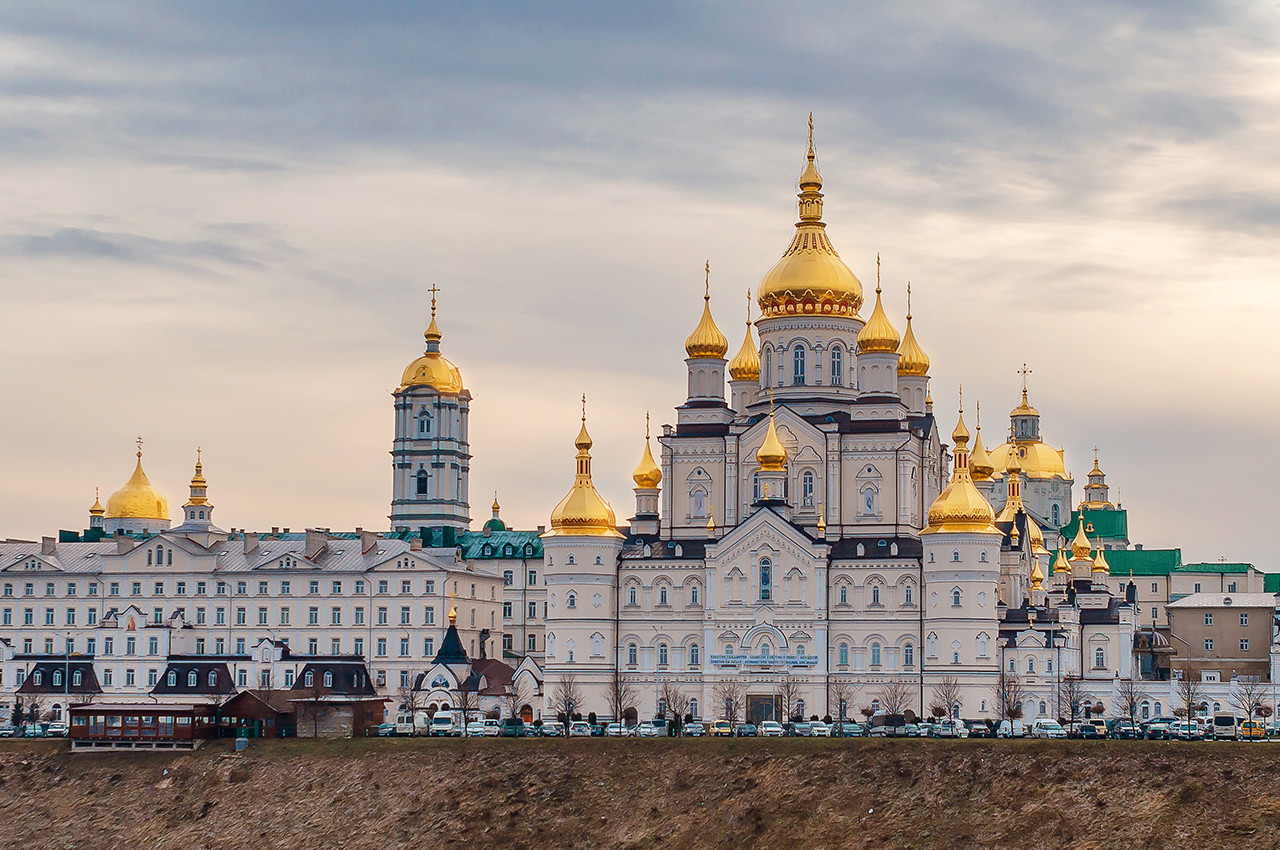
The State Service of Ukraine for Ethnic Policy and Freedom of Conscience has completed its investigation into the Pochaiv Holy Dormition Lavra and found evidence of its affiliation with the Russian Orthodox Church. According to the Service, the Lavra’s charter confirms that it forms part of the Ukrainian Orthodox Church (UOC), and its head is a member of the governing bodies of the Russian Orthodox Church in accordance with that church’s charter.
Briefly about the main points
- The DESC has completed its inspection of the Holy Dormition Lavra of Pochaiv.
- The service has identified signs that the monastery is affiliated with the Russian Orthodox Church.
- The charter confirms that the monastery is part of the Ukrainian Orthodox Church.
- The head of the monastery is a member of the governing bodies of the Russian Orthodox Church.
- A conclusion issued by the State Environmental Safety Service does not constitute a court order to cease operations.
What is the basis for the service’s conclusion?
The audit was formally launched on 24 June pursuant to an order issued by the State Audit Service on 19 June. The Service published the results on 22 July.
The DESC noted that it had established two key facts. Firstly, the charter of the Pochaiv Lavra confirms that it forms part of the structure of the Ukrainian Orthodox Church. Secondly, in accordance with the charter of the Russian Orthodox Church, the head of the Lavra is a member of the governing bodies of the Russian Orthodox Church.
Legal procedure following the audit
The investigation was carried out under the framework provided for by Law No. 3894-IX «On the Protection of the Constitutional Order in the Sphere of Religious Organisations» Activities’. The Act applies to organisations found to exhibit the characteristics specified therein of affiliation with a foreign religious organisation that is banned in Ukraine.
The conclusion reached by the State Service for Religious Affairs regarding such indications does not, in itself, mean that the Lavra’s activities will be suspended. The subsequent procedure may involve an order to rectify the breaches; if this is not complied with, the Service may bring a claim before the court seeking the suspension of the religious organisation’s activities.
Issues regarding the use of the Lavra complex
The Pochaiv Lavra makes use of a complex of architectural monuments of national importance, which are state property. The complex was transferred to the Lavra of the Ukrainian Orthodox Church for use free of charge by an order of the State Construction Committee in 2003.
Law No. 3894-IX prohibits the transfer of state or municipal property for use or lease to organisations to which its provisions apply, and to certain entities associated with them. At the same time, the published documents do not contain any decision to terminate the current agreement, change the user of the complex or transfer the buildings to another organisation.
The debate over the terms of use of the Lavra’s property has been ongoing for several years. In 2023, the relevant committee of the Verkhovna Rada recommended that parliament ask the government to review the agreement and consider its possible termination. This was a recommendation by the committee, not a decision to terminate the right of use.
The matter may end up in the realm of regulatory requirements and the courts
The ruling on the Pochaiv Lavra forms part of the wider application of the 2024 Act. This mechanism has already been used in relation to the Kyiv Metropolis of the Ukrainian Orthodox Church: the State Service for Religious Affairs issued an order and, following the service’s stated failure to comply, took the matter to court. Proceedings to cease its activities were initiated in September 2025.
There is no public response from the Pochaiv Lavra or the Ukrainian Orthodox Church specifically to the DESC’s conclusion of 22 July in any accessible authoritative sources. Previously, the Kyiv Metropolis of the UOC had challenged the legal validity of the DESC’s directive concerning itself, whilst the service insisted on the validity of its conclusions. This suggests that further decisions regarding the Lavra may be subject to legal challenge.