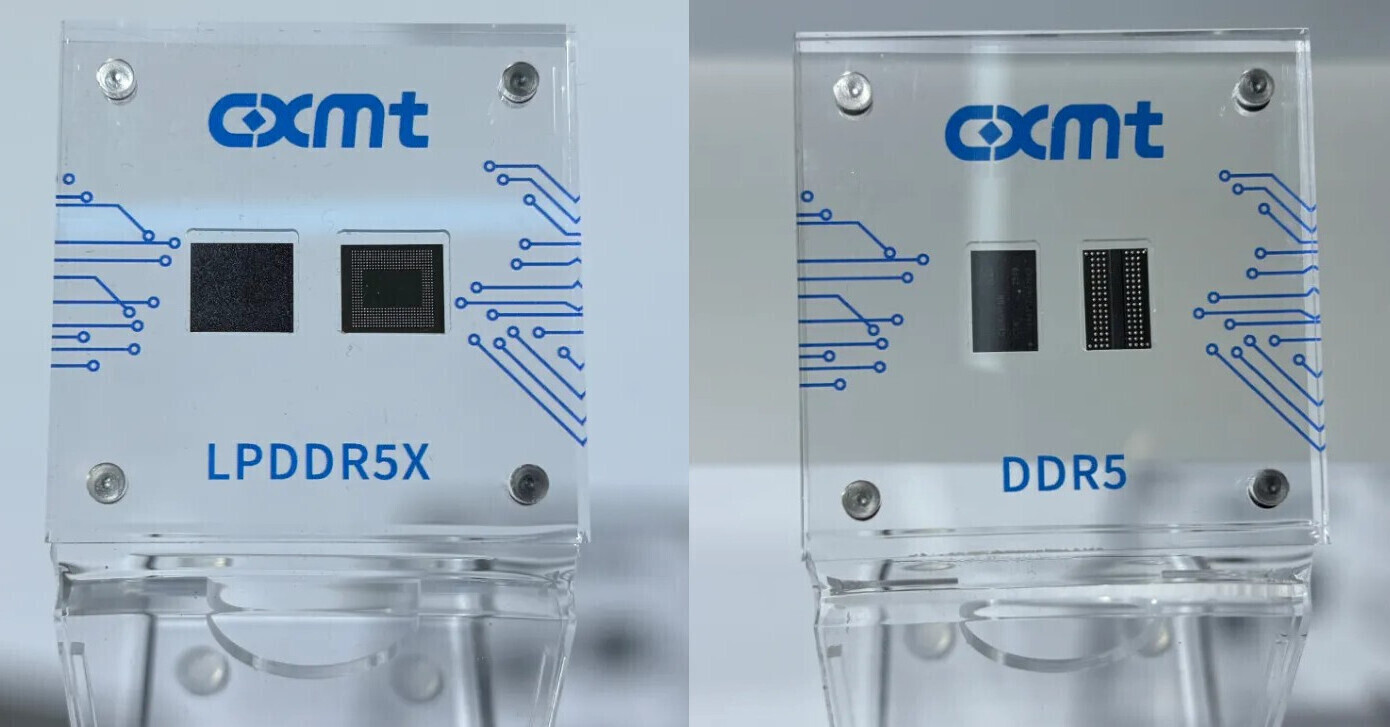
Chinese memory chip manufacturer ChangXin Memory Technologies has signed a five-year deal worth over $7 billion with ByteDance, the owner of TikTok. The contract was signed against a backdrop of global growth in demand for memory for artificial intelligence data centres, which has strengthened the pricing power of CXMT and its Chinese rival YMTC.
Briefly about the main points
- CXMT has signed a five-year contract with ByteDance worth over $7 billion.
- In June, the company also reached an agreement with Tencent for the supply of more than $3 billion.
- According to sources, CXMT was asking for more for individual DDR5 modules than Samsung.
- The dispute over prices preceded the withdrawal of SiCarrier’s engineers from the CXMT R&D zone.
- Chinese memory manufacturers are preparing for an IPO and an expansion of their production capacity.
From a cheap alternative to a supplier in short supply
CXMT and Yangtze Memory Technologies Corp (YMTC) have been operating at a loss for years and have relied on state support. Now, the rapid construction of AI data centres has sharply increased demand for memory components, which are needed by devices and servers to run programmes and store data.
Both Chinese manufacturers can now choose their customers and set their own prices. Six sources interviewed by Reuters said that Chinese memory chips are no longer a cheap alternative to products from US and South Korean companies.
The pricing dispute with Huawei
Over the course of several months CXMT It raised prices for Huawei and refused to lower them at the technology company’s request, according to two people familiar with the situation. In June, the conflict came to a head at the CXMT factory in Hefei, Anhui Province.
The company ordered engineers from equipment supplier SiCarrier to vacate the cleanrooms in the key research and development area. The engineers had been assisting with the maintenance of the equipment. Executives at SiCarrier, which has close strategic ties with Huawei, attributed this decision to a power struggle between CXMT and Huawei, sources say. The companies continue to collaborate, but the engineers have not been allowed back into the R&D zone.
CXMT, Huawei and SiCarrier did not respond to enquiries from Reuters regarding the incident. According to two sources, in recent weeks CXMT has been charging more for comparable 64-gigabyte DDR5 server modules than the approximately $1240 requested by Samsung. The sources did not specify CXMT’s exact price.
Major contracts and preparations for listing on the stock exchange
An agreement with ByteDance This followed the CXMT deal with Tencent, which was concluded in June. Its value exceeded $3 billion. ByteDance and Tencent did not respond to the agency’s enquiries.
CXMT is set to list on the Shanghai Stock Exchange following an IPO worth $8.6 billion. The company recorded revenue of $7.5 billion in the first quarter — 719% more than a year earlier — and wiped out a decade of losses in six months. YMTC is also preparing for a listing; some of the company’s executives are internally promoting a target valuation of 1 trillion yuan, or $148 billion.
Both companies are backed by the Chinese state investment fund, the Big Fund, as well as local authorities. In corporate documents and policy papers, the Chinese authorities regard the manufacturers as part of Beijing’s drive towards technological self-sufficiency.
Capacity is increasing, but the technology gap remains
CXMT is building two new factories — in Shanghai and Hefei — and is in talks regarding a third site. According to three sources, these projects are set to more than double its production capacity to over 600,000 wafers per month. The new factories could enable CXMT and YMTC to supply the Chinese and overseas markets as early as 2027.
At the same time, both manufacturers rely on deep ultraviolet lithography systems from the Dutch company ASML. China has been unable to obtain more advanced extreme ultraviolet systems since 2019. Five sources told Reuters that CXMT is already producing its own high-bandwidth memory (HBM) for AI, but is lagging behind its competitors by two generations, or several years.
YMTC has a slightly greater margin for manoeuvre in the event of new restrictions: following its inclusion on the US Entity List in 2022, it replaced around half of its equipment with Chinese-made alternatives and developed methods for stacking memory layers using less advanced tools. Whilst this may reduce its vulnerability, it does not eliminate the industry’s dependence on access to sophisticated equipment.