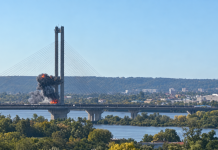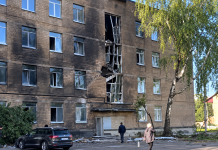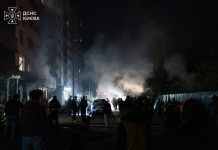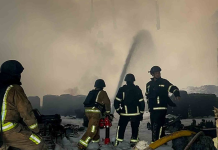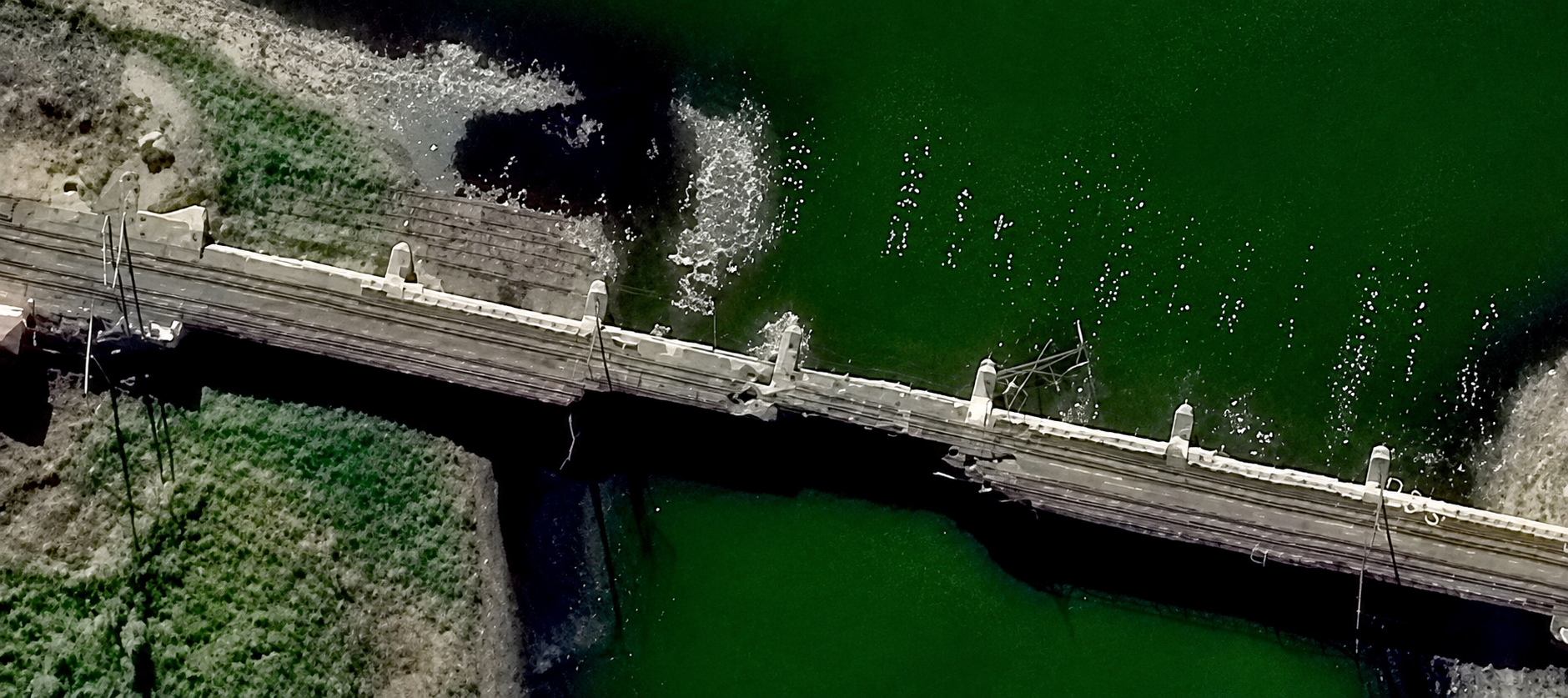
A significant section of the structure has collapsed on the Chongar railway bridge, which connects the temporarily occupied Crimea with the occupied part of the Kherson region. The damage is visible in a satellite image. As the continuity of the track has been lost, rail traffic across this crossing is technically impossible, and restoration will require repairs to the structure’s load-bearing elements.
Briefly about the main points
- A satellite image has captured a large section of the structure that has been destroyed.
- The track at the level crossing has been broken.
- Trains cannot run on this route.
- Restoration requires repairs to the structures, not just the rails.
- The cause and time of the collapse were not publicly disclosed.
Track repairs alone are not enough to restore the line
The damaged section of the structure no longer supports the railway track, so rolling stock cannot cross the bridge. Local repairs to the rails will not be sufficient to resume services: the destroyed load-bearing structures must be rebuilt and the condition of the surviving elements must be checked.
The Chongar corridor is one of the routes between the occupied peninsula and the south of mainland Ukraine. The railway infrastructure here could be used by Russian occupying forces to transport personnel, equipment, ammunition and fuel. At the same time, the closure of this crossing does not mean a complete cessation of transport links with Crimea: there are other routes, notably via Armiansk and The Kerch Bridge.
The cause of the collapse and the timeframe for the work were not announced
The exact time and cause of the collapse were not reported. There is no confirmed information as to whether the collapse was caused by an impact, prior damage or other factors.
In June, isolated incidents of damage to railway and road infrastructure were reported in the Chongar sector. However, these incidents do not provide grounds for determining the cause of the current collapse. The occupying authorities have also not specified a timeframe for possible restoration; given the need for structural work, the line is likely to remain unsuitable for rail traffic for some time.