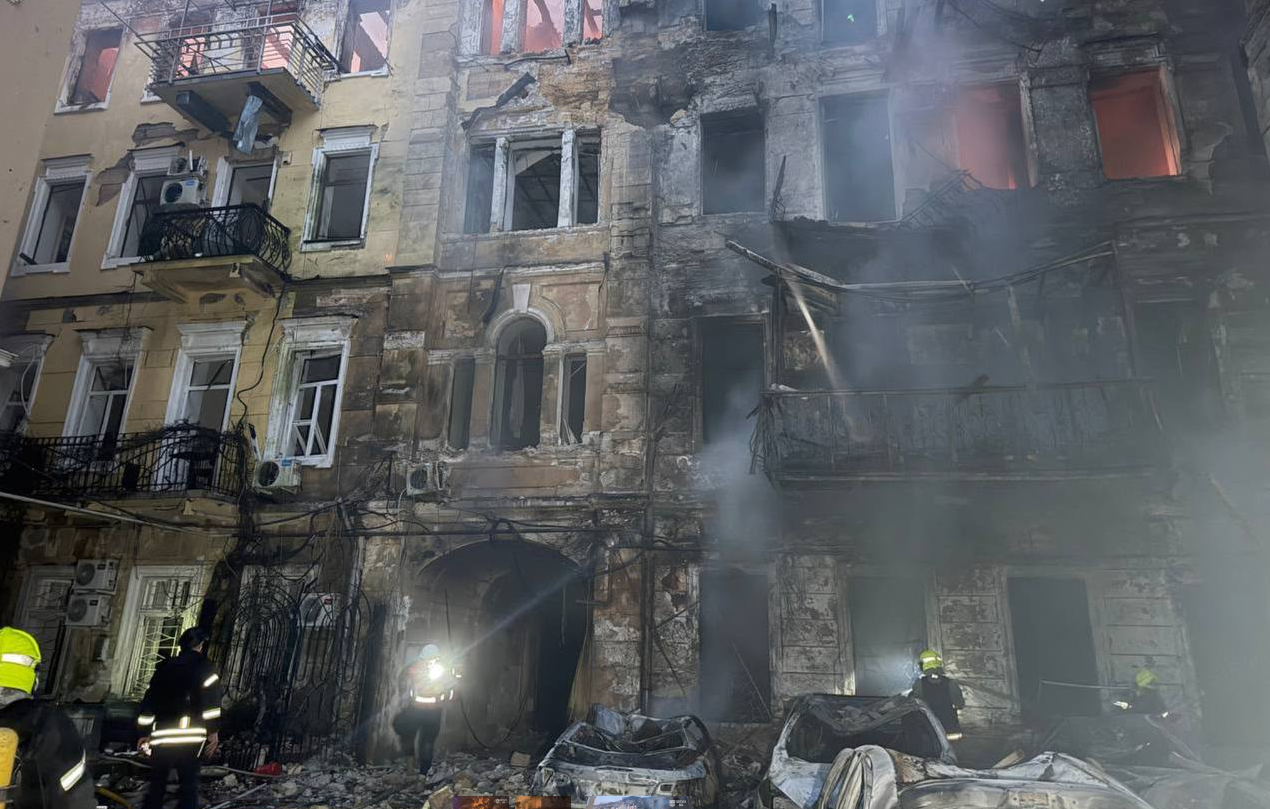
On the night of On 9 August, Russia carried out one of the most powerful combined attacks in recent times on Odesa and the surrounding region. The city came under simultaneous attack from strike drones and various types of missiles. The series of explosions lasted several hours; large-scale fires broke out in the centre of Odesa, residential buildings were damaged and partially destroyed, and cars were burnt out. As of this morning, it is known that eight people were injured. Seven of them are in a moderately serious condition; most have suffered shrapnel wounds. Rescue workers, medical staff, law enforcement officers and utility services are continuing to work at the sites of the strikes.
Briefly about the main points
- On the night of 9 August, Russia launched a large-scale combined attack on Odesa and the Odesa region.
- At least eight people were injured as a result of the attacks, seven of whom are in a moderately serious condition.
- In Odessa, residential buildings have been damaged and partially destroyed; large-scale fires have broken out; and cars have been destroyed.
- Russia deployed Iskander-M/S-400, Onyx and Kh-31P missiles, as well as a large number of attack drones.
- Across Ukraine as a whole, the enemy launched 202 unmanned aerial vehicles; air defence forces shot down or neutralised 179 of them.
- The Air Force recorded missile and drone strikes at 22 locations, whilst debris from downed targets fell at a further six.
The consequences of the attack on Odessa
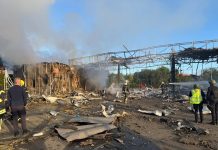
The most extensive damage was recorded in Odesa itself. According to the regional authorities and the State Emergency Service, several residential buildings in two districts of the city have been damaged and partially destroyed.
The consequences are particularly severe in the city centre. There, following the strike A four-storey residential block and some cars parked nearby caught fire. The area affected by the fire was approximately 1000 square metres.
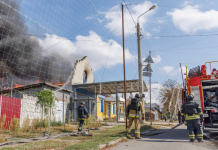
At another address, two private residential buildings were on fire at the same time. The fire damaged the façades, flats and residents’ cars. Footage released shows wrecked cars, smashed windows, damaged historic buildings and rescue workers dealing with the aftermath of the blast.
As of this morning, the main fires had been brought under control.
Eight people were injured as a result of the attack
The number of casualties rose throughout the morning and, as of 08:00, had reached eight people.
According to the head of the Odesa Regional State Administration Oleg Kipper, medical staff have assessed the condition of the seven injured as moderate. Most of the people suffered shrapnel wounds.
All those affected are being provided with the necessary medical care. At the same time, psychologists from the State Emergency Service are working with residents of the damaged buildings.
Law enforcement officers are documenting the aftermath of the Russian strikes and gathering evidence of damage to civilian infrastructure.
Odessa was attacked with ballistic missiles, «Onix» missiles and X-31P missiles
The attack was combined: Russia deployed several different types of weaponry at once.
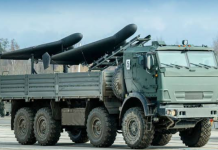
The Air Force has reported that it has carried out operations in the Odesa region «Iskander-M»/S-400 ballistic missiles, «Onyx» anti-ship missiles and X-31P anti-radar missiles. The launches were carried out, in particular, from the temporarily occupied Crimea and from the Black Sea.
The first explosions in Odessa were heard at around 03:45. Over the next few minutes, residents heard a series of further explosions. At 03:59, the Air Force issued a warning about a ballistic target heading towards Odesa and Chornomorsk, and just a few minutes later, another warning about a missile heading towards Mayaky.
At 04:15, groups of drones were already heading towards Odesa, Chornomorsk and Ovidopol. At around 05:00, the military again reported a missile over the Black Sea heading towards the Odesa region.
Russia therefore sought to overwhelm Ukraine’s air defences with various types of targets and waves of launches.
Dozens of drones and missiles were fired at the Odesa region over a two-hour period
According to unofficial estimates by monitoring channels, during the most intense period of the attack, lasting approximately two hours, the following may have passed through the Odesa region: more than 70 «Shaheds» and around 20 missiles of various types.
These figures should be distinguished from the Air Force’s official statistics, as monitoring estimates are compiled directly during an attack and are subject to change.
The Odesa Regional State Administration has officially reported that the enemy has used the following against the region several dozen missiles and drones.
Russia has launched 202 unmanned aerial vehicles at Ukraine
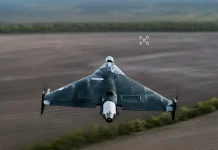
According to the Air Force’s morning report, Russia has launched a total of 202 drones and loitering munitions, including Shahed, «Gerberas» and other types of drones.
As of 08:00, the air defence forces 179 aerial targets were shot down or intercepted:
- 174 Russian drones of various types;
- 5 «Banderole» loitering munitions».
The air attack was repelled by the air force, anti-aircraft missile units, electronic warfare and unmanned systems units, and mobile fire groups of the Defence Forces.
The military recorded missile and attack drone strikes at 22 locations. Targets or their debris were brought down at a further six locations. Several Russian missiles failed to hit their targets; the final figures are still being confirmed.
Rescue workers are wrapping up their clean-up operations
Once the main phase of the attack had been completed, large-scale emergency and rescue operations were launched at the sites of the strikes.
The State Emergency Service extinguished fires in residential buildings and cars. Medical staff, police officers, utility workers and psychologists joined the effort. As of this morning, all major fires had been brought under control.
The full extent of the damage caused by the attack is still being assessed, as experts survey the damaged buildings and surrounding areas.
The night-time strike on 9 August marked yet another large-scale combined attack by the Russian Federation on southern Ukraine. The simultaneous use of ballistic, anti-ship and anti-radar missiles, alongside a large number of drones, placed an extremely heavy burden on the air defence system, with the main consequences for Odesa being the destruction of residential buildings, large-scale fires and injuries to civilians.