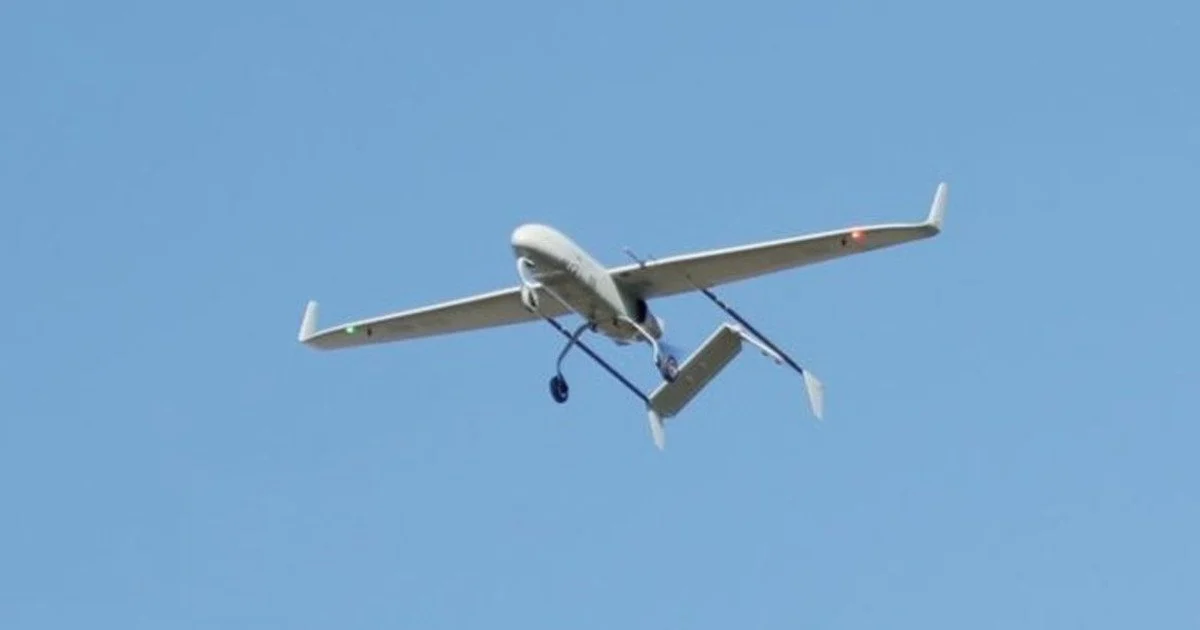
The Security Service of Ukraine has reported on the results of the latest week of the 40-day operation aimed at reducing Russia’s military and economic capabilities. According to the agency, strikes were carried out against a missile boat and two cargo ships in the Caspian Sea, airfields and air defence systems, oil infrastructure, as well as FSB command posts and bases in the occupied territories.
Briefly about the main points
- The SBU has announced that the missile boat «Molniya» has been struck in the Caspian Sea.
- In Crimea, a radar station at Belbek airfield and a fuel tank in Saki were hit.
- In Rostov-on-Don, an S-400 radar system was hit, and a «Tor-M2» and a «Pole-21» were destroyed.
- Drones attacked oil depots in Bashkortostan and the Ulyanovsk Region.
- Tehran has announced the death of a seaman on an Iranian merchant vessel in the Caspian Sea.
Targets in Crimea and Rostov-on-Don
Pros. information The SBU has reported that a «Nebo-U» long-range radar station at the «Belbek» military airfield in the temporarily occupied Crimea has been hit. At Saki airfield, a fuel and lubricants tank was damaged in the strike.
In Rostov-on-Don, the SBU announced that it had destroyed the 92N6E «Grave Stone» multi-purpose radar and its antenna tower, which form part of the S-400 «Triumph» system. The agency also reported the destruction of a «Tor-M2» anti-aircraft missile system and a ‘Pole-21’ electronic warfare system.
The 92N6E radar provides target tracking and missile guidance for the S-400 system. Its destruction could therefore weaken a specific air defence firing position; however, there is no publicly available data to assess the actual extent of the damage or the timeframe for restoration.
Caspian vessels and an oil production platform
The SBU has included a Project 12418 missile boat in its list of targets hit: «Zip» in the Caspian Sea. The agency also reported that two cargo ships subject to international sanctions, which were being used to transport military cargo between Iran and Russia, had been struck.
Among the Caspian targets was the oil production platform at the Filanovskoye field. This is the largest field in the Russian sector of the Caspian Sea, developed by Lukoil; the company states a projected production level of up to 6 million tonnes of oil per year. However, there is no publicly available data on actual production losses or possible downtime following the strike.
On 25 July, the Iranian Foreign Ministry condemned the attack on an Iranian merchant vessel in the Caspian Sea and reported that one seafarer had been killed and another injured. Tehran did not name the vessel nor did it publicly link it to the two cargo ships reported by the Ukrainian side.
Fuel infrastructure within a radius of up to 1,350 kilometres
According to the agency, the SBU’s long-range drones travelled approximately 1,350 km to the «Subhankulovo» in Bashkortostan, striking its tank farm. The Russian authorities in the region reported a fire at an industrial site in the Tuimazinsky District, attributing it to debris from a downed UAV.
The drones that struck the «Novospassky» mini-refinery in the Ulyanovsk Oblast had flown a further 900 km or so, the SBU reported. According to the agency, the plant’s tank farm caught fire. The regional governor, Oleksiy Russkikh, confirmed the strike on a fuel and energy facility in the Novospasky district and the fire, without specifying the name of the plant.
Separately, the SBU announced that it had struck the «1st Plant» mini-refinery in the Kaluga region. The agency describes these facilities as part of the fuel infrastructure that supplies petroleum products to the Russian military machine.
Strikes on FSB posts in the occupied territories
In the temporarily occupied Kherson region, the SBU struck a coordination centre and a base where Russian FSB personnel were stationed. Thirteen drones hit the target, the agency reported. According to its preliminary estimates, there may have been around 100 FSB officers in the area.
The SBU also reported strikes on FSB bases in Shchaslyvtseve, in the Kherson region, and in Yur’ivka, in the Donetsk region. There is no independently verified information regarding casualties or the consequences of these strikes.
Sequence of operations and estimation ranges
This week has seen the continuation of the 40-day operation, in previous updates on which the SBU had already reported strikes on oil facilities, air defence systems, airfields, a bomber and tankers subject to sanctions. The new selection of targets combines air defence, maritime logistics, oil production and refining, and occupation-related structures.
Strikes on Caspian targets could simultaneously put pressure on the Russian military presence at sea, the freight route between Iran and Russia, and the energy infrastructure. However, there is currently a lack of publicly available data to quantify the fleet’s losses, the scale of disrupted shipments, or the consequences for production at the Filanovskoye field.