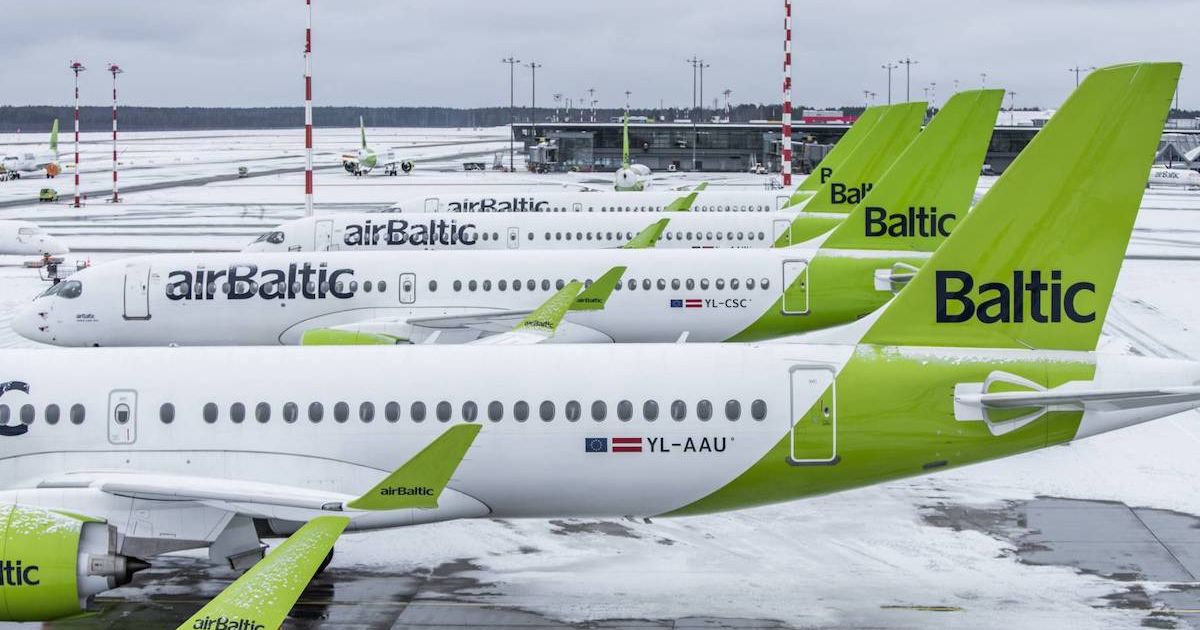
The Latvian airline airBaltic, which is undergoing bankruptcy proceedings under US Chapter 11, has presented some of its staff with a tough choice — redundancy, demotion or relocation to Papua New Guinea. The carrier is thus attempting to cut costs following a sharp rise in aviation fuel prices and the scrapping of plans for a major fleet expansion. The changes have already affected cabin crew and pilots, and have also cast doubt on the future of the company’s own flight academy.
- airBaltic is offering pilots and cabin crew the option of redundancy, demotion or secondment to Air Niugini.
- The company is reducing its fleet of Airbus A220-300s from 54 to 36 aircraft by the end of the year.
- The crisis was triggered by high fuel prices, with no hedging in place, against the backdrop of the war between the US and Israel on one side and Iran on the other.
- The Latvian aviation trade union has accused the airline of breaching EU labour regulations.
Fleet reductions and conditions for crews
According to internal correspondence, with which familiarised itself Reuters, airBaltic began contacting flight attendants as early as October, offering them the choice between redundancy and demotion, or accepting a severance payment in return for voluntary resignation. In total, the company announced in October its intention to cut between 500 and 700 jobs.
Similar decisions have also affected pilots, as, instead of its long-standing goal of expanding its fleet to 100 aircraft by 2030, the carrier plans to reduce the number of its Airbus A220-300s from 54 to 36 by the end of 2026. Some pilots were offered secondment to Air Niugini in Papua New Guinea (which also operates the A220) or redundancy, whilst others were asked to give up their instructor status and the associated allowances. Initially, those seconded will be paid as if on secondment, whilst there are plans to employ them through a Swiss subsidiary at a later date.
The stance of the airline, the trade union and the crisis in the sector
airBaltic itself (in which the Latvian government holds a controlling stake) insists that it is acting in accordance with labour legislation and is endeavouring to minimise the number of redundancies, by offering a reduced workload or a move to other roles. The company has also secured the first tranche of funding as part of a €350 million package and plans to emerge from restructuring next year, focusing on a smaller fleet and aircraft leasing with crew (ACMI).
However, the Latvian Aviation Trade Union, which represents around 30 per cent of the company’s pilots and a quarter of its cabin crew, has stated that management failed to consult with it regarding pay cuts and business trips, thereby breaching Latvian and EU regulations. The future of the airBaltic pilot academy also remains uncertain — students studying on the company’s credit remain at risk of not being able to sit the A220 certification exams.
airBaltic’s problems illustrate a general pressure on European airlines, which was exacerbated by the war in the Middle East and the sharp rise in the price of aviation fuel (in 2026, the carrier found itself without any fuel hedging contracts). Against the backdrop of attacks in the Middle East and, following a harsh winter, its Norwegian rival Norse Atlantic had also announced the previous day that it was in a critical financial situation, As a result, its share price has plummeted by 80 per cent, whilst Qatar Airways is phasing out its older Airbus aircraft and sending some of its pilots to Rwanda.