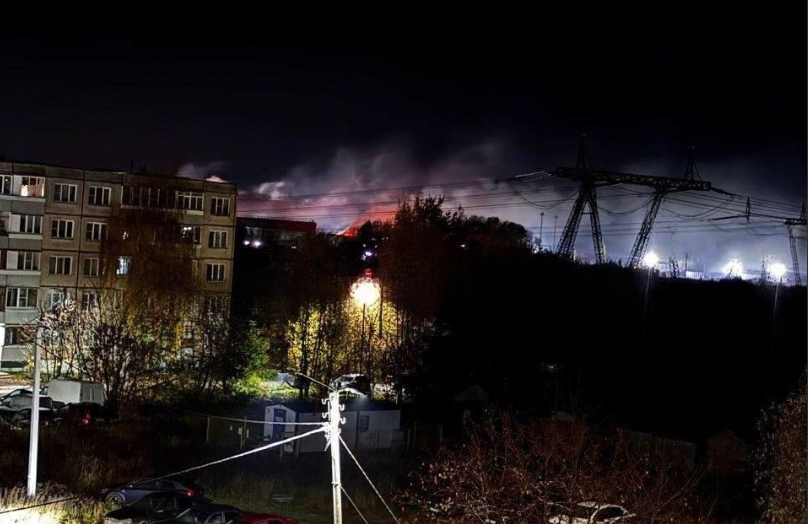
On the night of 11 October 2026, drones attacked the data centre of the Russian technology company «Yandex» in the city of Vladimir. The strike damaged the server infrastructure and brought the facility to a complete standstill, as confirmed by company representatives. At the same time, there was a flood of complaints across Russia regarding the performance of «Yandex Go», «Yandex Music», the «Yandex Pay» payment service, the «Alice» voice assistant and other applications. The official Yandex Cloud page reported power supply issues within the service area ru-central1-a, which affected dozens of cloud-based components. This is the third attack on the company’s data centre infrastructure in the last four days — following attacks on facilities in the Ryazan and Kaluga regions.
- Drones attacked the Yandex data centre in Vladimir.
- The company has confirmed that the facility has ceased operations.
- Yandex Cloud has experienced a major outage.
- The issues affected dozens of cloud services.
In Vladimir, the Yandex data centre came to a complete standstill following a drone attack«
On the night of 10 October, a series of explosions rocked the Vladimir Region of Russia. According to reports from monitoring organisations, Drones attacked Yandex’s data centre« in the Energetik neighbourhood of Vladimir.
At around 4 am local time, a message appeared on the official Yandex Cloud page regarding a power cut in the service area ru-central1-a. It is this area that the server infrastructure in Vladimir is linked to.
The company subsequently confirmed that the data centre had been damaged as a result of a drone attack and that its operations had come to a complete standstill. Representatives of Yandex Cloud alerted customers to the platform being in emergency mode and recommended using alternative platforms to restore services.
Governor of the Vladimir Region Alexander Avdeev He also confirmed that a fire had broken out at an infrastructure facility following a drone attack. According to him, two electrical substations, which supplied power to around five thousand local residents, had been taken out of action. An evacuation was organised from neighbouring buildings. There are no reports of casualties so far.
Major outage: which Yandex services have stopped working
The consequences of the attack extended far beyond the data centre itself. On the morning of 11 October, Russian users began complaining en masse about problems accessing popular digital services.
According to the Detector404 monitoring system, in just one hour, approximately 1,600 complaints were received about «Yandex Go», 1,400 about «Yandex» services in general, and nearly 900 about the «Yandex Pay» payment system.
Problems also arose with music streaming services, online cinema, the «Alice» voice assistant and smart home devices. Some users reported that the apps were completely unavailable, whilst others reported long loading times and errors whilst carrying out operations.
Which Yandex Cloud components were affected by the outage?
| Category. | Services for which accessibility issues have been identified |
|---|---|
| Cloud computing | Compute Cloud, Kubernetes, Cloud Functions |
| Network | Virtual Private Cloud, Cloud DNS, Load Balancers |
| Databases | PostgreSQL, MySQL, ClickHouse, YDB |
| Storage | Object Storage |
| Artificial intelligence | Yandex AI Studio, SpeechKit, Vision OCR |
| Analytics | DataLens, SpeechSense |
| Development and security | GitLab, SourceCraft, SmartCaptcha |
| Corporate tools | Tracker, Wiki, Cloud Desktop, Billing |
The table provides examples of components from the Yandex Cloud availability outage lists. This does not mean that every service was completely unavailable across all regions and zones of the platform.
The official page detailing the status of the cloud platform lists more than 80 components affected by the availability issue. However, the extent of the impact on each of them depends on the location of client resources and the redundancy arrangements between data centres.
The company had already warned that, due to previous damage to the infrastructure, some of «Alice’s» functions might be unreliable, and the neural network’s responses might be delayed.
A third data centre has been hit in four days
The attack on a facility in Vladimir was the latest in a series of strikes on large data centres belonging to a Russian technology company.
-
8 October — Sasovo, Ryazan Oblast. A fire broke out following the attack, and operations at the data centre were brought to a complete halt. The site housed critical computing infrastructure for the development of artificial intelligence.
-
9 October — Kaluga. As a result of the attack, part of the server infrastructure was taken out of action, leading to further problems with service availability.
-
11 October — Vladimir. A third facility has been damaged. The company has confirmed that it has ceased operations entirely and that there has been another major outage of the cloud platform.
Following previous attacks, Yandex acknowledged the difficulty of restoring its equipment. To assist its customers, the company has reached an agreement with other cloud providers to expedite the migration of data and information systems.
In particular, Selectel, K2Cloud and VK Cloud have been brought on board for this process. However, the migration of resources takes time, and some client systems may be dependent on specific infrastructure that has been damaged.
Why does a data centre outage affect dozens of services?
A modern data centre does more than just store information. It houses servers, payment processing systems, databases, artificial intelligence computing resources and infrastructure for thousands of third-party companies.
Public reports on the facility in Vladimir mention a capacity of up to 50 MW and 2,880 server racks. Other sources cite 40 MW and 2,800 racks for the new site, which is due to open in March 2026. It has not yet been definitively established which phase of the complex was affected or how much equipment was damaged.
When a large computing platform fails, problems can arise simultaneously across many systems, even if they appear to be unrelated. Disruptions to cloud databases, network components and authorisation systems are particularly critical. Due to their reliance on these components, individual applications may remain inaccessible even after some of the servers have been restored.
For corporate clients, this means a risk of downtime for websites, online shops, payment systems and internal information platforms.
Reports of disruptions are also coming in from Belarus, although there is currently no independent confirmation of the scale of the disruptions in that country.